Key takeaways
- ✓Zone and overlays are free to check and take about ten minutes on your council's mapping and the Queensland Globe.
- ✓Easements, covenants and registered building envelopes sit on the title and the plan, not in the listing.
- ✓Queensland's seller disclosure scheme applies to freehold land sales from 1 August 2025 under the Property Law Act 2023.
- ✓Disclosure does not cover flooding history, building approvals or planning limits — those remain your searches.
- ✓Infrastructure charges are a real cost that arrives with the approval, not with the land.
Buying Land to Build On in QLD — Planning Checklist
You'll usually hear this called a development application, or DA — that's the formal name for council approval under the Planning Act 2016. When you buy land to build on, you're not really buying dirt. You're buying a set of planning constraints, and the price you pay ought to reflect them.
Most of those constraints are public, free and checkable in an afternoon. Almost nobody checks them before signing.
Get a council-ready planning report in 5 minutes — no planner, no waiting.
Get your report →The short answer
Check the zone, the table of assessment, and overlays on your council's mapping and the Queensland Globe. Then check the title and registered plan for easements, covenants and building envelopes. Then check council's approval history, servicing and likely infrastructure charges. Most of this isn't in the seller disclosure statement.
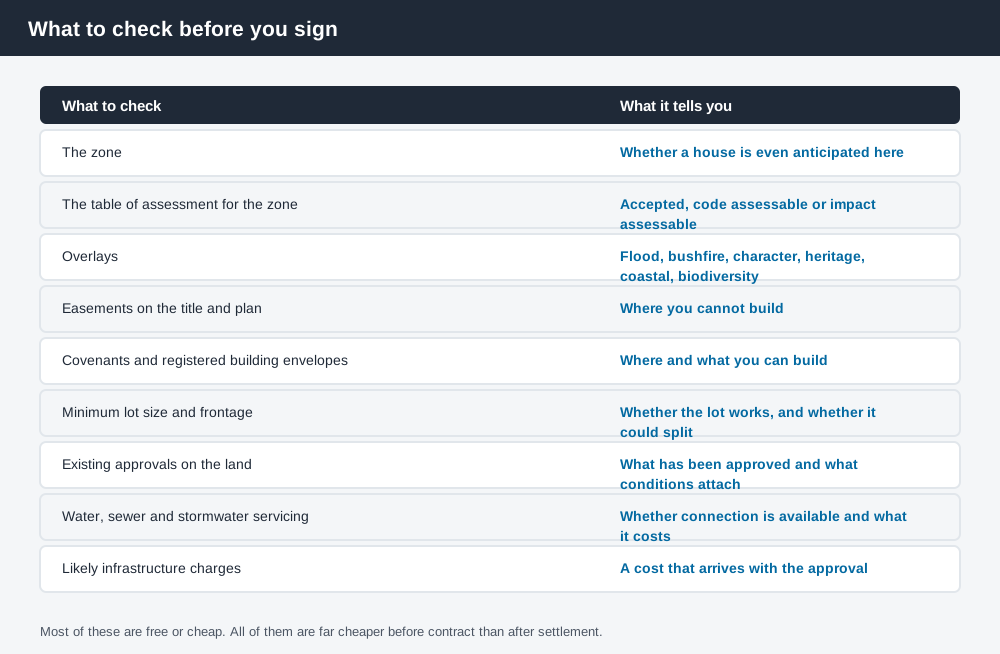
Figure 1: Nine checks. Most cost nothing.
The order to do it in
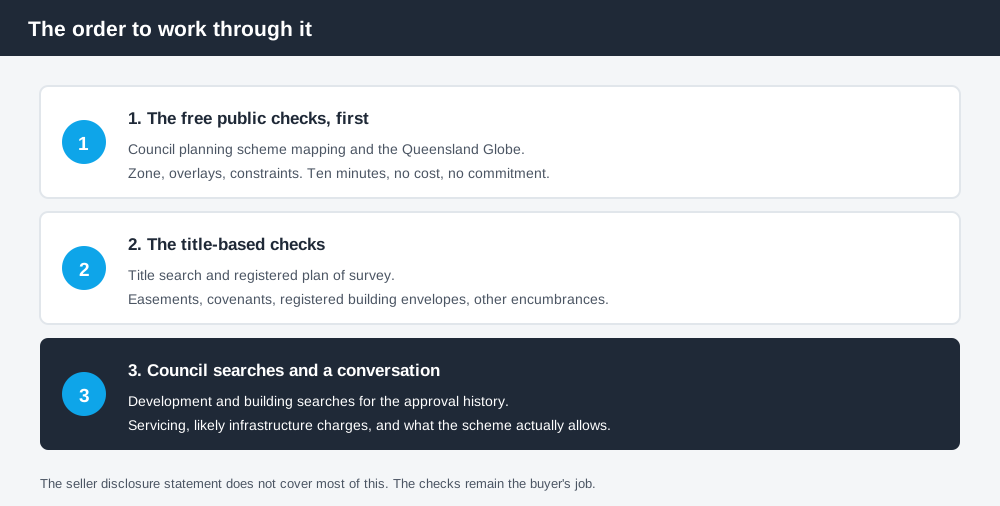
Figure 2: Cheapest and fastest first, so a bad block eliminates itself early.
Start with the free public checks because they eliminate the worst blocks in minutes. Zone tells you whether a house is anticipated at all. Overlays tell you what will constrain the design — flood, bushfire, character, heritage, coastal hazard, biodiversity, waterway corridors. A block in a flood hazard overlay isn't unbuildable, but the floor level, the fill and the engineering will cost real money, and the price should account for it. How to check overlays in QLD walks through the mapping.
Then the title. Easements are the classic surprise: a sewer easement running diagonally across the buildable area of a lot is invisible from the street and definitive in practice. Registered covenants and building envelopes are just as binding — developer estates commonly register envelopes limiting where a house may sit, plus architectural covenants controlling materials, roof pitch and colours.
Then council. Development and building searches show what has been approved on the land and what conditions attach, which matters even for vacant land — a lot created by a recent reconfiguration may carry conditions that bind you.
What seller disclosure does and doesn't do
Spend 5 minutes, not 3 weeks
instantDA generates a council-ready planning report for Queensland development applications. No town planner. No waiting.
Get your report →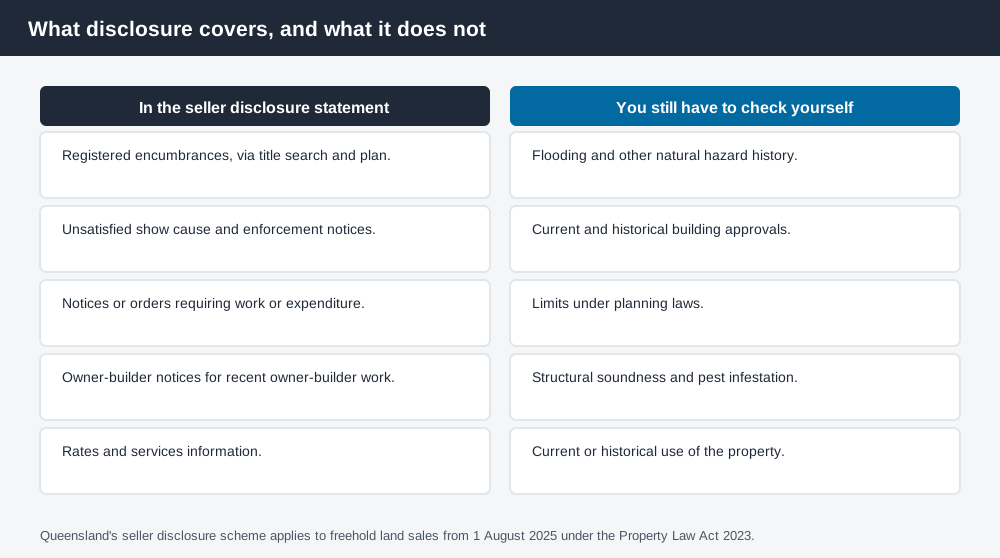
Figure 3: The right-hand column is where the expensive surprises live.
Queensland introduced a mandatory seller disclosure scheme for sales of freehold land from 1 August 2025, under the Property Law Act 2023. Before the buyer signs, the seller must give a disclosure statement in the approved form together with prescribed certificates — which include a title search and registered plan, unsatisfied show cause and enforcement notices under the Building Act 1975 and the Planning Act 2016, and any notice or order requiring work to be done or money spent in relation to the lot.
That's genuinely useful, and where the statement is incomplete or inaccurate about a material matter the buyer may have a right to terminate before settlement.
But the scheme explicitly does not extend to several things buyers assume it covers: flooding and other natural hazard history, structural soundness, pest infestation, current or historical use of the property, current or historical building approvals, limits under planning laws, and services connected.
In other words, disclosure will tell you if there's an enforcement notice. It will not tell you the block floods.
The constraints that most often cost money
- ✓Flood hazard — floor levels, fill, and insurance
- ✓Bushfire hazard — construction standards and access
- ✓Slope — retaining, earthworks and footings
- ✓Easements — where you cannot build
- ✓Registered building envelopes — where you must build
- ✓Character or heritage overlay — what you may build
- ✓Servicing distance — the cost of getting water and sewer to the lot
- ✓Infrastructure charges — a levied cost at approval
Infrastructure charges deserve their own note because buyers routinely miss them. They are a charge levied in connection with development, and for a new dwelling on a newly created lot they can be substantial. They aren't a cost of the land; they're a cost of the approval, and they land later. Ask council what applies.
Servicing is the other one. A block with water and sewer at the frontage is a different proposition from one where the nearest connection is 200 metres away, and the difference doesn't show up in the listing photos.
Queensland's planning schemes follow the Queensland Planning Provisions structure, but each council layers its own codes and overlays on top. They are not uniform, so a rule you know from one local government area may not apply in the next.
Slope deserves a mention of its own because it is the constraint buyers most consistently underestimate. A block with two or three metres of fall across the building area needs retaining, deeper footings, stepped floor levels and often a crane or difficult access for materials. None of that appears on a listing, all of it appears on a builder's quote, and the difference between a flat block and a sloping one of the same size and zone can run well beyond what the price gap suggests. Contour mapping gives you a first read; a feature survey gives you the real number.
If you're buying for more than a house
If the appeal of the block is what you might do with it later — a second dwelling, a subdivision, a business — that's a different and more demanding check. How to check a property's development potential in QLD covers the full assessment, and can I subdivide this block deals specifically with the subdivision question, which turns on minimum lot size, frontage, access and servicing rather than on how big the block looks.
What to do next
Do the free checks before you get emotionally committed, not after. Council planning scheme mapping and the Queensland Globe will tell you the zone, the overlays and a great deal about constraints in about ten minutes, at no cost. The state's guidance on changes to secondary dwellings and planning issues covers state-level planning matters.
If the block survives that, order the title search and plan, run the council searches, and talk to a duty planner about anything the mapping raises.
If you'd rather see the zone, the overlays and the likely category of assessment for an address set out in one document than work through a planning scheme yourself, an instantDA planning report does that for $169 — against the $800–$1,500 a town planner typically charges for a preliminary opinion. You can start a report in a few minutes.
Then confirm with your council before the contract goes unconditional. Land is the one purchase where the constraints are entirely knowable in advance and entirely unfixable afterwards.
Frequently asked questions
What planning checks should I do before buying land in Queensland?
Does the seller have to tell me about flooding in Queensland?
What does Queensland's seller disclosure statement actually include?
Can I build a house on any residential block in Queensland?
What are infrastructure charges and when do I pay them?
Do easements really stop me building?
Ready to generate your report?
Skip the writing. Get a council-ready planning report in 5 minutes.
Get your report