Key takeaways
- ✓A pool that can hold 300mm or more of water is a regulated pool, and that includes portable and inflatable pools and spas.
- ✓Building approval comes from a private building certifier, not from council's planning department.
- ✓The barrier has to meet the pool safety standard in Queensland Development Code MP 3.4, which is separate again.
- ✓Regulated pools go on the QBCC pool safety register, and sellers and lessors need a current pool safety certificate.
- ✓A development application only enters the picture when a planning scheme rule, an overlay or an easement is triggered.
Do You Need Council Approval for a Pool in QLD?
You'll usually hear this called a development application, or DA — that's the formal name for council approval under the Planning Act 2016. A pool is one of the few backyard projects where the DA is often the least important of the approvals you need. Three separate regimes land on a swimming pool in Queensland, and people get into trouble by assuming they are one thing.
Get a council-ready planning report in 5 minutes — no planner, no waiting.
Get your report →The short answer
Yes — almost always. A pool that can hold 300mm or more of water is a regulated pool. It needs building approval from a private building certifier, a barrier meeting QDC MP 3.4, and registration with QBCC. A development application is only added when a scheme rule or overlay is triggered.
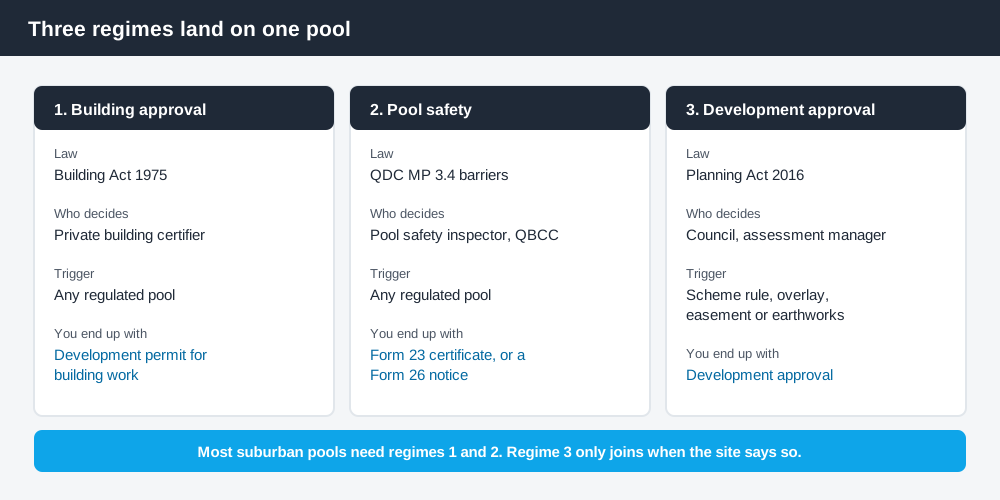
Figure 1: Three regimes, three decision makers, three different documents.
Three systems, not one
Building approval sits under the Building Act 1975 and is granted by a private building certifier. Pool safety sits under the same Act but is expressed through the Queensland Development Code and administered with the Queensland Building and Construction Commission (QBCC). Development approval sits under the Planning Act 2016 with your council as assessment manager.
You can need one, two or all three. Most suburban pools need the first two and not the third. If the distinction between the first and the third is unfamiliar, building approval versus development approval in QLD is worth reading before you go further, because the rest of this article assumes you can tell them apart.
What counts as a regulated pool?
Spend 5 minutes, not 3 weeks
instantDA generates a council-ready planning report for Queensland development applications. No town planner. No waiting.
Get your report →The Building Act 1975 uses the term regulated pool, and it turns on the Act's definition of a swimming pool. The practical test used across Queensland Government and QBCC guidance is a structure capable of being filled with water to a depth of 300mm or more. Wading pools are excluded only where they meet the full set of exclusion criteria — a depth of no more than 300mm, a volume of no more than 2,000 litres, and no filtration system.
This is the part that catches people. A portable pool from a hardware store, an inflatable pool, a fixed or portable spa — if it holds 300mm of water, it is a regulated pool with the same barrier, register and certificate obligations as a full in-ground concrete pool. QBCC is explicit that a spa with a lockable lid still needs a compliant fence around it.
Do I need building approval for a pool in Queensland?
Yes. A swimming pool is building work, and a regulated pool needs a development permit for building work — the thing everyone calls building approval — before it is built. You get that from a licensed private building certifier, not over the counter at council.
The certifier assesses the pool shell, its structural design and its siting, and assesses the barrier against the pool safety standard at the same time. At the end they issue a final certificate and pass those details to QBCC, so the pool is entered on the pool safety register.
Filling a regulated pool before it has an approved and compliant barrier is the most common serious breach, and councils are authorised to inspect and fine for it.
The pool safety standard and the certificate
The barrier standard is Queensland Development Code Mandatory Part 3.4 — Swimming Pool Barriers, which applies to all regulated pools, indoor and outdoor. QBCC's summary of the pool safety standard covers fence height and strength, non-climbable zones, gates with self-closing and self-latching hardware, preventing direct access from a building into the pool area, and mandatory signage. MP 3.4 calls up and modifies the relevant Australian Standard, and where the two conflict, MP 3.4 prevails.
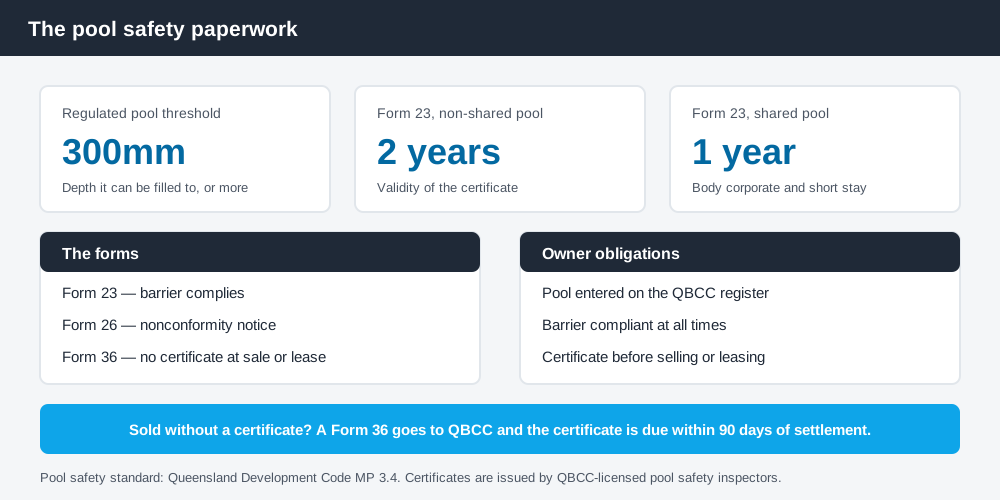
Figure 2: The pool safety paperwork, and how long each piece lasts.
A licensed pool safety inspector — licensed by QBCC — inspects the barrier. If it complies, they issue a Form 23 pool safety certificate. If it does not, they issue a Form 26 pool safety nonconformity notice setting out what has to be rectified. A Form 23 is valid for two years for a non-shared pool and one year for a shared pool, the shared category covering body corporate and short-term accommodation pools.
- ✓Regulated pool entered on the QBCC pool safety register
- ✓Barrier compliant with QDC MP 3.4 at all times
- ✓Current Form 23 before selling or leasing, or a Form 36 notice lodged instead
Sellers must give the buyer a copy of a current certificate before settlement. If there isn't one, a Form 36 notice of no pool safety certificate must be lodged with QBCC and given to the buyer, and the certificate then has to be obtained within 90 days of settlement. For a non-shared pool, a lessor must not enter into an accommodation agreement at all unless a certificate is in effect. You can check whether a pool is already listed, or add one, through the QBCC pool register.
Fences are a related but distinct problem — the boundary fence between you and the neighbour is governed differently from the pool barrier, and council approval for a fence in QLD covers where the two sets of rules meet.
When does the planning scheme get involved?
Queensland's planning schemes follow the Queensland Planning Provisions structure, but each council layers its own zone codes and overlays on top, so they are not uniform. Siting for a pool associated with a house is normally assessed by the certifier against the Queensland Development Code, with the scheme able to substitute its own boundary clearance and site cover provisions.
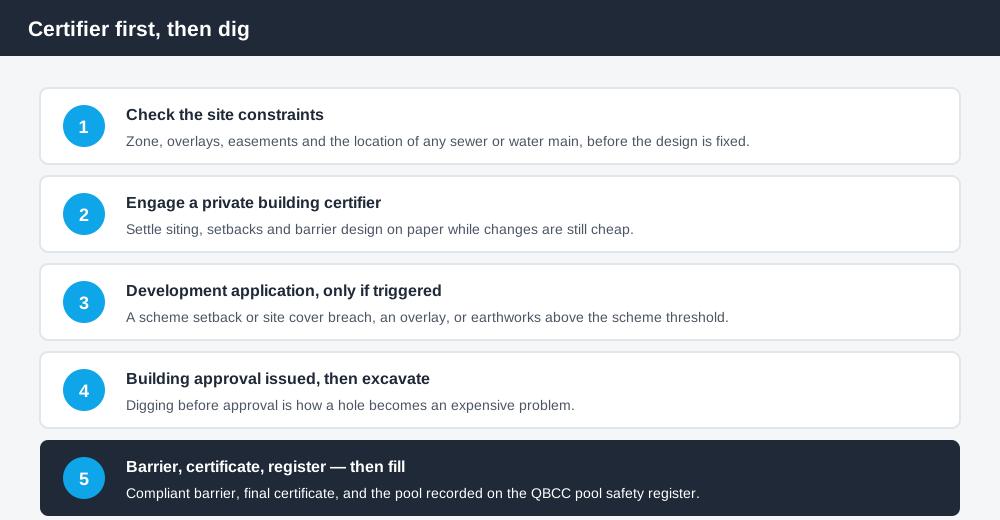
Figure 3: Certifier first, then dig. Reversing this is expensive.
A development application typically becomes necessary where the pool or its surrounds breach the scheme's setback or site cover provisions and the scheme makes that building work assessable against the scheme; where an overlay — flood hazard, traditional character, heritage, biodiversity, koala habitat, landslide or coastal hazard — makes the work assessable; or where excavation and fill for the pool shell exceeds the scheme's earthworks thresholds and becomes assessable operational works. Confirm the categories of assessment in your own scheme, because they genuinely differ.
Two site constraints stop pools cold. The first is infrastructure: a pool over or near a sewer main needs the water authority's build over or near asset approval as well as compliance with the code, and building over a sewer in QLD explains that process. The second is easements — a pool, its coping, its paving and its pump enclosure generally cannot sit inside a utility easement without the easement holder's written consent, and a certifier will not approve work that conflicts with one.
What to do next
Order the checks before you order the excavator. Confirm your zone, overlays, easements and the location of any sewer, then take that to a private building certifier and settle the siting on paper. Digging first and discovering an overlay or an easement afterwards means either an unplanned development application or a filled-in hole.
If you'd rather see your zone, your overlays and your likely category of assessment in one document than work through a planning scheme yourself, an instantDA planning report does that for your address for $169 — against the $800–$1,500 a town planner typically charges for a preliminary opinion. You can start a report in a few minutes.
Then confirm with your council and your certifier before anything is excavated.
Frequently asked questions
Do I need council approval for a swimming pool in QLD?
Does an inflatable or portable pool need approval in Queensland?
How long is a pool safety certificate valid in Queensland?
Do I need a pool safety certificate to sell my house?
What happens if my pool fence does not comply?
Do pool setbacks apply in Queensland?
Ready to generate your report?
Skip the writing. Get a council-ready planning report in 5 minutes.
Get your report