Key takeaways
- ✓Two systems, two Acts, two decision-makers, testing two different things.
- ✓All building work is assessable development under the Building Act 1975 unless it is made accepted development.
- ✓A building certifier is the assessment manager for building work. The council is the assessment manager for planning matters.
- ✓Where planning approval is needed, it comes first — a certifier cannot issue building approval ahead of it.
- ✓Being exempt from one system says nothing at all about the other.
Building Approval vs Development Approval in QLD
You'll usually hear this called a development application, or DA — that's the formal name for council approval under the Planning Act 2016. But there is a second approval running in parallel that people constantly confuse it with, and the confusion is expensive in both directions: owners who obtain a DA and think they can build, and owners who engage a certifier and think they have dealt with the council.
Get a council-ready planning report in 5 minutes — no planner, no waiting.
Get your report →The short answer
Building approval sits under the Building Act 1975 and is decided by a building certifier, testing structure, fire safety, health and amenity. Development approval sits under the Planning Act 2016 and is decided by the council as assessment manager, testing land use, siting, density and overlays. Clearing one says nothing about the other.
Two systems, side by side
Building approval. Governed by the Building Act 1975 and the Building Regulation 2021. The default position is that all building work is assessable development and needs a building development approval unless it is made accepted development or exempt. It is assessed against the building assessment provisions — the National Construction Code, the Queensland Development Code, and the structural, fire, health, safety, amenity and sustainability requirements that flow from them. A building certifier decides it, and that certifier can be private or employed by the council.
Development approval. Governed by the Planning Act 2016 and your council's planning scheme. It is about land use, siting, density, character and the constraints mapped over your block. Whether you need one depends on your category of development — accepted, assessable or prohibited — as set by a categorising instrument. Your council, as assessment manager, decides it.
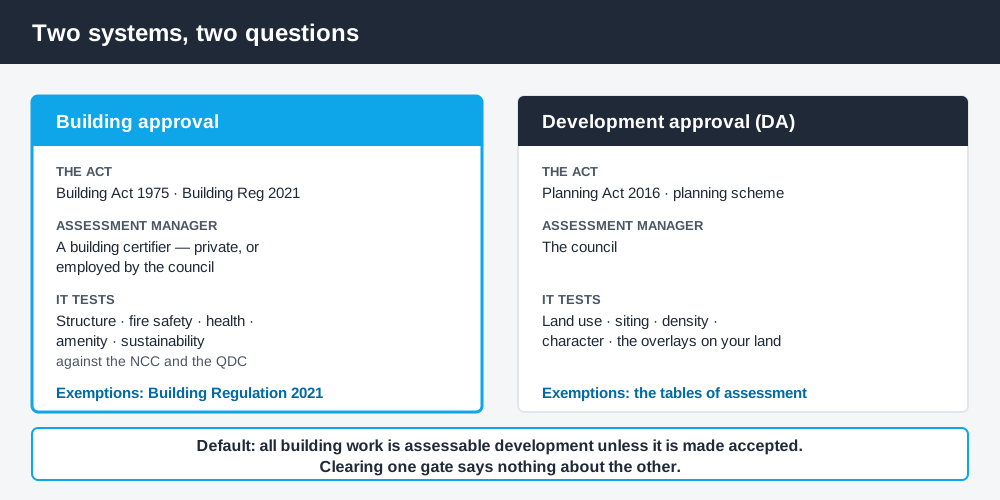
Figure 1: Same project, two independent gates.
Who is the assessment manager
Spend 5 minutes, not 3 weeks
instantDA generates a council-ready planning report for Queensland development applications. No town planner. No waiting.
Get your report →This is the technical point that makes everything else click into place.
For building work, the building certifier is the assessment manager. A private certifier you engage directly is exercising a statutory function, not simply providing a service. They assess your plans, issue the building development approval, carry out the mandatory inspections, and issue the final certificate.
For planning matters, the council is the assessment manager. Nothing a certifier does substitutes for that, and a certifier cannot give you a planning approval.
There is one important obligation on councils here: where a private certifier has not been engaged and a building development application is properly made, the council must receive, assess and decide it, and must appoint or employ a building certifier for that purpose. You cannot be left with nobody to certify your work. Private certifier vs council in QLD works through which route suits which project.
The order matters
Where both approvals are needed, planning comes first.
A certifier cannot issue a building development approval where the work also needs a planning approval that has not yet been given. If your proposal requires assessment against the planning scheme — a material change of use, or building work assessable against a zone code or an overlay — the council must give that development permit before the certifier can issue theirs.
This trips up project timelines constantly. Owners engage a certifier early, receive a request for the planning approval they did not know they needed, and lose weeks. Establish your planning position first, then engage the certifier.
- ✓Establish the planning position first — zone, overlays, category of assessment
- ✓Obtain any development permit needed
- ✓Then engage a certifier for the building work
- ✓Allow for a council referral if siting relaxations are needed
- ✓Lodge and archive the final certificate with council
The council's referral role
Even on a privately certified job, the council does not disappear.
Siting variations. Where your design does not meet the standard siting provisions of the Queensland Development Code — boundary setbacks, height, site cover — the certifier refers those aspects to the council, which acts as a referral agency and decides them against the QDC provisions governing siting for houses, MP1.1 and MP1.2, plus any local amenity and aesthetics criteria. That referral is a separate assessment with its own fee.
Lodgement and records. Certifiers lodge the application documents, the notice of engagement, the decision notice and the final certificate with the council, which archives them. This is why a council building records search shows privately certified work, and why the absence of a record is a red flag when you buy.
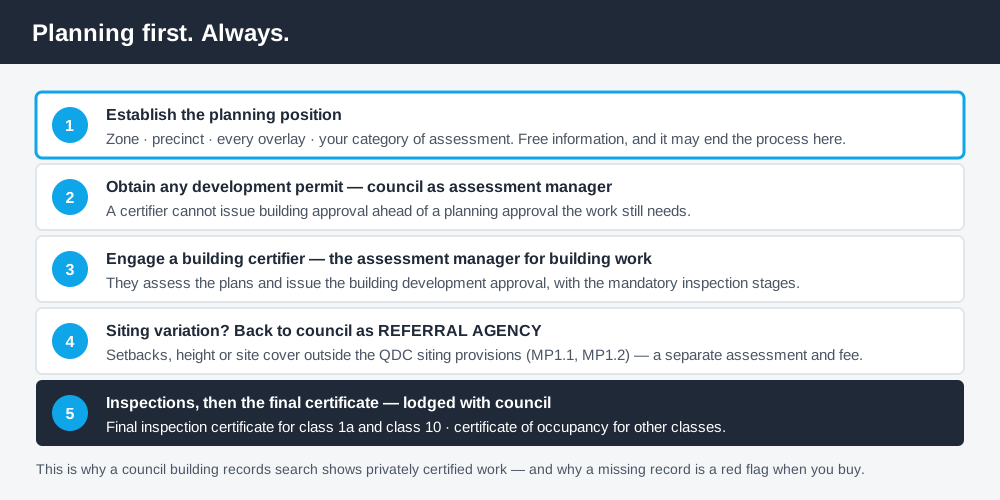
Figure 2: Planning first, then certification, with council on both ends.
The four combinations
Every project lands in one of these, and knowing which one saves a great deal of confusion.
Neither. Small class 10 structures inside the exemption thresholds, on land with no overlay complication. Build. Get the exemption confirmed in writing.
Building approval only. The commonest residential case. A deck, a garage, an extension that complies with the scheme's acceptable outcomes. Engage a certifier and go.
Development approval only. Rare but real — a material change of use with no building work. Starting a home based business, or changing how premises are used.
Both. A secondary dwelling, a dual occupancy, most commercial work, and anything caught by an overlay. Planning first, then building.
The final document differs by building class too. For a single detached class 1a house and class 10 structures, the certifier issues a final inspection certificate. For other classes the certifier issues a certificate of occupancy, which replaced the certificate of classification on 1 October 2020.
Working out where you sit
The building question is answered by the exemption thresholds — what you can build without council approval in QLD sets out the common ones. The planning question is answered by your council's tables of assessment, and accepted vs code vs impact assessable in QLD explains how to work through them.
Start with the mapping. Your council's planning scheme maps give the zone, precinct and every overlay. Queensland Globe gives lot and plan details and state-mapped layers. Queensland Government's guidance on building certifiers explains the certification side.
If you'd rather read your zone, your overlays and your likely category of assessment in one document than work through a planning scheme yourself, an instantDA planning report does that for your address for $169, against the $800–$1,500 a town planner typically charges for a preliminary opinion. It answers the planning question — you will still need a certifier for the building one. You can start a report in a few minutes.
And confirm both positions before you order materials. Schemes are not uniform across Queensland, and a certifier's view on the building side does not settle the planning side.
Frequently asked questions
What is the difference between building approval and development approval in Queensland?
Do I need both approvals?
Which approval comes first?
Who is the assessment manager for building work in Queensland?
Can a council refuse to act as my building certifier?
What certificate do I get at the end?
Ready to generate your report?
Skip the writing. Get a council-ready planning report in 5 minutes.
Get your report