Key takeaways
- ✓Queensland runs two separate approval systems. Escaping one does not mean you have escaped the other.
- ✓A garden shed avoids building approval only if it is 10 m² or less, 2.4 m or lower, has a mean height of 2.1 m or less, and no side longer than 5 m.
- ✓A fence is generally accepted at 2 m or under, unless it forms part of a swimming pool barrier, in which case the pool safety rules always apply.
- ✓A retaining wall is generally accepted at 1 m or less of retained height, with no surcharge above it, and at least 1.5 m from a building or another wall.
- ✓Overlays override the general rules. Heritage, flood, bushfire and character controls can make an otherwise exempt structure assessable.
What Can You Build Without Council Approval in QLD?
You'll usually hear this called a development application, or DA — that's the formal name for council approval under the Planning Act 2016. But the honest answer to "what can I build without council approval in Queensland" starts one step further back, because most homeowners are actually asking about two different approvals at once, and the thresholds for each are set by different laws.
Get a council-ready planning report in 5 minutes — no planner, no waiting.
Get your report →The short answer
Queensland runs two approval systems. A shed needs no building approval if it is 10 m² or less, 2.4 m or lower, mean height 2.1 m or less, with no side over 5 m. Fences under 2 m and retaining walls under 1 m are usually accepted. Overlays can override all of it.
Two approvals, two rulebooks
This is the single most expensive misunderstanding in Queensland residential building, so it is worth being blunt about it.
Building approval comes from the Building Act 1975 and the Building Regulation 2021. It is about structural adequacy, fire safety, health and amenity. A private building certifier usually gives it, and they can be engaged directly without going anywhere near the council counter.
Development approval comes from the Planning Act 2016 and your council's planning scheme. It is about land use, siting, density, character and the constraints mapped over your block. The council is normally the assessment manager.
You can be exempt from one and caught by the other. A shed that comfortably sits under the building exemption can still need a DA because it breaches the setback in your zone code, or because a character overlay covers your street. If you want the distinction laid out properly, building approval vs development approval in QLD is the article that does it.
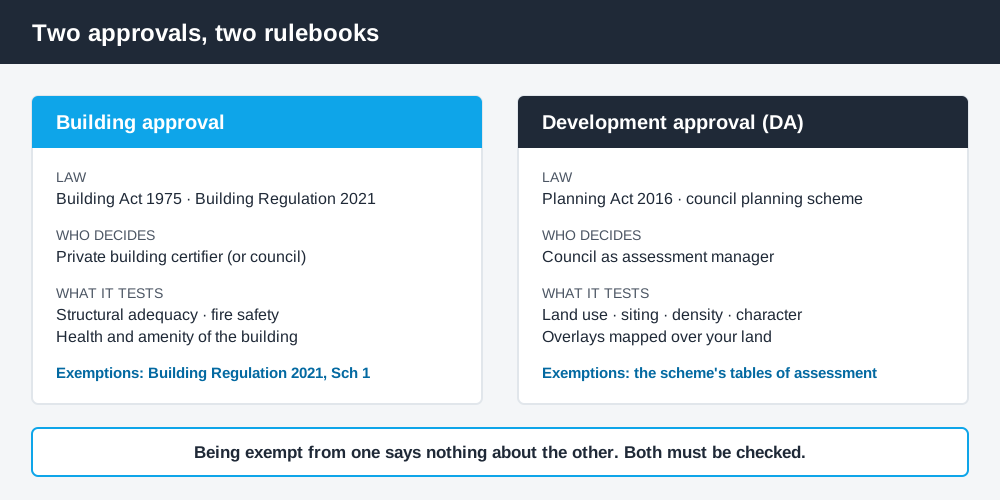
Figure 1: Clearing one gate does not open the other.
What is genuinely exempt from building approval
Spend 5 minutes, not 3 weeks
instantDA generates a council-ready planning report for Queensland development applications. No town planner. No waiting.
Get your report →Schedule 1 of the Building Regulation 2021 sets out building work that is accepted development, meaning no building development approval is needed provided you meet every stated requirement. The figures below are the ones homeowners hit most often.
Small class 10 structures. A garden shed, tool shed, greenhouse or similar is accepted only if it satisfies all four limits together: a plan area of no more than 10 m², a maximum height of no more than 2.4 m, a mean height of no more than 2.1 m, and no side longer than 5 m. Miss any one of the four and the whole exemption falls away. A common 6 m × 3 m Colorbond shed is 18 m² and has a 6 m side, so it fails on two counts before you even measure the roof.
Fences. A fence up to 2 m above natural ground surface is generally accepted, with one hard exception: if it is or forms part of a swimming pool barrier, the exemption does not apply at all.
Retaining walls. A wall is generally accepted where it retains no more than 1 m, carries no surcharge above it — no driveway, no building, no batter loading the wall — and stands at least 1.5 m clear of any building or another retaining wall. Fail any limb and it becomes assessable building work.
Repairs, maintenance and minor alterations. Work on an existing building is generally accepted where it does not change the floor area or the height, and does not affect a structural component or the fire safety system. Replacing a vanity, cupboards, floor coverings or internal linings sits comfortably inside this. Removing a wall does not.
- ✓Measure plan area, maximum height, mean height and longest side
- ✓Confirm nothing is a pool barrier
- ✓Confirm no surcharge above a retaining wall
- ✓Confirm no structural or fire safety element is touched
- ✓Then check the planning scheme separately
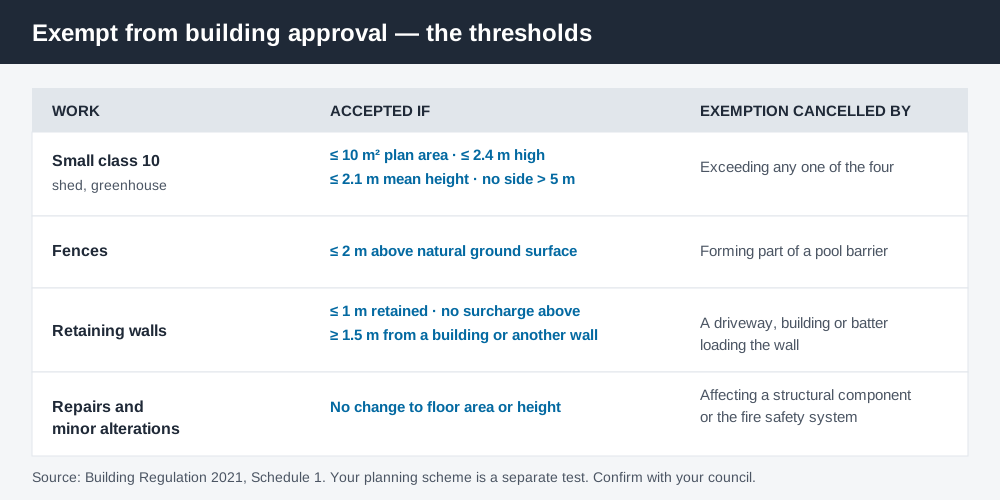
Figure 2: The numbers that decide it, and the condition that cancels each one.
The pool exception, which has no exceptions
Swimming pool barriers are carved out of the ordinary fence and retaining wall rules deliberately. A fence or wall that forms part of a regulated pool barrier must comply with the pool safety provisions of the Building Act 1975 and the barrier standard in the Queensland Development Code, regardless of its height and regardless of any other exemption you might otherwise rely on.
That includes a retaining wall you were planning to use as one side of the enclosure, and a boundary fence you intended to double up as pool fencing. Treat both as pool barrier work and have a pool safety inspector or certifier confirm compliance.
Where the planning scheme takes it back
Everything above is the building side. The planning side is decided by your council's planning scheme, and it is not uniform across Queensland. Schemes follow the Queensland Planning Provisions structure, so the documents are recognisable from council to council, but each council layers its own zone codes, local plans, overlays and thresholds on top. Never carry an answer from one scheme to another.
Three things commonly turn an otherwise exempt structure into assessable development. Setbacks and site cover in the zone code can catch a shed that met every building limit. Overlays — heritage, character, flood hazard, bushfire hazard, biodiversity, coastal hazard — sit over the top of the zone and impose their own assessment tables. Use, rather than structure, is the third: putting a bed in the shed is a material change of use, no matter how small the shed is.
Where two parts of the scheme give different answers, the higher category prevails. The mechanics of that ranking are set out in accepted vs code vs impact assessable in QLD, which is worth reading before you assume an exemption holds.
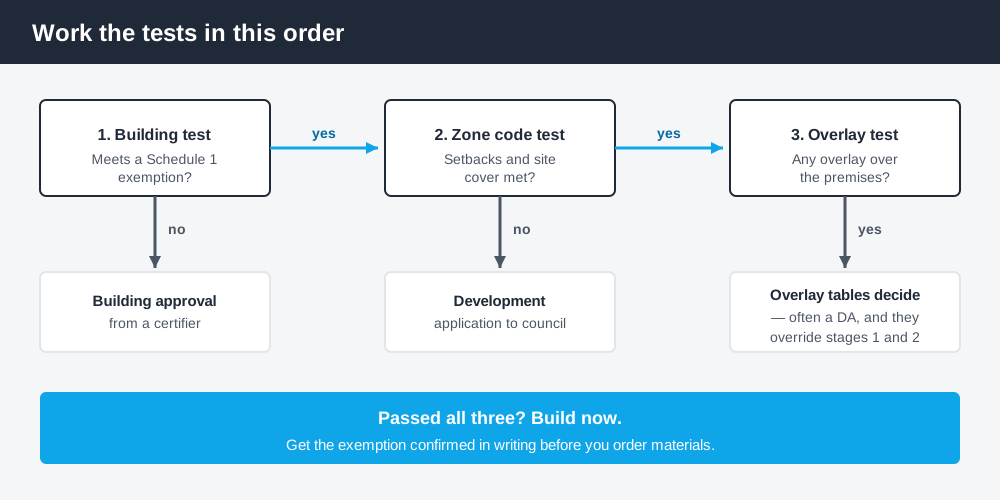
Figure 3: Work the tests in this order. Overlays are checked last and can overturn everything before them.
How to check your own block
Start with the mapping rather than the measuring tape. Queensland Globe gives you lot and plan details plus a wide range of state layers. Your council's planning scheme maps give the zone, any precinct or local plan, and the overlays affecting the premises. Your council's development.i or equivalent enquiry portal shows what has been applied for and decided nearby, which is a useful reality check on what your council actually treats as exempt.
Queensland Government's guidance on when building approval is not needed is a reliable plain-English starting point on the building side. For anything borderline, ring a private building certifier before you order materials — that call is free and a demolition order is not.
If you'd rather read your zone, your overlays and what they mean for a specific structure in one document than work through a scheme yourself, an instantDA planning report does that for your address for $169, against the $800–$1,500 a town planner typically charges for a preliminary opinion. You can start a report in a few minutes.
If you have already built something and are now reading this with a sinking feeling, building without council approval in QLD explains what happens next and what your options are. Either way, get any exemption you rely on confirmed in writing by your council or your certifier before you build. A verbal "you'll be right" is worth nothing when a complaint arrives.
Frequently asked questions
What size shed can I build without council approval in QLD?
Do I need approval for a fence in Queensland?
Does a retaining wall need approval in QLD?
Can my council still stop me even if the work is exempt from building approval?
Do I need approval to renovate inside my house in Queensland?
Where do I check the overlays on my property?
Ready to generate your report?
Skip the writing. Get a council-ready planning report in 5 minutes.
Get your report