Key takeaways
- ✓Council approval means a development approval under the Planning Act 2016. Building approval is a separate system under the Building Act 1975.
- ✓Development is prohibited, assessable or accepted. Only assessable development needs a development application.
- ✓Assessable development is either code assessable, judged only against the benchmarks, or impact assessable, which is publicly notified.
- ✓Four things set your category: what you are doing, the zone, any overlay, and the scale of the proposal.
- ✓Schemes are not uniform across Queensland, so an answer from one council does not carry to another.
Do You Need Council Approval in QLD? The Complete Guide
You'll usually hear this called a development application, or DA — that's the formal name for council approval under the Planning Act 2016. Whether you need one is not a question about the size of your project. It is a question about what the law calls the category of your development on your particular piece of land, and the answer can differ between two houses on the same street.
Get a council-ready planning report in 5 minutes — no planner, no waiting.
Get your report →The short answer
Council approval means a development approval under the Planning Act 2016. You need one only if your proposal is assessable development. Accepted development needs none. Your category depends on the use, the zone, any overlay and the scale, and is found in your council's tables of assessment.
Two systems people mix up constantly
Before anything else: Queensland has two separate approval regimes, run under different Acts, decided by different people, testing different things.
Development approval is the Planning Act 2016 one. It is about land use, siting, density, character and the constraints mapped over your block. Your council is normally the assessment manager. This is what people mean by "council approval".
Building approval is the Building Act 1975 one. It is about structural adequacy, fire safety, health and amenity. A private building certifier usually gives it, and you can engage one directly.
Neither substitutes for the other. A pergola can be exempt from building approval and still need a DA because a heritage overlay covers your street. A shed can be accepted development under the scheme and still need a certifier because it is 30 m². If this distinction is new to you, building approval vs development approval in QLD walks through it properly, because getting it wrong is the most common and most expensive mistake in Queensland residential work.
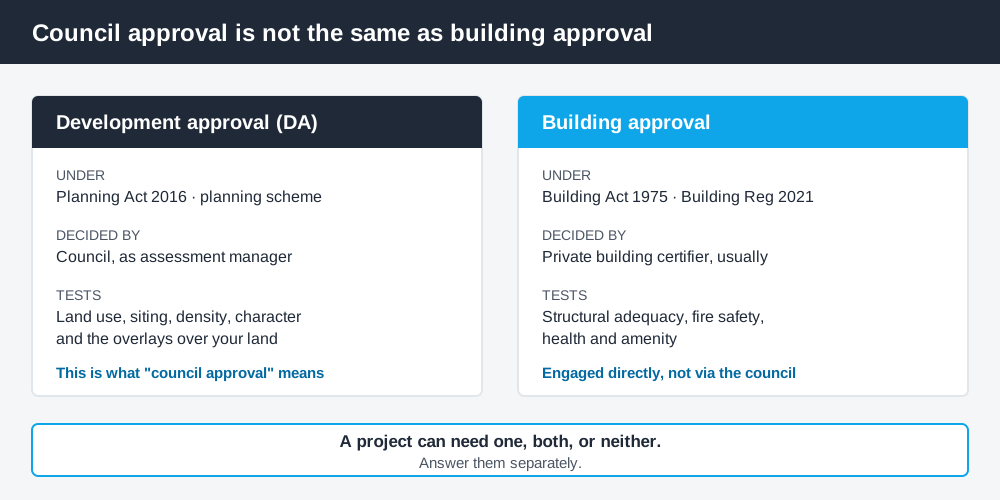
Figure 1: Different Acts, different decision-makers, different questions.
The three categories of development
Spend 5 minutes, not 3 weeks
instantDA generates a council-ready planning report for Queensland development applications. No town planner. No waiting.
Get your report →The Planning Act 2016 puts every proposal into one of three boxes.
Prohibited development cannot be applied for at all. There is no DA you could lodge and no approval available.
Assessable development requires a development approval before you can lawfully carry it out. This is the box that means "yes, you need council approval".
Accepted development requires no development approval. It comes in two flavours, and the difference matters. Plain accepted development is exactly what it sounds like — build, no application, no assessment. Accepted development subject to requirements also needs no DA, but only while you comply with stated requirements, usually a code in the scheme. You self-assess. Nobody checks at the front end. If you were wrong about compliance, the work was never accepted development, and you have unlawful development on your land.
Categories are not set by the Act itself but by a categorising instrument — the Planning Regulation 2017, or a local instrument such as your council's planning scheme, a temporary local planning instrument, or a variation approval. Those same instruments set the assessment benchmarks your proposal is measured against.
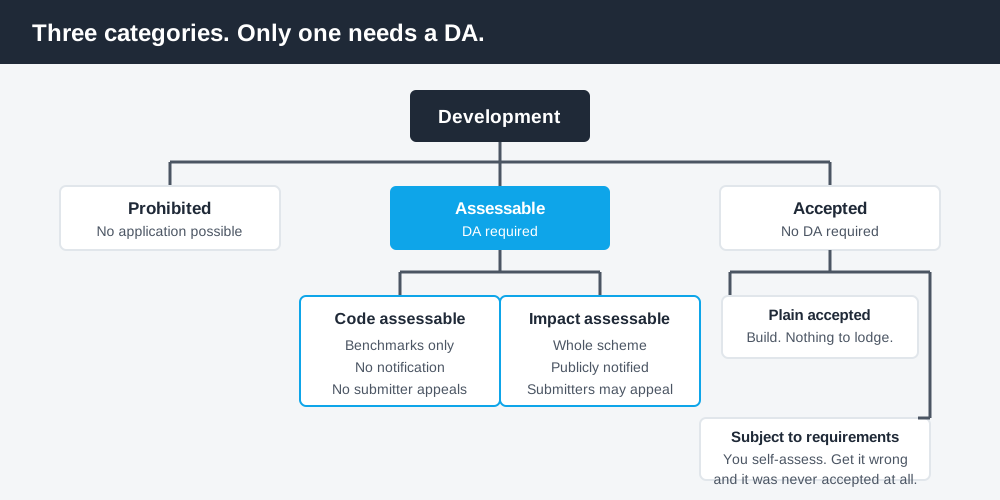
Figure 2: Only the assessable branch requires a development application.
If it is assessable: code or impact
Assessable development splits again, and this determines how hard the approval will be.
Code assessment is carried out only against the assessment benchmarks in the categorising instrument, plus anything prescribed by regulation. That word "only" does the work. Where the proposal complies with all relevant benchmarks, the assessment manager must approve it. There is no public notification and no submitter appeal rights. Your job is narrow and technical: demonstrate compliance benchmark by benchmark.
Impact assessment is carried out against the benchmarks and having regard to any other relevant matter — the whole planning scheme to the extent it is relevant, planning need, amenity, and public submissions. It must be publicly notified. Anyone may make a properly made submission, and a submitter can appeal the decision to the Planning and Environment Court.
The gap between those two is the single biggest driver of cost and timeframe in a Queensland DA. Accepted vs code vs impact assessable in QLD sets out the mechanics of working out which one you are in.
What actually triggers a DA
Four questions decide it, and you need all four answered together.
What are you doing? Building work, operational works, reconfiguring a lot, or a material change of use. A material change of use is the one people miss — putting a bed in a shed, running a business from home, or renting out a room can be a change of use even when nothing is built.
Where is it? The zone and any precinct or local plan. The same dual occupancy can be code assessable in one zone and impact assessable one street away.
What is mapped over it? Overlays — heritage, character, flood hazard, bushfire hazard, biodiversity, coastal hazard, acid sulfate soils. Overlays sit above the zone and have their own assessment tables that can lift your category.
How big is it? Scale thresholds inside the codes: height, site cover, setbacks, gross floor area, number of dwellings.
- ✓Identify the type of development
- ✓Find the zone and precinct
- ✓Find every overlay on the premises
- ✓Check the Planning Regulation 2017
- ✓Read the zone table of assessment
- ✓Apply the overlay tables last
Where different parts of the scheme give different answers, the higher category prevails. Accepted subject to requirements beats plain accepted, code assessment beats both, and impact assessment beats everything.
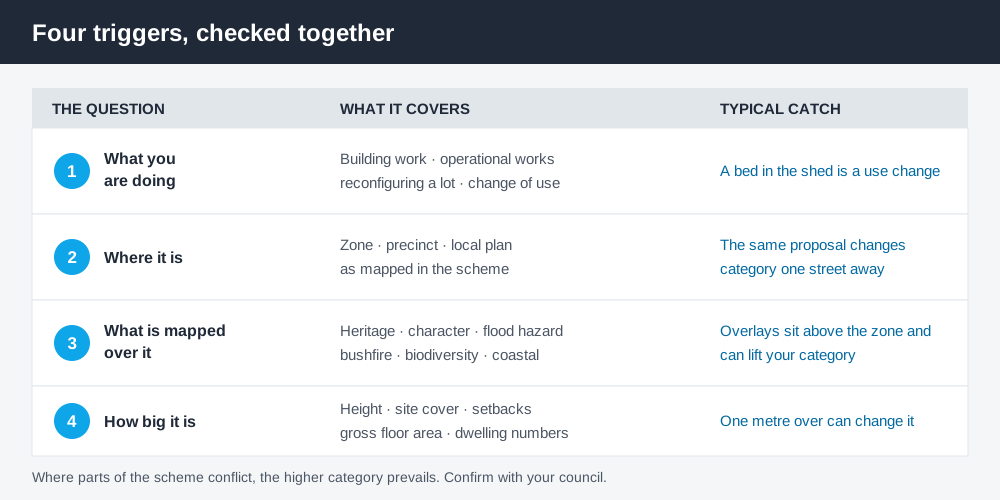
Figure 3: All four are checked together, not in isolation.
Queensland schemes are not uniform
Queensland planning schemes follow the Queensland Planning Provisions structure, so the documents are recognisable from council to council — you will find zone codes, overlay codes, development codes and tables of assessment in each. But each council layers its own codes, overlays and thresholds on top. They are not standardised the way some other states' controls are.
The practical consequence: never carry an answer from one council's scheme to another, never rely on what a mate in a different LGA was told, and be careful with generic advice from national builders' websites. Check your own scheme, for your own address.
How to find your answer
Start with the mapping. Your council's planning scheme maps give the zone, precinct and overlays. Queensland Globe gives lot and plan details and a wide range of state layers. Your council's development.i or equivalent portal shows what has been applied for and decided nearby, which is a good sanity check on how your council actually treats your kind of proposal.
The state's guidance on local planning schemes explains how the documents fit together. If your project is small and clearly exempt, what you can build without council approval in QLD lists the common thresholds.
If you'd rather read your zone, your overlays and your likely category of assessment in one document than work through a scheme yourself, an instantDA planning report does that for your address for $169, against the $800–$1,500 a town planner typically charges for a preliminary opinion. You can start a report in a few minutes.
Whatever you conclude, confirm it with your council before you commit money. A category is not a matter of opinion, and a written confirmation costs nothing compared with unwinding unlawful development later.
Frequently asked questions
Do I need council approval to renovate in Queensland?
What is the difference between council approval and building approval in QLD?
What is accepted development in Queensland?
How do I find out if my project needs a DA?
Does a change of use need council approval in QLD?
How long does public notification take?
Ready to generate your report?
Skip the writing. Get a council-ready planning report in 5 minutes.
Get your report