Key takeaways
- ✓A fence no higher than 2m above natural ground surface, and not a pool barrier, is accepted development under the Building Regulation 2021.
- ✓The 2m is measured from natural ground surface, so a fence on top of a retaining wall can exceed it even when the fence panel itself is short.
- ✓Your planning scheme can still control fence height and materials on a road frontage, in a character or heritage overlay, and near a driveway.
- ✓Dividing fence cost-sharing is neighbour law under a separate Act, not a council approval question.
- ✓Pool barriers are a different regime again and are never covered by the ordinary fence exemption.
Do You Need Council Approval for a Fence in QLD?
You'll usually hear this called a development application, or DA — that's the formal name for council approval under the Planning Act 2016. For an ordinary domestic fence, a DA almost never comes into it. But "no DA" is not the same as "no rules", and fences attract more overlapping rules than almost any other small job on a suburban block.
Get a council-ready planning report in 5 minutes — no planner, no waiting.
Get your report →The short answer
Usually no. Under the Building Regulation 2021, a fence no higher than 2m above natural ground surface is accepted development and needs no building approval, unless it is a pool barrier. Your planning scheme can still control height and materials on a road frontage, and dividing fence cost-sharing is separate neighbour law.
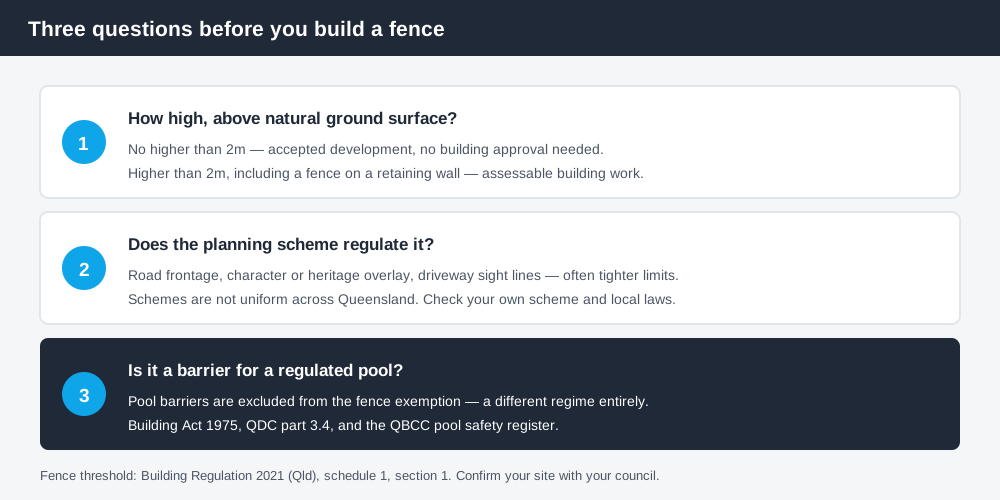
Figure 1: Three questions decide whether a fence is caught.
What the building rules actually say about fence height
Schedule 1, section 1 of the Building Regulation 2021 lists "work for particular fences, barriers and gates" as accepted development. The wording is unusually plain. Building work for a fence is accepted development if the fence is no higher than 2m above the fence's natural ground surface, and is not for a regulated pool.
Two words do most of the work. The first is natural — the height is measured from the ground as it was, not from a mound, a garden bed or a wall you built last month. The second is regulated pool, which carves pool barriers out of the exemption completely.
Note the term. Accepted development means the work is lawful without a building approval, provided it stays inside the stated limits. It is not the same as accepted development subject to requirements, where you must comply with identified benchmarks even though no application is made. Exceed 2m and the exemption stops applying: the work becomes assessable building work, and a private building certifier, not a council planner, is who you talk to first.
Can the planning scheme still regulate my fence?
Spend 5 minutes, not 3 weeks
instantDA generates a council-ready planning report for Queensland development applications. No town planner. No waiting.
Get your report →Yes, and this is where most people are caught out. Building approval and development approval are separate systems, so clearing the 2m building threshold says nothing about whether your planning scheme regulates the fence.
Queensland's planning schemes follow the Queensland Planning Provisions structure, but every council layers its own codes and overlays on top, so they are not uniform. Fence provisions commonly turn up in a dwelling house code, a residential design code, or a streetscape or character provision.
- ✓A solid fence on a road frontage, where schemes often cap front fences well below 2m or require them to be partly transparent
- ✓A character or heritage overlay, where fence materials, style and height are controlled to protect the streetscape
- ✓A fence near a driveway or corner, where sight lines for vehicles and pedestrians must be preserved
- ✓Acoustic or screen fencing required as a condition of an earlier approval
Front fences are the most common surprise. A rear boundary fence at 1.8m might be unremarkable while the same fence across the front of the same lot breaches a scheme provision, because the scheme is protecting the street, not your privacy. If your lot sits in a character residential area, character overlay rules in QLD explain why those provisions bite harder on anything visible from the road.
Local laws are a third layer again. Some councils regulate barbed wire, electric fencing or dangerous-dog enclosures by local law rather than through the scheme.
How is a fence on a retaining wall measured?
This is the trap the legislation quietly sets. Because the fence exemption is measured from natural ground surface, a fence built on top of a retaining wall is measured from the original ground, not from the top of the wall. A 900mm retaining wall with a 1.8m fence on top is a 2.7m structure above natural ground — well past the exemption, even though the fence panel is a perfectly ordinary height.
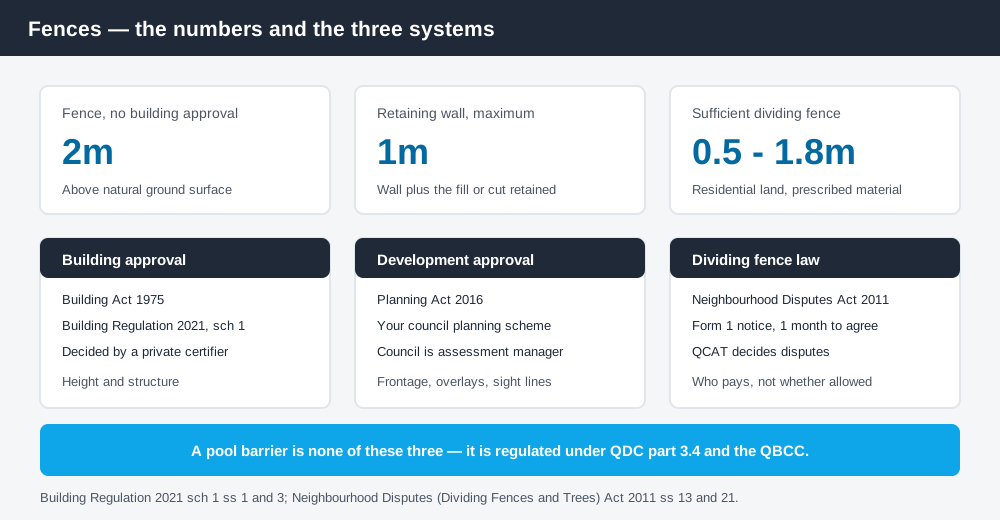
Figure 2: The numbers that govern fences, retaining walls and dividing fences in Queensland.
The wall has its own separate test. Schedule 1, section 3 treats building work for a retaining wall as accepted development only where there is no surcharge loading over the wall's zone of influence, the total height of the wall and the fill or cut it retains is no more than 1m, and the wall is no closer than 1.5m to a building or another retaining wall. A wall-and-fence combination can therefore fail two exemptions at once. If you are building both, read council approval for a retaining wall in QLD before you set out levels.
Who pays for a dividing fence in Queensland?
This is the biggest source of confusion on the whole topic, so it is worth being blunt: cost-sharing for a dividing fence has nothing to do with council approval. It is neighbour law, dealt with under the Neighbourhood Disputes (Dividing Fences and Trees) Act 2011, and council has no role in it.
Under that Act, a dividing fence between two parcels of residential land is a sufficient dividing fence if it is between 0.5m and 1.8m high and consists substantially of prescribed material — timber, chain wire, metal panels, bricks, rendered cement, concrete blocks, a hedge, or other material fences are ordinarily built from. Adjoining owners are each liable to contribute equally to fencing work for a sufficient dividing fence. If you want better than sufficient — taller, or a more expensive material — you pay the difference.
To require a contribution, you serve a Notice to Contribute for Fencing Work in the approved form, commonly called the Form 1. It must describe the work and its estimated cost and include at least one written quotation. If you have not agreed within one month of giving the notice, either owner may apply to the Queensland Civil and Administrative Tribunal within two months. The Queensland Government's guidance on disputes about fences, trees and buildings sets out the process. If a neighbour's structure rather than the fence is the problem, complaining to council about a neighbour's building work covers that different path.
Pool fences are a different regime again
A fence that forms part of a barrier for a regulated pool is expressly excluded from the ordinary fence exemption. Pool barriers are regulated under the Building Act 1975 and the pool safety standard in Queensland Development Code part 3.4, with compliance administered through the QBCC pool safety register and pool safety inspectors.
The practical consequence matters: a compliant boundary fence does not by itself satisfy a pool barrier. Barrier rules deal with gaps, non-climbable zones, gate self-closing and self-latching, and climbable objects nearby — none of which an ordinary dividing fence is designed to address. See council approval for a pool in QLD for how the pool and its barrier are approved together.
What to do next
Measure from natural ground surface, not from the top of a wall or a garden bed. If you are under 2m and it is not a pool barrier, the building side is almost certainly clear. Then check your scheme for front-fence, character and sight-line provisions, and treat the cost conversation with your neighbour as an entirely separate exercise.
If you'd rather see your zone, your overlays and your likely category of assessment in one document than work through a planning scheme yourself, an instantDA planning report does that for your address for $169 — against the $800–$1,500 a town planner typically charges for a preliminary opinion. You can start a report in a few minutes.
Where a figure or a scheme provision is unclear for your address, confirm with your council or a private building certifier before you dig the first post hole.
Frequently asked questions
Do I need council approval for a fence in QLD?
How high can a fence be in Queensland without approval?
Do I need approval for a front fence in QLD?
Who pays for a dividing fence in Queensland?
What is a Form 1 notice to contribute?
Does my boundary fence count as a pool fence?
Ready to generate your report?
Skip the writing. Get a council-ready planning report in 5 minutes.
Get your report