Key takeaways
- ✓No Queensland law requires a town planner. An owner can lodge their own development application.
- ✓The right test is the category of assessment, not the size or cost of the project.
- ✓If the work is accepted development, a planner has nothing to do — you need a certifier at most.
- ✓Impact assessable, non-complying and contested proposals are where a planner genuinely earns their fee.
- ✓Answer the free questions first. They frequently show that no application is required at all.
Do You Actually Need a Town Planner in QLD?
The honest answer is: sometimes, and less often than people assume.
Nothing in Queensland law requires you to use a town planner. A development application may be made by the owner of the land, or by another person with the owner's written consent, and there is no requirement that the applicant hold a planning qualification. So the question is not permission. It is value.
Get a council-ready planning report in 5 minutes — no planner, no waiting.
Get your report →The short answer
No. Queensland law does not require a town planner, and an owner may lodge their own development application. Whether you need one depends on the category of assessment and how contested the proposal is likely to be — not on the size or cost of the project.
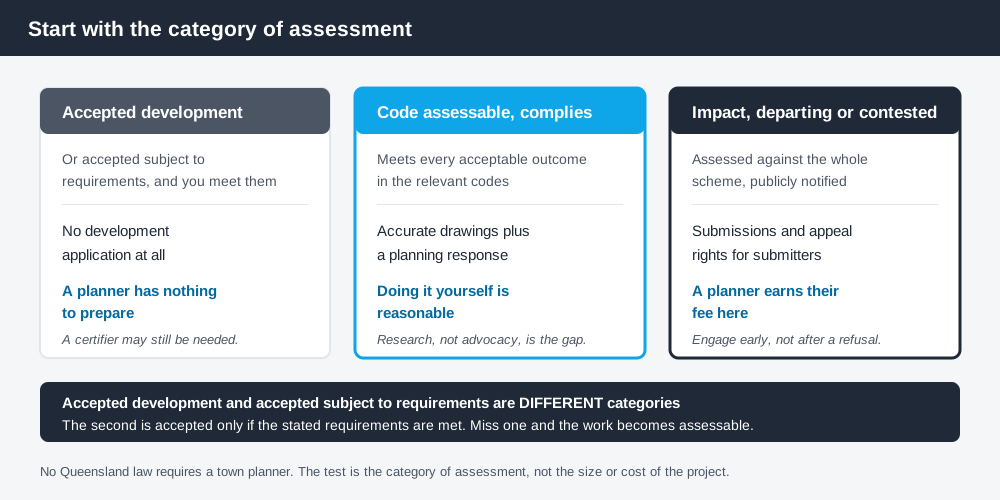
Figure 1: The test that actually decides it.
Start with the category of assessment
Everything turns on this, and most people skip it.
Queensland planning schemes sort development into categories. Where your proposal lands determines the process, the timeframe, the risk and — directly — whether professional help is worth buying.
- ✓Accepted development — no development application at all
- ✓Accepted subject to requirements — no application, provided stated requirements are met
- ✓Code assessable — assessed against nominated codes, no public notification
- ✓Impact assessable — assessed against the whole planning scheme, publicly notified, submissions and appeal rights
Note the second one carefully: "accepted development" and "accepted subject to requirements" are different things. The second means your work is only accepted if it meets stated requirements; miss one and you are into assessable development. Accepted versus assessable development in QLD sets out how the categories work and how an overlay can move you up a level.
Where a planner has nothing to do
Spend 5 minutes, not 3 weeks
instantDA generates a council-ready planning report for Queensland development applications. No town planner. No waiting.
Get your report →If your work is accepted development, there is no development application, so there is nothing for a planner to prepare. You may still need building approval from a private building certifier, but that is a different profession and a different Act.
A large share of residential projects sit here.
- ✓A shed within the exemption thresholds
- ✓A low, freestanding, unroofed deck
- ✓An internal renovation that does not touch structure, floor area or fire safety
- ✓A carport or garage meeting the siting provisions
- ✓A dwelling that complies with everything the zone requires
Paying for planning advice to be told any of these is fine is not good value. Establish the category first.
The six situations where a planner earns their fee
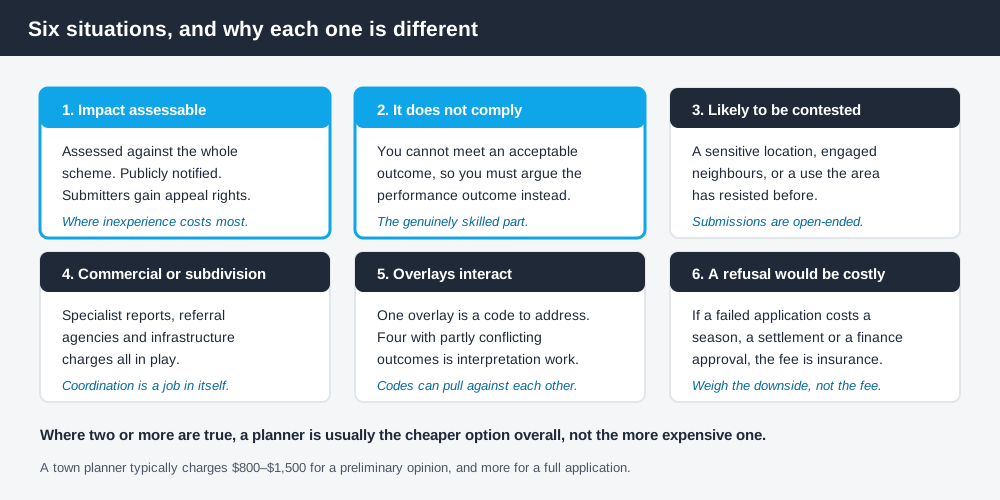
Figure 2: Six situations, and why each one is different.
One — the application is impact assessable. Assessment against the whole planning scheme, public notification, submissions from anyone, and appeal rights for submitters. That is a materially different exercise from a code assessable application, and it is where inexperience costs the most.
Two — the proposal does not comply. Where you cannot meet an acceptable outcome, you need a performance-based argument against the performance outcome. That is the skilled part of planning work, and it is not something a template supplies.
Three — submissions or an appeal are likely. A sensitive location, engaged neighbours, or a use the area has resisted before.
Four — the project is commercial, multi-unit or a subdivision. These bring specialist reports, referral agencies and infrastructure charges, and coordinating them is a job in itself.
Five — several overlays interact. One overlay is a code to address. Four with partly conflicting outcomes is a genuine interpretation problem.
Six — a refusal would be expensive. If a failed application costs you a season, a settlement or a finance approval, the planner's fee is cheap insurance.
Where two or more of those are true, a planner is usually the cheaper option overall — the cost of a refusal or a lost year exceeds the fee comfortably. A town planner typically charges $800–$1,500 for a preliminary opinion, and more for a full application.
The middle ground
Between "nothing to do" and "clearly needed" sits a large territory: code assessable applications that comply.
Here you have real choices. The council needs accurate drawings and a response explaining how the proposal meets the relevant codes. A building designer produces the first. The second is writing work against a document, and plenty of owners do it competently.
- ✓Are the codes that apply clearly identified?
- ✓Does the proposal meet every acceptable outcome, or does it depart from any?
- ✓Is the drawing set accurate and complete?
- ✓Are you confident responding to an information request?
If the answer to the first three is yes and the fourth is "probably", doing it yourself is reasonable. If you are unsure which codes apply, that is a research problem rather than an advocacy problem — and research is the cheaper thing to buy. Alternatives to hiring a town planner in QLD sets out the options.
Answer the free questions first
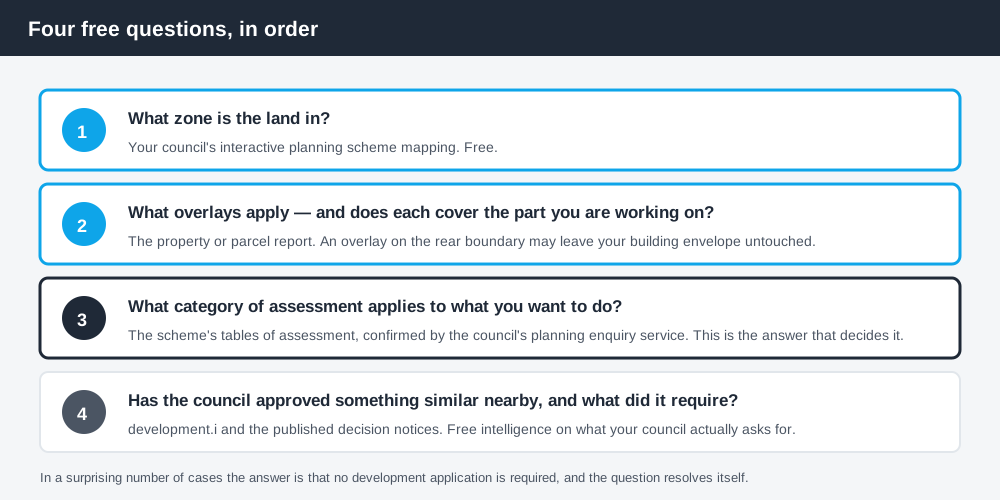
Figure 3: Four free questions, in order.
Before you spend anything, use your council's tools.
- ✓What zone is the land in?
- ✓What overlays apply, and does each cover the part of the lot you are working on?
- ✓What category of assessment applies to what you want to do?
- ✓Has the council approved something similar nearby, and what did it require?
Interactive scheme mapping, a property or parcel report, development.i and the council's planning enquiry service will answer all four at no cost. In a surprising number of cases the answer is that no development application is required, and the question resolves itself.
Queensland's planning schemes follow the Queensland Planning Provisions structure, but each council layers its own codes, overlays, definitions and tables of assessment on top. They are not uniform. That is exactly why council-specific experience matters when you do engage someone — and why advice written for another council is not a safe substitute for your own scheme.
One caution about credentials
"Town planner" is not a protected or registered title in Queensland. There is no statutory register, and professional membership of the Planning Institute of Australia is voluntary accreditation rather than a licence.
So if you decide you need one, ask about qualifications and — more usefully — how many applications of your type they have taken through your specific council. Ask for the reference number of a recent comparable approval; development application records are public, so you can verify it yourself.
What to do next
Establish your category of assessment. That single answer resolves the question for most people, and it costs nothing.
If you'd rather see your zone, your overlays and your likely category of assessment set out in one document than work through a planning scheme yourself, an instantDA planning report does that for your address for $169 — against the $800–$1,500 a town planner typically charges for a preliminary opinion. You can start a report in a few minutes.
If the answer comes back impact assessable, or your proposal departs from the codes, engage a planner and do it early. What a town planner costs in QLD sets out the realistic range so you can tell a fair quote from a thin one.
Then confirm the position with your council in writing before committing to either path.
Frequently asked questions
Do I need a town planner in Queensland?
When is a town planner worth hiring?
When do I definitely not need one?
What is the difference between accepted development and accepted subject to requirements?
How do I find out my category of assessment?
Is "town planner" a registered title in Queensland?
Ready to generate your report?
Skip the writing. Get a council-ready planning report in 5 minutes.
Get your report