Key takeaways
- ✓Liquor licences are granted by the Office of Liquor and Gaming Regulation under the Liquor Act 1992. Councils do not issue them.
- ✓Councils commonly provide written advice confirming the proposed alcohol use complies with the planning scheme, which forms part of the licence application.
- ✓The planning question comes first: get the licence sorted for a use the scheme doesn't permit and you have nothing.
- ✓Trading hours can be constrained twice — by a planning condition and by a licence condition.
- ✓Footpath and outdoor licensed areas usually need a separate council permit as well.
Liquor Licences and Council Approval in QLD
You'll usually hear this called a development application, or DA — that's the formal name for council approval under the Planning Act 2016. Serving alcohol in Queensland involves two entirely separate approval systems, run by two different bodies, asking two different questions — and one of them will not act until the other has been consulted.
Operators consistently get this backwards, treating the liquor licence as the main event and the council as an afterthought. It's the other way around.
Get a council-ready planning report in 5 minutes — no planner, no waiting.
Get your report →The short answer
Liquor licences are granted by the Office of Liquor and Gaming Regulation under the Liquor Act 1992. Councils do not issue them. But councils commonly provide written advice confirming the proposed alcohol use complies with the planning scheme, and that advice forms part of the licence application.
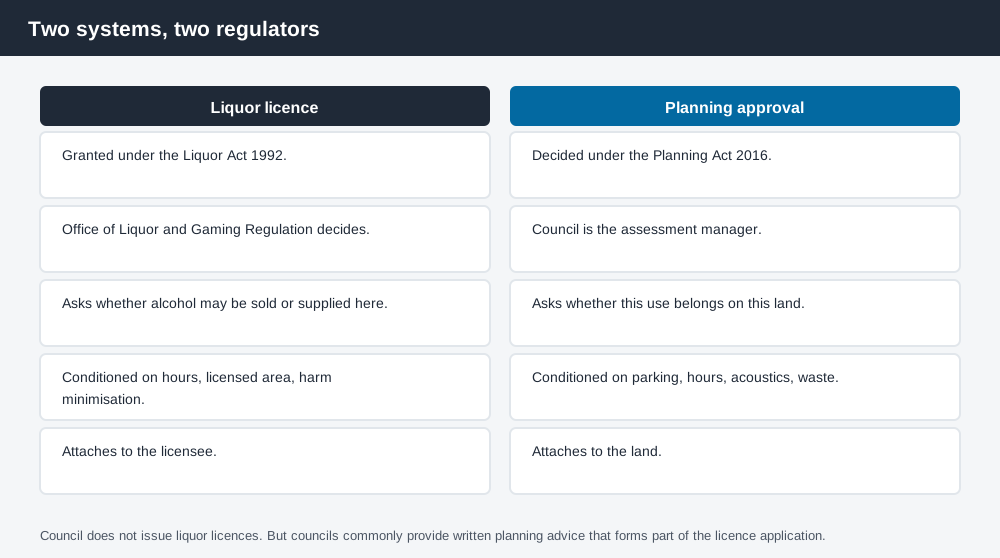
Figure 1: Two regulators, two questions, one dependency between them.
Who decides what
The Office of Liquor and Gaming Regulation administers liquor licensing under the Liquor Act 1992, across a range of licence types — commercial hotel, commercial other for restaurants and cafes, club, producer/wholesaler, artisan producer, and various restricted and temporary licences for events. It decides whether alcohol may be sold or supplied at the premises and on what terms.
Council decides whether the use belongs on the land, under the Planning Act 2016, assessed against the planning scheme's benchmarks.
The link between them is documentary. Brisbane City Council, for example, sets out that applicants must obtain written advice from council confirming the proposed alcohol use complies with the planning scheme, and that this advice forms part of the material lodged with the regulator. Other councils operate similarly. In effect, the regulator wants to know the planning position is sound before it grants a licence.
The order that works
Spend 5 minutes, not 3 weeks
instantDA generates a council-ready planning report for Queensland development applications. No town planner. No waiting.
Get your report →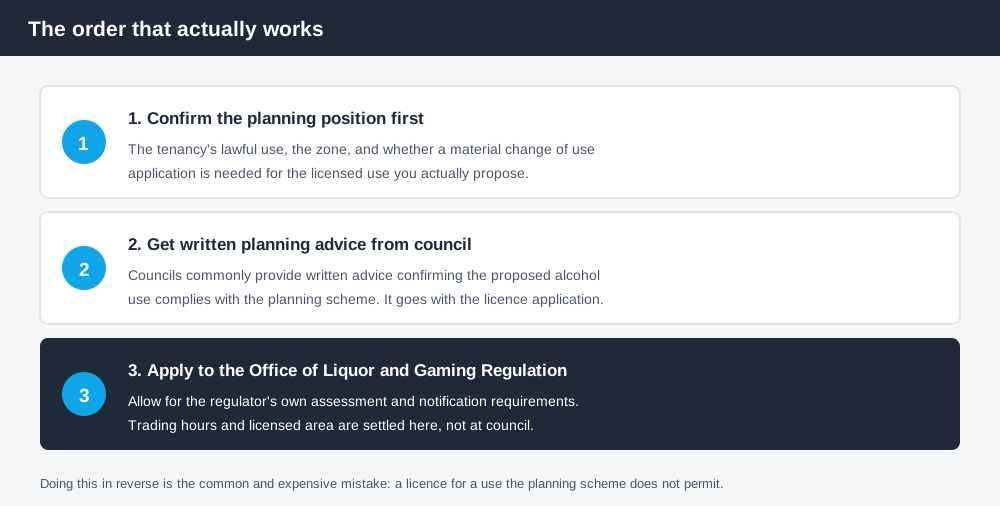
Figure 2: The dependency runs one way. Plan for it.
- ✓Confirm the tenancy's lawful use with council in writing
- ✓Work out whether the licensed use is a material change of use
- ✓Lodge and resolve any development application
- ✓Obtain written planning advice from council
- ✓Apply to the Office of Liquor and Gaming Regulation
- ✓Allow for the regulator's own assessment and notification
The second step is the one that catches people. A tenancy approved as a shop, or even as a food and drink outlet, may not cover the use you actually propose. A restaurant with a subsidiary liquor licence is one thing; a bar is another. If the scheme treats them as different defined uses, or if the intensity changes materially, that's a material change of use and needs approval before you start.
Queensland's planning schemes follow the Queensland Planning Provisions structure, but each council layers its own codes and overlays on top. They are not uniform — how a scheme defines and locates a bar, a hotel, a nightclub or a restaurant with a bar differs between local government areas. Our guide to changing a shop's use in QLD covers how to establish where you stand.
What council assesses about a licensed premises
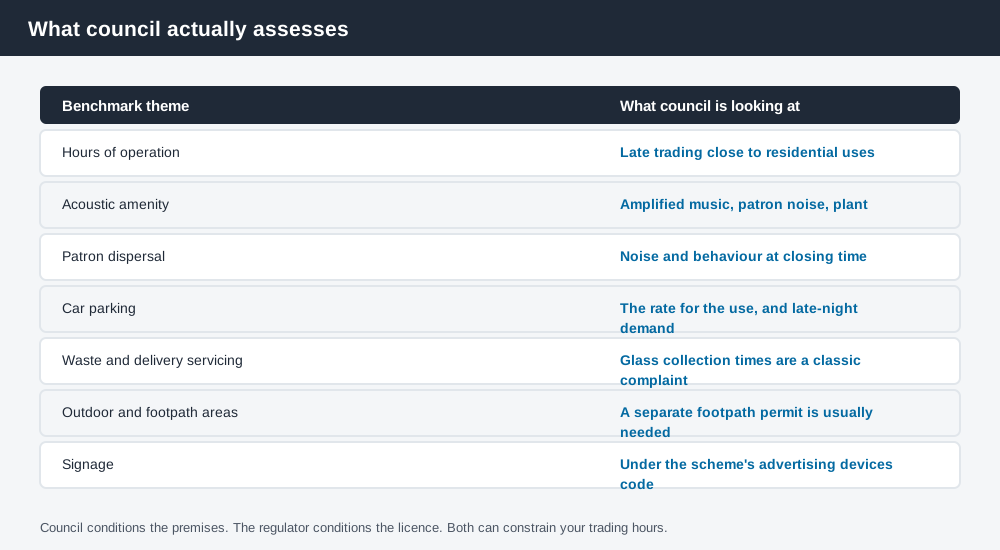
Figure 3: Council's concerns are all about what happens outside the building.
Notice what isn't on that list: responsible service of alcohol, harm minimisation, ID scanning, licence conditions and the character of the licensee. Those are the regulator's domain and council has no role in them.
What council does care about is amenity, and specifically the amenity effects of a venue that operates when neighbours are asleep. Hours of operation are assessed against proximity to residential uses. Acoustics covers amplified music and plant, but also the harder problem of patron noise, which is not attenuated by building fabric because it happens outside the building.
Patron dispersal is the one seasoned assessing officers focus on. What happens in the twenty minutes after closing — voices, car doors, engines — generates more complaints than the music ever does, and it's a design and management question as much as an acoustic one.
Waste and deliveries matters more than operators expect. Early-morning glass collection is a classic, avoidable, recurring complaint.
There is a design consequence worth acting on early. Where a venue can be laid out so that the entry, smoking area and car park face away from the most noise-sensitive boundary, most of the amenity argument disappears before it starts. Where the only practical entry faces a row of houses, no acoustic report will fully answer it, and the application will be conditioned accordingly. That decision is made when the tenancy is chosen, not when the application is written.
Two sets of hours
A licensed venue can end up with trading hours constrained twice: by a planning condition on the development approval, and by a licence condition from the regulator. They are set independently and the more restrictive one governs.
That is worth planning for rather than discovering. If the development approval conditions trading to 10pm, a midnight licence is decorative. Getting the planning hours right, with acoustic evidence behind them, is what actually determines how late you can trade.
Outdoor and footpath areas add a third layer: using the public footpath is use of council land and usually needs its own permit, separate from both the development approval and the liquor licence.
What to do next
Establish the planning position before anything else. Ask council in writing for the tenancy's lawful use and any conditions on the existing approval, and check the zone and overlays on your council's planning scheme mapping and on the Queensland Globe. The state's liquor licensing guidance sets out the licence types and process.
If you're opening a venue that serves food as well, opening a cafe or restaurant in QLD covers the full approval stack, and food business licence versus council approval in QLD explains the third approval that also comes from council under a different Act.
If you'd rather see the zone, the overlays and the likely category of assessment for a tenancy's address than work through a planning scheme yourself, an instantDA planning report does that for $169 — against the $800–$1,500 a town planner typically charges for a preliminary opinion. You can start a report in a few minutes.
Then confirm with both your council and the regulator before committing. They will each tell you what they need, and neither will tell you what the other needs.
Frequently asked questions
Does council issue liquor licences in Queensland?
Do I need council approval before applying for a liquor licence?
Is a restaurant with a liquor licence a different use from a bar?
Can council restrict my trading hours even if the regulator grants later hours?
Do I need a separate permit for outdoor drinking areas on the footpath?
What does council actually assess for a licensed premises?
Ready to generate your report?
Skip the writing. Get a council-ready planning report in 5 minutes.
Get your report