Key takeaways
- ✓Whether a cafe in an existing shop needs a new development approval depends on the tenancy's lawful use, not on the fitout.
- ✓The food business licence is issued by your local council under the Food Act 2006 — it is not a planning approval.
- ✓A licensable food business must nominate a food safety supervisor.
- ✓Footpath dining on public land needs a separate council permit even where no development approval is required.
- ✓Liquor licences come from the Office of Liquor and Gaming Regulation, not council — but the right planning approval is expected first.
Opening a Cafe or Restaurant in QLD — Council Approval
You'll usually hear this called a development application, or DA — that's the formal name for council approval under the Planning Act 2016. For a cafe, the question people ask is "do I need council approval?" and the honest answer is: probably several kinds, from more than one body, and possibly not the planning one at all.
The single most expensive mistake in Queensland hospitality is signing a lease on a tenancy whose lawful use doesn't cover what you intend to do in it.
Get a council-ready planning report in 5 minutes — no planner, no waiting.
Get your report →The short answer
A cafe needs development approval only where the tenancy's lawful use doesn't already cover a food and drink outlet at that scale. Separately, you need a food business licence from council under the Food Act 2006, building approval for the fitout, and a liquor licence from the state if you serve alcohol.
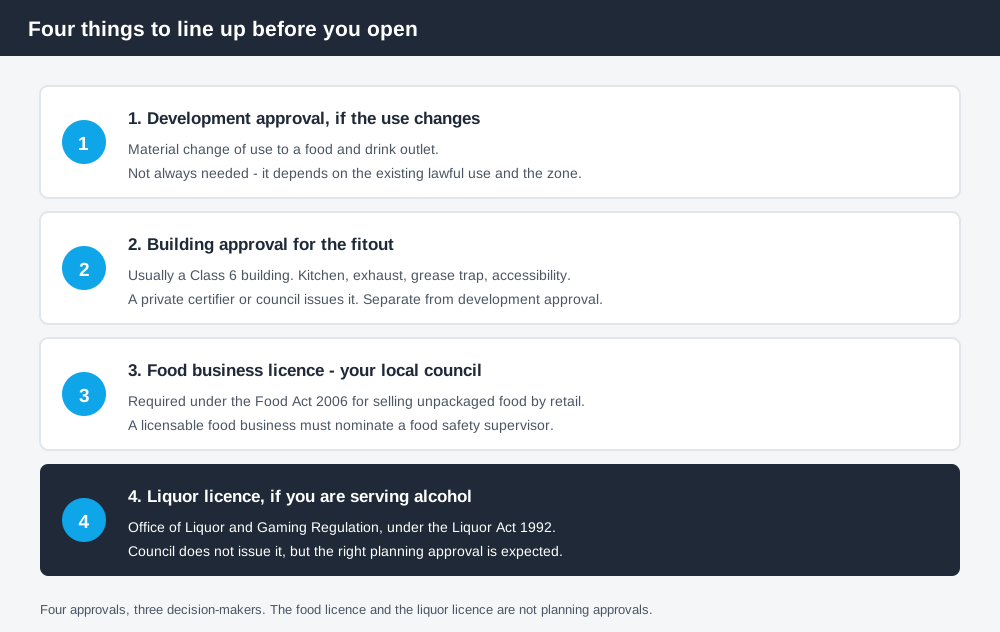
Figure 1: Four approvals, three decision-makers. Only the first is a planning approval.
When a cafe needs a new development approval
A material change of use is the start of a new use of premises, the re-establishment of a use that had been abandoned, or a material increase in the intensity or scale of a use. That definition, not the shopfitter's drawings, decides whether you need a DA.
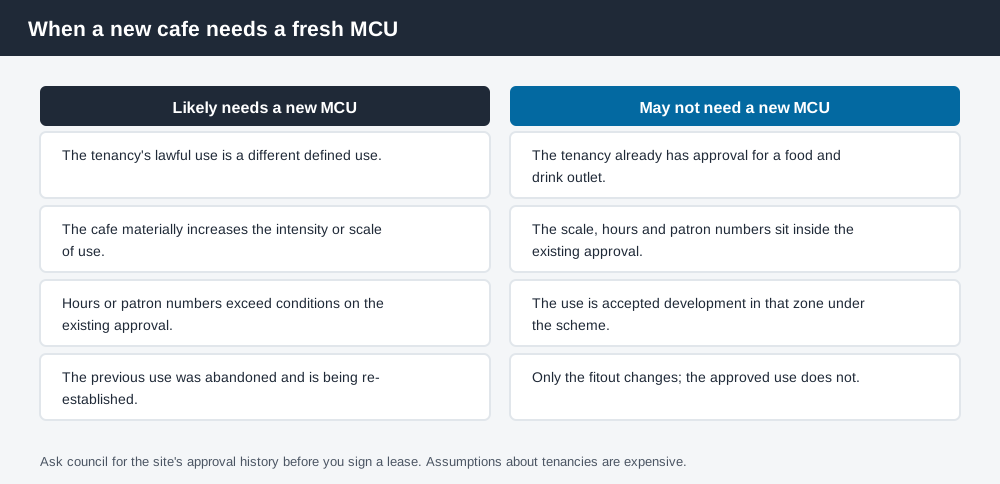
Figure 2: The lawful use of the tenancy is the whole question.
If the tenancy already has approval as a food and drink outlet and you're operating at a similar scale, you may need nothing further on the planning side. If it's approved as a shop and the scheme treats a food and drink outlet as a different defined use, you likely do. If it was a cafe five years ago but has been vacant since, re-establishing an abandoned use can itself be an MCU.
And if the scheme makes a food and drink outlet accepted development in that zone, and you comply with any stated requirements, no application is needed at all.
Queensland's planning schemes follow the Queensland Planning Provisions structure, but each council layers its own codes and overlays on top. They are not uniform — the use definitions and the tables of assessment differ between local government areas. Our guide to changing a shop's use in QLD works through the tenancy question in more detail, and material change of use in QLD covers the definition itself.
What the planning assessment looks at
Spend 5 minutes, not 3 weeks
instantDA generates a council-ready planning report for Queensland development applications. No town planner. No waiting.
Get your report →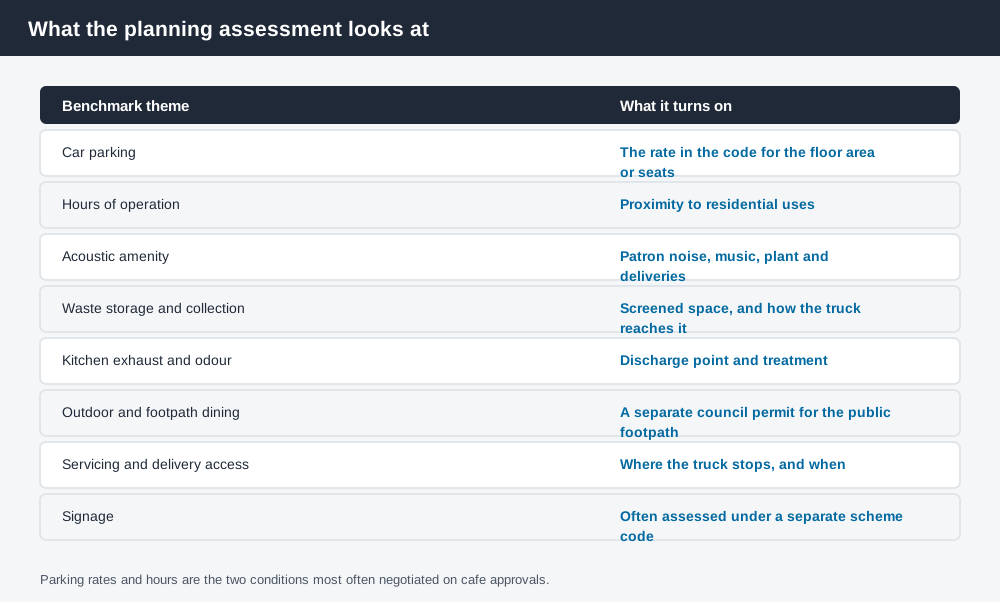
Figure 3: Parking and hours are where most cafe approvals are actually negotiated.
Two benchmarks do most of the work. Car parking is set by a rate in the applicable code, usually per unit of floor area or per seat, and a tenancy that generated little parking demand as a shop can generate a lot as a restaurant. Hours of operation get conditioned wherever residential uses are nearby, and late trading is where objections concentrate.
- ✓Car parking at the rate the code sets
- ✓Hours of operation appropriate to the neighbours
- ✓Acoustic management of patrons, music, plant and deliveries
- ✓Screened waste storage the collection truck can actually reach
- ✓Kitchen exhaust discharge and odour treatment
- ✓Delivery and servicing access
- ✓Signage, often under a separate scheme code
The food business licence — a different system entirely
Under the Food Act 2006, most food businesses in Queensland need a food business licence issued by the local council for the area where the business operates. A licensable food business broadly includes one that manufactures food, or sells unpackaged food by retail.
A cafe selling cooked meals or other unpackaged food needs one. Some narrower operations don't — for example, a business that only sells drinks, or only sells pre-packaged food prepared by a licensed food business, or only grinds coffee beans. Check your actual menu against the categories rather than assuming.
A licensable food business is required to nominate a food safety supervisor. Councils assess this as part of licensing and ongoing compliance.
Critically, the food business licence is issued under the Food Act, not the Planning Act. Holding one does not mean the use is lawful under the planning scheme, and vice versa. Food business licence versus council approval in QLD sets the two side by side.
Fitout, footpath dining and liquor
The fitout. A hospitality fitout is building work and generally needs building approval, usually as a Class 6 building. That's issued by a private certifier or council under the Building Act 1975, separately from any development approval. Kitchen construction, mechanical exhaust, grease arrestor, accessibility and fire safety all land here.
Footpath dining. Putting tables and chairs on the public footpath is use of council land, not your tenancy. It generally needs a separate council permit — a footpath dining permit or a permit for commercial activity on a council road — even where the underlying cafe use is lawful and no MCU is triggered.
Waste is the quiet one. A cafe generates far more waste than the retail use that preceded it, and schemes increasingly require a screened bin store that a collection vehicle can actually service without reversing across a footpath. In a small strip tenancy with no rear access, that requirement alone has killed otherwise viable proposals — and it is invisible on a floor plan until someone asks where the bins go.
Liquor. Liquor licences are administered by the Office of Liquor and Gaming Regulation under the Liquor Act 1992. Councils do not issue them. But the two systems are connected in practice: the premises are expected to have appropriate planning approval for the intended use, and confirmation of council approvals is normally part of a licence application. Liquor licences and council approval in QLD covers how the two interact.
The order that avoids dead rent
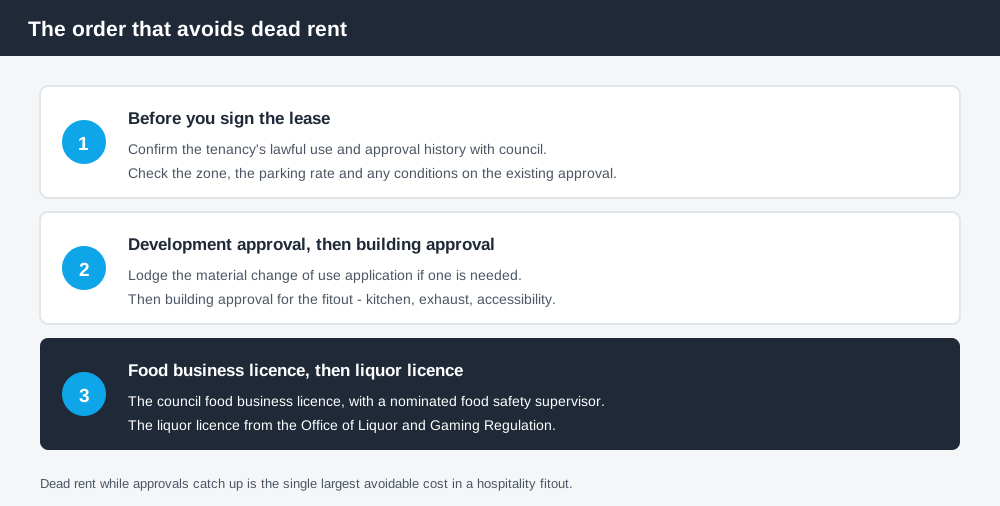
Figure 4: Every stage you run out of order gets paid for in rent.
Confirm the lawful use before the lease. Then planning, then building, then licensing. You can check the zone and overlays affecting a tenancy on your council's planning scheme mapping and on the Queensland Globe, and the state's guidance on food business licences sets out which businesses are licensable.
If you'd rather see the zone, the overlays and the likely category of assessment for a tenancy's address than work through a planning scheme yourself, an instantDA planning report does that for $169 — against the $800–$1,500 a town planner typically charges for a preliminary opinion. You can start a report in a few minutes.
Then confirm with your council before you commit. Duty planners answer the lawful-use question routinely, and it is the one question you cannot afford to guess.
Frequently asked questions
Do I need council approval to open a cafe in Queensland?
Is a food business licence the same as council planning approval?
Does a cafe need a food safety supervisor in Queensland?
Do I need a permit for footpath dining?
Who issues a liquor licence in Queensland?
How long before opening should I start on approvals?
Ready to generate your report?
Skip the writing. Get a council-ready planning report in 5 minutes.
Get your report