Key takeaways
- ✓A material change of use is the start of a new use, re-establishing an abandoned use, or a material increase in intensity or scale.
- ✓Moving between defined uses is a new use — even when nothing about the building changes.
- ✓The third limb catches tenancies that keep the same defined use but trade far harder than the approval contemplated.
- ✓Abandonment is judged on the facts: how long the use ceased, what happened in the meantime, and the condition of the premises.
- ✓Ask council for the tenancy's approval history in writing before you sign a lease. It is free and it is the whole answer.
Changing a Shop's Use in QLD — Do You Need Approval?
You'll usually hear this called a development application, or DA — that's the formal name for council approval under the Planning Act 2016. When someone takes over a shop tenancy and does something different in it, the question is whether that change is a material change of use. If it is, approval is generally needed before the new use starts. Learn more about the place of worship development application.
The test is statutory, it has three limbs, and it is not intuitive.
Get a council-ready planning report in 5 minutes — no planner, no waiting.
Get your report →The short answer
A material change of use is the start of a new use of premises, the re-establishment of a use that has been abandoned, or a material increase in the intensity or scale of the use. Moving between defined uses is a new use — even where nothing about the building changes.
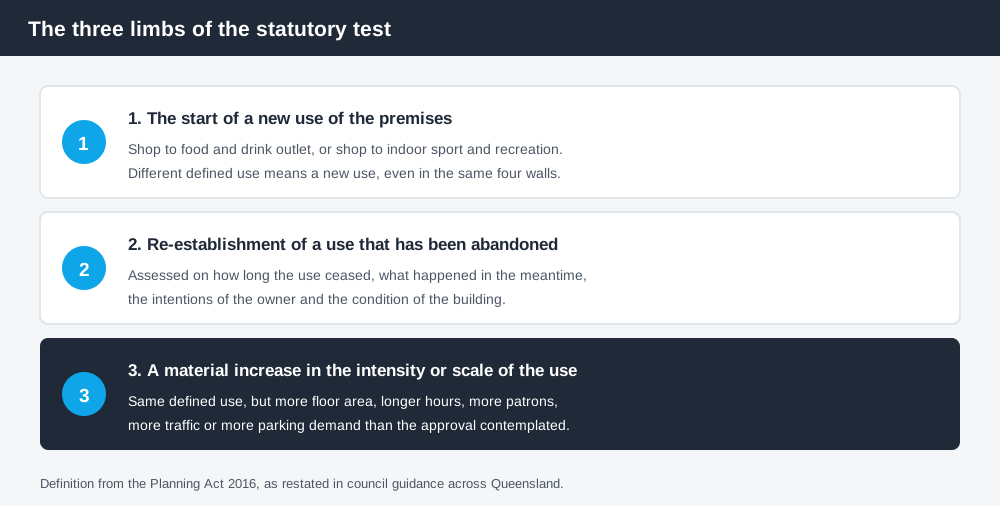
Figure 1: Three limbs. Any one of them can catch you.
Limb one: a new use
Queensland planning schemes define uses in a dictionary — typically Schedule 1 — and a tenancy is lawfully approved for one of them. Change from one defined use to another and you have started a new use, whatever the building looks like from the street.
This is why the fitout is a red herring. A shop that becomes a cafe hasn't changed physically in any way the scheme cares about, but it has moved from "shop" to "food and drink outlet", and those are different uses with different parking rates, different hours expectations and often different zone positions.
Limb two: re-establishing an abandoned use
Spend 5 minutes, not 3 weeks
instantDA generates a council-ready planning report for Queensland development applications. No town planner. No waiting.
Get your report →If a use ceased and was abandoned, starting it up again can itself be a material change of use — even though the same activity was lawfully carried on there before.
Abandonment is a question of fact, not a fixed period. Council guidance across Queensland describes it as a reasonable-person assessment considering how long the use ceased, whether another use has operated in the meantime, the intentions of the owner or occupier, and the condition of the building.
This one bites hardest on long-vacant tenancies in older strips. A shopfront that traded as a takeaway until 2019 and has been empty since is not a safe assumption. Ask council.
Limb three: intensification
The subtlest limb. The defined use stays the same, but the way it's carried on changes materially — more gross floor area, longer trading hours, more staff, more patrons, more traffic or more parking demand than the approval contemplated.
- ✓Has the gross floor area increased?
- ✓Have trading hours extended materially?
- ✓Are patron or staff numbers substantially higher?
- ✓Has parking demand or traffic generation increased?
- ✓Would any condition on the existing approval now be breached?
That last one is important and often overlooked. An existing development approval may carry conditions on hours, patron numbers, delivery times or car parking. Breaching a condition is a separate problem from needing a new approval, and it is enforceable in its own right.
Which tenancy swaps usually trigger an application
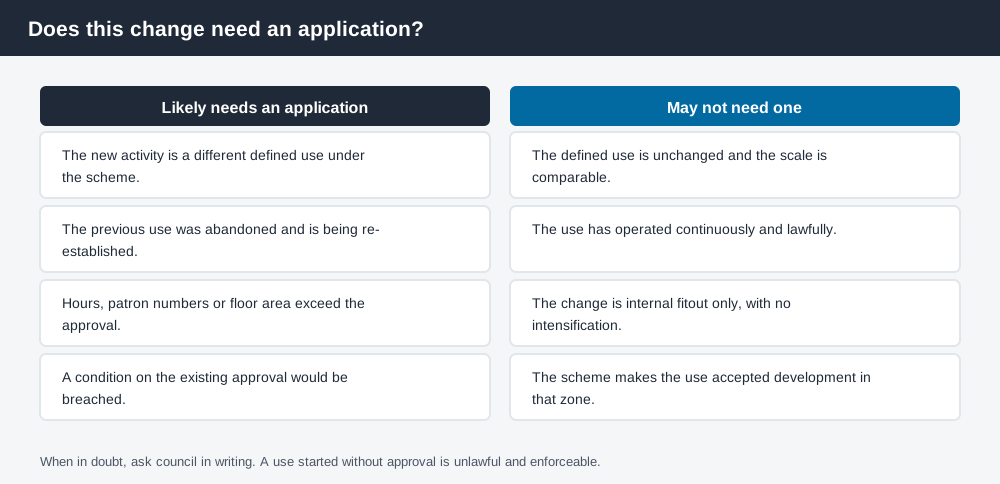
Figure 2: The pattern is consistent even though the detail is scheme-specific.
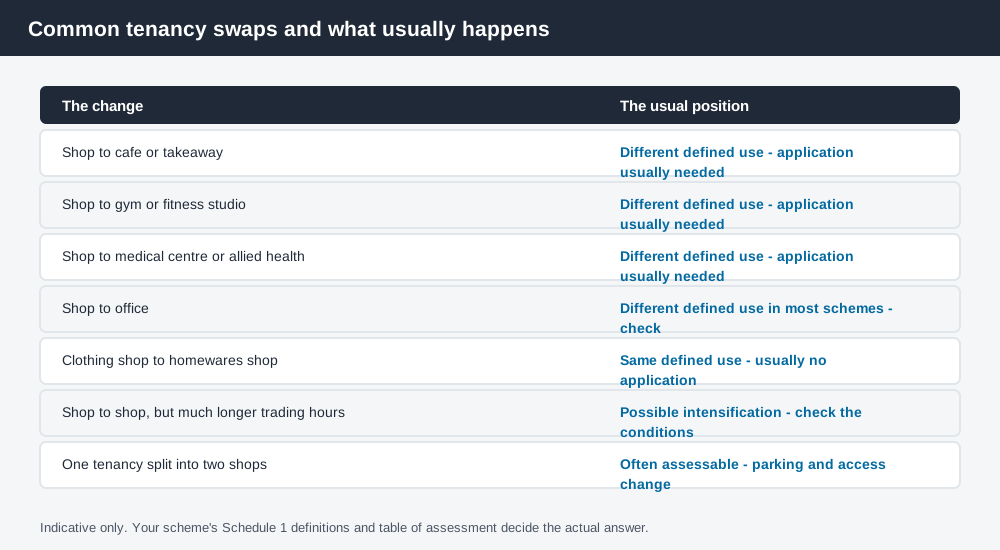
Figure 3: Indicative only — your scheme's definitions decide.
Queensland's planning schemes follow the Queensland Planning Provisions structure, but each council layers its own codes and overlays on top. They are not uniform. Some schemes group uses more broadly than others, and a swap that's a new use in one local government area may sit inside the same definition next door.
There is also the possibility that no application is needed at all because the scheme makes the new use accepted development in that zone — sometimes subject to requirements you must actually comply with. Accepted versus assessable development in QLD sets out what each category means.
The practical consequence is that the answer cannot be inferred from what similar businesses nearby are doing. A cafe two doors down may hold an approval you don't, may be operating under a broader historical approval, or may itself be unlawful and simply undetected. None of those tells you anything about your tenancy.
If you're already operating
This happens constantly: a business opens, trades for a year, and then a complaint or a licence application surfaces the fact that the use was never approved. The use is unlawful, and council can take enforcement action.
It also complicates everything else. Insurers ask about approvals. Lenders ask about approvals. A buyer's solicitor will ask when you come to sell the business, and an unapproved use is a discount or a deal-breaker at exactly the moment you have least room to move.
It is usually fixable. A development application can be made for a use that has already started, and councils deal with these regularly. What you lose is leverage and time — you're now applying under pressure, possibly with a show cause notice in hand, rather than at your own pace.
The lesson for anyone taking a tenancy is that the approval history question costs nothing to ask and answers the whole thing.
What to do next
Before you sign a lease, ask the council in writing for the tenancy's lawful use and any conditions on the existing development approval. Then check the zone and overlays for the address on your council's planning scheme mapping and on the Queensland Globe, and read the table of assessment for the use you intend.
If your intended use is hospitality, opening a cafe or restaurant in QLD covers the food licensing and fitout layers that sit alongside the planning question. If it's fitness, opening a gym in QLD covers the indoor sport and recreation position and the acoustic issues that follow.
If you'd rather see the zone, the overlays and the likely category of assessment for a tenancy's address than work through a planning scheme yourself, an instantDA planning report does that for $169 — against the $800–$1,500 a town planner typically charges for a preliminary opinion. You can start a report in a few minutes.
Then confirm with your council before you commit. Duty planners answer the material-change-of-use question every day, and the answer is specific to your scheme, your zone and your tenancy.
Frequently asked questions
What is a material change of use in Queensland?
Do I need approval to change my shop into a cafe in Queensland?
Can I change use without any building work?
What does "abandoned" mean for a Queensland planning use?
What if I've already started operating without approval?
How do I find out my tenancy's approved use?
Ready to generate your report?
Skip the writing. Get a council-ready planning report in 5 minutes.
Get your report