Key takeaways
- ✓A QBCC owner-builder permit is needed to undertake or supervise a residential building project valued at more than $11,000. Farm buildings run to $27,500.
- ✓The permit is about who does the work. It does not replace building approval, and it does not replace development approval.
- ✓You cannot do plumbing, draining, gas fitting or pest control yourself without the relevant occupational licence.
- ✓One permit every six years, with exemptions sometimes granted, and you must get it before starting work.
- ✓Owner-builders get no cover under the Queensland Home Warranty Scheme, and must notify buyers in writing if selling within six years of completion.
Owner Builder in Queensland: Permits, Limits and the Approvals You Still Need
Owner-building is genuinely viable in Queensland, and a lot of people do it well. What trips people up is not the building — it is the assumption that one permit covers everything. It does not. Queensland runs three separate systems here, and an owner-builder permit only answers one of the three questions.
Getting the sequence wrong is expensive in a specific way: a certifier cannot grant your building approval until the QBCC has issued your permit, so a permit obtained late holds up everything behind it.
Get a council-ready planning report in 5 minutes — no planner, no waiting.
Get your report →The short answer
You need a QBCC owner-builder permit to undertake or supervise a residential building project valued at more than $11,000, or $27,500 for a genuine farm building. The permit governs who may carry out and supervise the work. It does not replace building approval from a certifier, or development approval from your council.
When you need a permit
You need an owner-builder permit to undertake or supervise a building project valued at more than $11,000 on your own land, on company-owned land where you are a director, or on land you lease with the owner's permission.
For farm buildings the threshold is $27,500. A farm building means one built on farm land — land wholly or primarily used for agriculture or pastoral purposes — and intended for genuine farm work. A shed storing household goods or the town car does not qualify, however rural the address.
Valuing the project is not a matter of what you actually spend. You add the cost of all materials and labour at trade price including GST — what a licensed contractor would charge. Free labour from a mate still counts at what it would have cost. Second-hand or salvaged materials count at retail. That calculation pushes far more projects over $11,000 than people expect.
You must have the permit before you start any work on site. Working without one exposes you to fines, prosecution, cancellation of the permit, and an enforcement order from your council to remove or dismantle unapproved work.
Eligibility, and the six-year rule
Spend 5 minutes, not 3 weeks
instantDA generates a council-ready planning report for Queensland development applications. No town planner. No waiting.
Get your report →To be eligible you must be an owner with your name on the title, a director of a company that owns the property, or a lease occupier with the owner's permission for the specific work.
Most people must complete an owner-builder course before applying. QBCC or interstate licensees and some professionals are exempt.
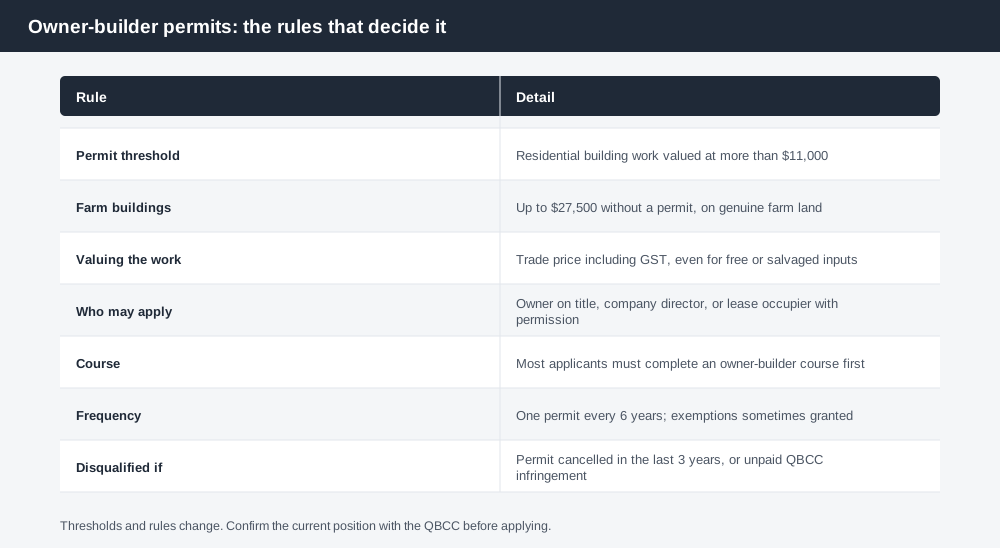
Figure 1: Who can hold a permit, and the rules that most often disqualify people.
You cannot apply if you have been served with a QBCC notice for Tier 1 defective work, have an unpaid QBCC infringement fine, have had an owner-builder permit cancelled in the last three years, or already hold a permit issued in the last six years — though the QBCC does sometimes grant exemptions to the six-year rule.
The QBCC can only issue one permit to a person every six years. That is the constraint that most often stops the second project.
What you can and cannot do
The permit lets you personally perform building work and act as head contractor, engaging and coordinating your own contractors.
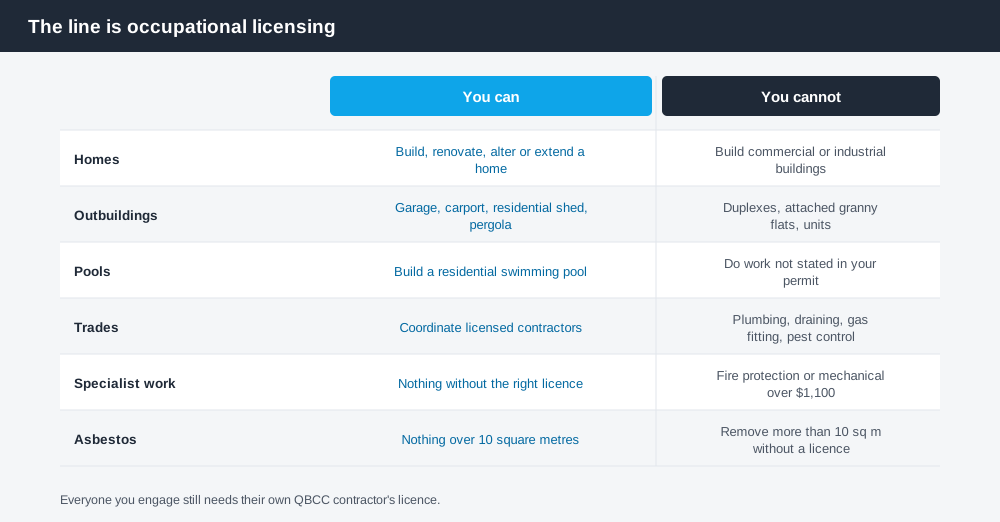
Figure 2: The line is drawn around occupational licensing, not around difficulty.
You can build a new home; renovate, alter or extend an existing home; build a garage, carport or residential shed; build a residential swimming pool; build a pergola or entertainment area; and complete a home from a stage a licensed builder was contracted to.
You cannot carry out occupational work such as plumbing, draining, gas fitting or pest control unless you hold the relevant occupational licence. You cannot carry out fire protection or mechanical services work valued at more than $1,100 without the appropriate licence, and mechanical services work is excluded. You cannot remove more than 10 square metres of asbestos without an asbestos removal licence. You cannot build commercial or industrial buildings, and you cannot build or renovate multiple dwellings such as duplexes, attached granny flats, boarding houses or units.
And you cannot do any work not stated in your permit conditions. If the scope changes, amend the permit.
The two approvals the permit does not replace
This is the section worth reading twice.
Building approval. Your building work still needs approval, decided by a private certifier or your council's building team. Critically, the certifier cannot grant the approval until the QBCC has issued your owner-builder permit and the work complies with the relevant planning rules and building codes. Sequence accordingly.
Development approval. Where the work is assessable development under the Planning Act 2016, you still need a DA from your council. Owner-builder status has no bearing on whether planning approval is required — that depends on the defined use, the zone and the overlays, exactly as it would if a licensed builder were doing the job. Building approval versus development approval sets out the distinction, and do you need council approval in QLD covers the threshold question.
You must have the work approved before you start — even before earthworks. Your owner-builder work is considered complete once you receive a final certificate from your certifier.
- ✓Establish whether a development approval is needed
- ✓Obtain the owner-builder permit before starting
- ✓Engage a certifier for the building approval
- ✓Display the owner-builder sign before work starts
- ✓Use only licensed contractors for licensed trades
- ✓Keep every certificate and Form 4
Site obligations people forget
You must display an owner-builder sign before work starts. It has to be clearly visible from the street, show your permit number, be weatherproof, be at least half a square metre, and use letters at least 50mm high. Not displaying it can attract a fine.
You must supervise and coordinate contractors, maintain quality control and uphold safe work practices, and you are responsible for the health and safety of occupants, visitors and workers on site. If the property contains asbestos or was built before 1990 you must complete an asbestos general awareness course, and the QBCC may ask for the certificate at two days' notice.
Get written agreements with your subcontractors.
What it costs you at sale
Two real consequences, both worth pricing in before you start.
No home warranty cover. Owner-builders are not eligible for insurance under the Queensland Home Warranty Scheme. That cover protects home owners where a licensed contractor fails to finish work, fails to rectify defective work, or where the building is damaged by subsidence or settlement. As an owner-builder you have none of it.
A notification on your title. After the permit issues, the QBCC notifies Titles Queensland and an owner-builder administrative advice is placed on the title, remaining for seven years. If you sell within six years of the completion date — the date your certifier signs off — you must tell the prospective buyer in writing. You can apply to have the advice removed six years after completion.
The QBCC also maintains a public register of owner-builder permit holders, searchable by name or address.
The current rules and forms are on the QBCC's owner-build pages. Thresholds and requirements change, so confirm the current position with the QBCC and your council before committing.
What to do next
Before the permit question, settle the planning question. An instantDA planning report tells you whether your project is assessable development and what your council's codes require — zone, overlays and a benchmark-by-benchmark assessment — for $169, against $800–$1,500 for a town planner preparing the same document.
Start with a planning report, or go straight to creating your report.
Frequently asked questions
When do I need an owner-builder permit in Queensland?
Does an owner-builder permit replace council approval?
What work can I not do as an owner-builder?
How often can I get an owner-builder permit?
What happens if I sell within six years?
Do I get home warranty insurance as an owner-builder?
Ready to generate your report?
Skip the writing. Get a council-ready planning report in 5 minutes.
Get your report