Key takeaways
- ✓Planning report, town planning report and planning assessment report describe the same Queensland document.
- ✓Other states use different names for the equivalent document, and those names have no standing in Queensland.
- ✓What matters is not the title on the cover but whether the report addresses the right assessment benchmarks.
- ✓A pre-purchase or feasibility report and a report lodged with an application do different jobs.
- ✓Queensland has no prescribed template, so the codes that apply determine the structure.
Planning Report vs Town Planning Report in QLD
If you have been quoted for a "planning report" by one firm and a "town planning report" by another, and a council officer has mentioned a "planning assessment report", you may reasonably wonder whether these are three different documents.
They are not. In Queensland they describe the same thing, and the naming variation is a matter of habit rather than law. What actually distinguishes one report from another is not the words on the cover — it is the job the report is doing and whether it addresses the right assessment benchmarks.
Get a council-ready planning report in 5 minutes — no planner, no waiting.
Get your report →The short answer
Planning report, town planning report and planning assessment report all describe the same Queensland document: a written response explaining how a proposal performs against the assessment benchmarks in the planning scheme. Queensland has no prescribed template, so the applicable codes determine the structure and content.
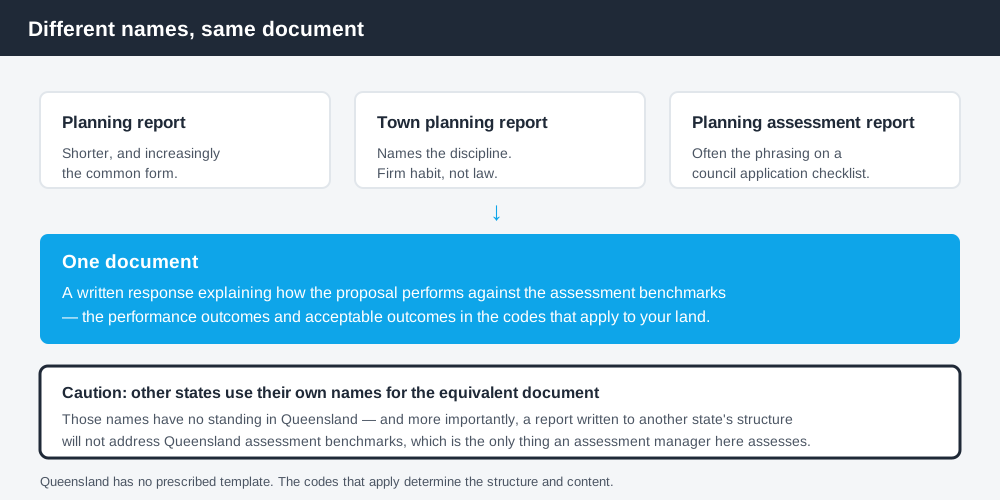
Figure 1: Different names, same document.
What the document actually is
Under the Planning Act 2016, an assessable development application is judged against assessment benchmarks — the performance outcomes and acceptable outcomes in the codes that apply to your land and your proposal.
The report is the written argument connecting your proposal to those benchmarks. It typically covers:
- ✓What is proposed, described precisely
- ✓The site — zone, overlays, lot dimensions, existing use, surrounds
- ✓Which codes apply, and why those and not others
- ✓A response to each relevant benchmark, showing compliance or arguing performance
- ✓How the proposal responds to the site's constraints
- ✓Any specialist reports relied on, and what they conclude
That is the substance. The name on the cover changes nothing about it.
Why the names vary
Spend 5 minutes, not 3 weeks
instantDA generates a council-ready planning report for Queensland development applications. No town planner. No waiting.
Get your report →Three reasons, none of them legal.
Firm habit. Some practices favour "town planning report" because it names the discipline; others use "planning report" because it is shorter. Neither carries a distinct meaning.
Council phrasing. Different councils' application checklists ask for slightly different things — a "planning report", a "planning assessment report", a "statement addressing the codes". They are asking for the same document.
Interstate terminology bleeding in. This is the one that causes real confusion. Other Australian states use their own names for the equivalent document, and those terms appear constantly in online searches and templates. They have no standing in Queensland. A document written to another state's naming convention and structure will not be assessing your proposal against your Queensland planning scheme's benchmarks — which is the only thing that matters here.
Queensland's terminology is its own: development application, assessment manager, assessment benchmarks, accepted development, code assessable, impact assessable, material change of use, reconfiguring a lot, operational works. If a template you have found does not use those words, it was not written for Queensland.
The distinction that does matter
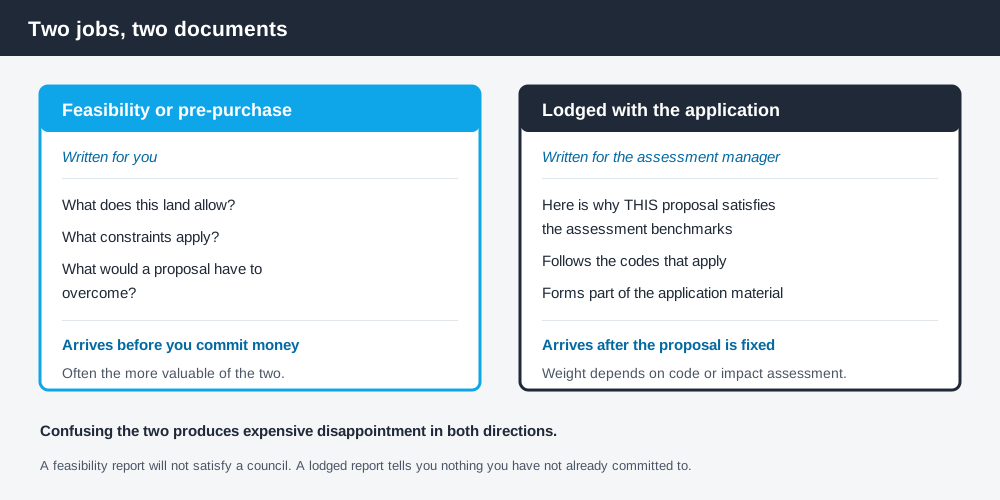
Figure 2: Two jobs, two documents.
The useful distinction is not between the names. It is between a report that helps you decide and a report that goes to the council.
A feasibility or pre-purchase report answers: what does this land allow, what constraints apply, and what would my proposal have to overcome? It is written for you. It is often the more valuable of the two, because it arrives before you have spent money.
A lodged planning report answers: here is why this specific proposal satisfies the assessment benchmarks. It is written for the assessment manager, follows the codes that apply, and forms part of the application material.
Confusing the two produces expensive disappointment in both directions — a feasibility report will not satisfy a council, and a lodged report tells you nothing you did not already commit to.
What separates a good report from a padded one
Length is not quality. A long report that recites the whole planning scheme back at the council is worse than a short one that addresses the four codes that apply.
- ✓Does it identify the correct codes, and explain why those ones?
- ✓Does it respond to each relevant benchmark specifically, rather than generally?
- ✓Where the proposal departs from an acceptable outcome, does it argue the performance outcome directly?
- ✓Does it deal with the overlays, not just the zone?
- ✓Are the specialist reports actually relied on, or just attached?
- ✓Is anything asserted that the drawings contradict?
That last one catches more applications than any other. Where the report says one thing and the drawings show another, the council will issue an information request, and the timeframe extends.
There is a related test worth applying before you accept any report: can a stranger read it and tell exactly what is being proposed? Hours of operation, number of dwellings, gross floor area, car parking numbers, staff numbers — these are the details a council will condition an approval around, and a report that leaves them vague is asking the assessing officer to guess. An officer who has to guess will instead ask, and asking is an information request. The best reports read as though the writer expected every sentence to be checked against a drawing, because a good assessing officer will do exactly that.
For the mechanics of putting one together, how to write a planning report for a DA in QLD sets out the structure and method.
Where the report sits in the application
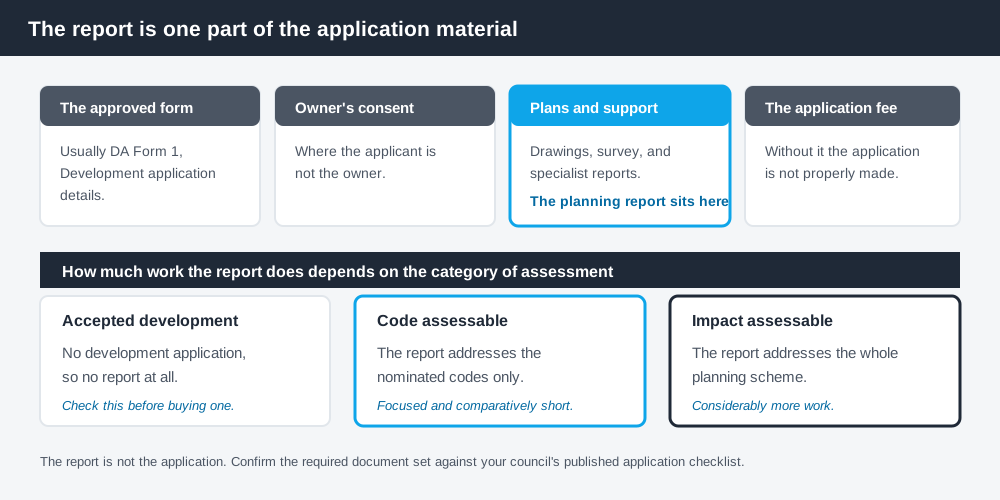
Figure 3: The report is one part of the application material.
The report is not the application. The application is the approved form, the owner's consent where required, the plans and supporting material, and the fee. The report sits inside the supporting material and does a particular job: it explains the proposal against the benchmarks so an assessing officer does not have to construct that argument themselves.
Its weight varies with the category of assessment.
- ✓Accepted development — no application, so no report
- ✓Code assessable — the report addresses the nominated codes
- ✓Impact assessable — the report addresses the whole planning scheme, and is doing considerably more work
What supporting information a DA needs in QLD covers the full document set, and material change of use in QLD explains the application type most likely to need a substantial report.
Queensland's planning schemes follow the Queensland Planning Provisions structure, but each council layers its own codes, overlays and checklists on top. They are not uniform, so a report structure that satisfied one council is a starting point rather than a template for the next.
What to do next
Do not shop for a report by its name. Establish first which of the two jobs you need done: understanding what your land allows, or arguing a specific proposal to the council.
If it is the first, an instantDA planning report sets out your zone, your overlays and your likely category of assessment for your address for $169 — against the $800–$1,500 a town planner typically charges for a preliminary opinion. You can start a report in a few minutes.
If it is the second, and particularly if the application is impact assessable or departs from the codes, that is a document written by someone who does it regularly. Ask what codes they intend to address before you engage them — the answer tells you whether they have read your site.
Either way, confirm the required document set with your council. Their application checklist is the definitive statement of what they expect, and it is published.
Frequently asked questions
Is a planning report the same as a town planning report?
What goes in a Queensland planning report?
Is there a prescribed template for a planning report in Queensland?
Do other states use different names for this document?
What is the difference between a feasibility report and a lodged report?
Does a longer planning report help?
Ready to generate your report?
Skip the writing. Get a council-ready planning report in 5 minutes.
Get your report