Key takeaways
- ✓An architect designs the building. A town planner deals with what the council will allow. They answer different questions.
- ✓In Queensland, architect is a protected title regulated under the Architects Act 2002 by the Board of Architects of Queensland.
- ✓Town planner is not a registered title, so credentials there are worth checking rather than assuming.
- ✓On a constrained site, the planning answer should come before the design, not after it.
- ✓Many residential projects need neither — a building designer and a certifier will do.
Do You Need an Architect or a Town Planner in QLD?
This question comes up because both professions sit between you and a finished project, and their websites can read similarly. But they answer genuinely different questions.
An architect answers: what should this building be? A town planner answers: what will the council allow on this land? On a straightforward site those questions barely interact. On a constrained one, the order in which you ask them decides whether you pay for a design twice.
Get a council-ready planning report in 5 minutes — no planner, no waiting.
Get your report →The short answer
An architect designs the building and documents it for construction. A town planner interprets the planning scheme and prepares the development application. In Queensland, architect is a protected registered title; town planner is not. Many residential projects need neither, and a building designer plus a certifier will do.
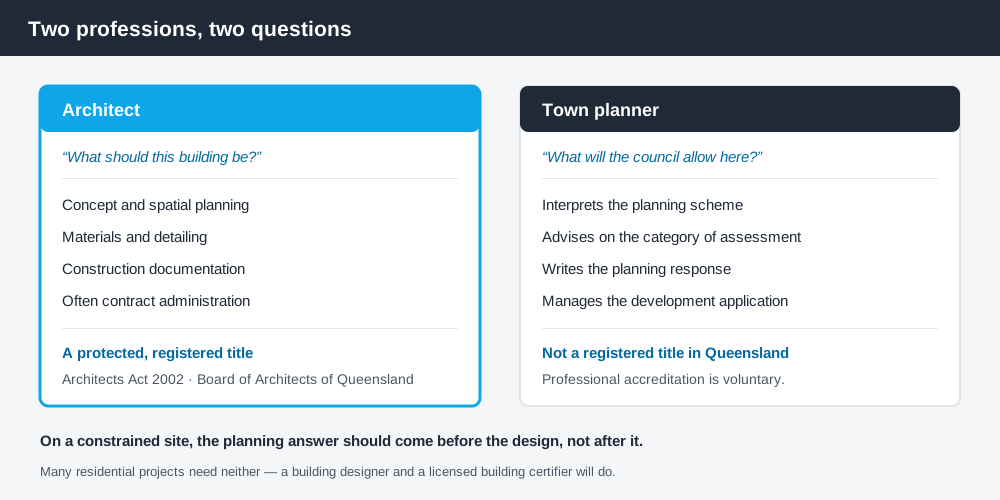
Figure 1: Two professions, two questions.
What an architect does — and why the title matters
An architect designs buildings and documents them: concept, spatial planning, materials, detailing, construction documentation, and often contract administration during the build.
In Queensland, "architect" is a protected title. The Architects Act 2002 provides for the registration and regulation of architects and the regulation of the practice of architecture, and establishes the Board of Architects of Queensland as the regulator. It is an offence for an unregistered person to use the title "architect" or "registered architect", or to hold themselves out as an architect. The Board's responsibilities expressly include investigating and prosecuting unregistered people who hold out as architects.
That has a practical consequence. When someone in Queensland calls themselves an architect, that is a verifiable credential — you can check the register. When someone calls themselves a building designer or draftsperson, they may be highly skilled, but the title itself carries no registration.
What a town planner does — and what the title does not tell you
Spend 5 minutes, not 3 weeks
instantDA generates a council-ready planning report for Queensland development applications. No town planner. No waiting.
Get your report →A town planner interprets the planning scheme, advises on the category of assessment, prepares the planning response, and manages a development application through council assessment.
"Town planner" is not a protected or registered title in Queensland. There is no statutory register, and professional membership of the Planning Institute of Australia is voluntary accreditation rather than a licence. Anyone may use the title.
That is not a reason to avoid planners — plenty are highly qualified, often former council assessment officers. It is a reason to ask about qualifications and, more usefully, about applications of your type taken through your specific council. Planning consultant versus town planner in QLD sets out the full picture of which roles are regulated.
The question that actually decides it
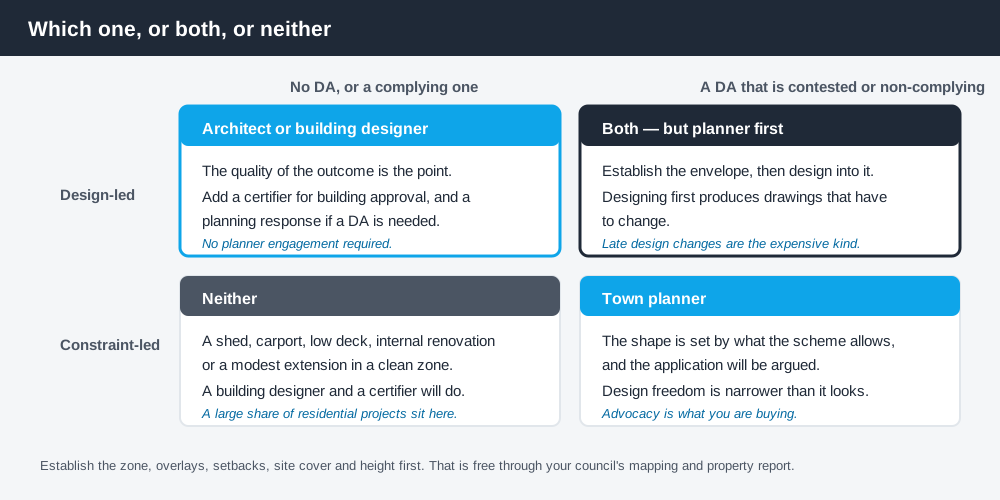
Figure 2: Which one, or both, or neither.
Ask two questions, in this order.
Is this project design-led or constraint-led? A new home on a difficult site, a renovation with a complicated brief, or anything where the quality of the outcome is the point — that is design-led, and an architect earns their fee. A project where the shape is largely determined by what the scheme allows is constraint-led, and design freedom is narrower than it looks.
Does the project need a development application, and is it likely to be contested? If the work is accepted development and needs only building approval, no planner is involved. If it needs a development application that complies with the codes, a designer plus a planning response may be enough. If it does not comply, is impact assessable, or is likely to attract submissions, that is planner territory.
- ✓Design-led and no development application — architect or building designer, plus a certifier
- ✓Design-led and a complying development application — architect or designer, plus a planning response
- ✓Constraint-led with a contested application — planner first, then design
- ✓Neither design-led nor assessable — a building designer and a certifier will do
Sequence matters more than choice
The single most expensive mistake in this area is not picking the wrong professional. It is picking the right ones in the wrong order.
On a site with real constraints — a character overlay, a flood extent, tight setbacks, site cover near the limit — the planning envelope determines what can be designed. Commissioning a full design before that envelope is understood produces drawings that have to change, and design changes late in documentation are expensive.
- ✓Establish the zone and every overlay
- ✓Establish the setbacks, site cover and height the scheme allows
- ✓Establish whether the work is accepted development or assessable
- ✓Then brief the designer against those limits
That sequence costs nothing but time, and it is the single best predictor of a design that gets approved as drawn. If the extension is your project, council approval for an extension in QLD sets out exactly which of those constraints commonly bite.
What each one costs you, in broad terms
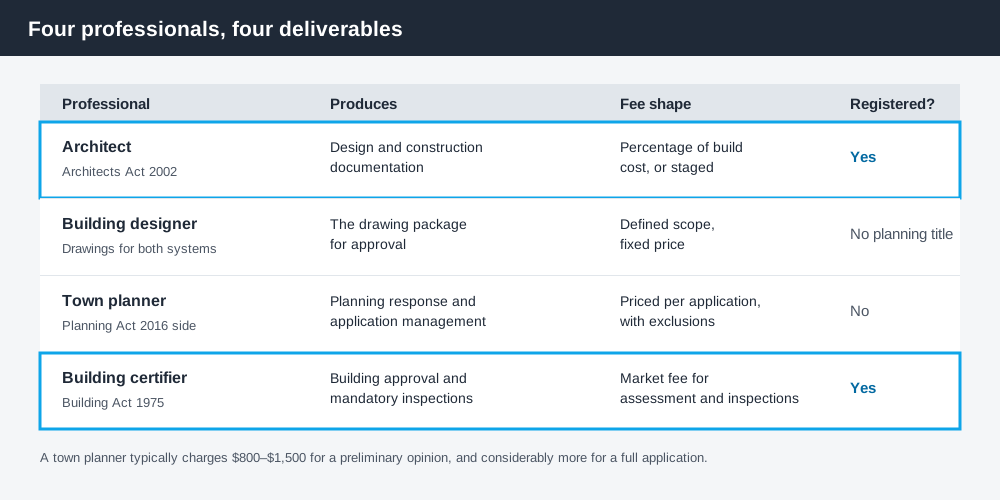
Figure 3: Four professionals, four deliverables.
Fee structures differ in shape, not just in size.
Architects commonly work on a percentage of construction cost or on staged fees, and the engagement typically runs from concept through documentation and sometimes into contract administration. That is a long engagement, and it is priced accordingly.
Building designers usually price the drawing package, which is a narrower and more defined scope.
Town planners typically price the application, with exclusions for specialist reports, notification and information request responses. A town planner typically charges $800–$1,500 for a preliminary opinion, and considerably more for a full application.
Building certifiers price the assessment and inspections. Their fee is a market price, but unlike the others the role itself is licensed and regulated.
Neither, in a lot of cases
It is worth saying plainly: a great many Queensland residential projects need neither an architect nor a town planner.
A shed, a carport, a low deck, an internal renovation that does not touch structure, a modest extension in a clean zone with no overlays — these are building matters. A building designer produces the drawings and a certifier assesses them. Nothing else is required.
Queensland's planning schemes follow the Queensland Planning Provisions structure, but each council layers its own codes, overlays and thresholds on top. They are not uniform, so the only way to know which category you are in is to check your own scheme. Do you actually need a town planner in QLD works through that test, and draftsman versus town planner in QLD covers the design end of the same question.
What to do next
Establish the planning envelope before you commission a design. That is the step that makes everything downstream cheaper, and it is answerable using your council's free mapping, property report and planning enquiry service.
If you'd rather see your zone, your overlays and your likely category of assessment set out in one document than work through a planning scheme yourself, an instantDA planning report does that for your address for $169 — against the $800–$1,500 a town planner typically charges for a preliminary opinion. You can start a report in a few minutes.
Then, if you are engaging an architect, check the register. If you are engaging a planner, check the track record with your specific council. And confirm the scheme position in writing before anyone starts drawing.
Frequently asked questions
Do I need an architect or a town planner in Queensland?
Is "architect" a protected title in Queensland?
Is "town planner" a registered title in Queensland?
Should I get planning advice before or after design?
What is the difference between an architect and a building designer?
Can a town planner design my building?
Ready to generate your report?
Skip the writing. Get a council-ready planning report in 5 minutes.
Get your report