Key takeaways
- ✓In Queensland, planning consultant and town planner describe the same work. Neither title is registered.
- ✓Building certifiers are licensed and regulated. Planners are not, which is the single most important distinction.
- ✓The right question is not which title to hire, but which approval you actually need.
- ✓Building approval and development approval sit under different Acts with different decision-makers.
- ✓Because the title is unregulated, check qualifications and a track record with your specific council.
Planning Consultant vs Town Planner in QLD
If you have been quoted by a "planning consultant" and a "town planner" and cannot work out the difference, there is a simple reason: in Queensland there usually isn't one. Both describe someone who interprets planning schemes and prepares development applications, and neither title is registered.
The distinction that actually matters is a different one — between the roles that are licensed and the roles that are not, and between the two separate approvals a Queensland project can need.
Get a council-ready planning report in 5 minutes — no planner, no waiting.
Get your report →The short answer
Planning consultant and town planner describe the same work in Queensland, and neither is a protected or registered title. Building certifiers are licensed and regulated. The more useful question is which approval you need — building approval under the Building Act 1975, or development approval under the Planning Act 2016.
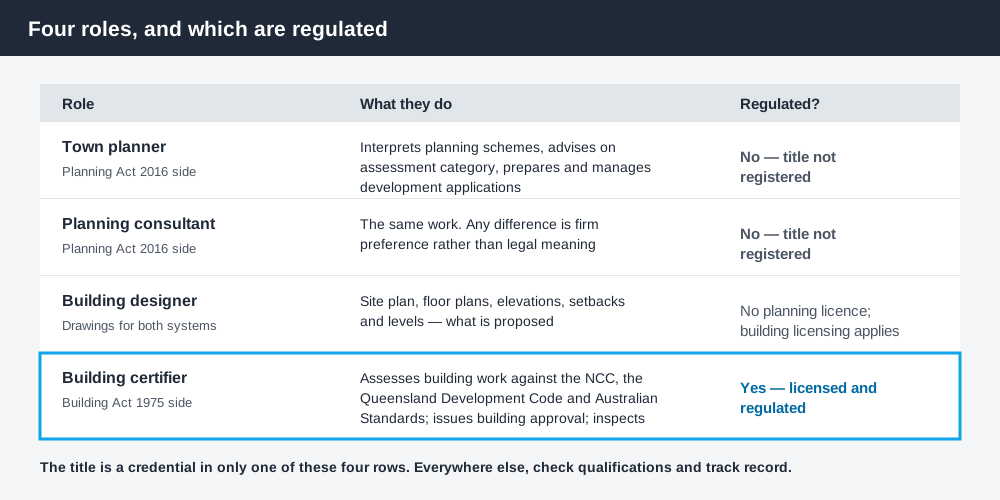
Figure 1: Four roles, and which are regulated.
Town planner and planning consultant
These two titles overlap almost completely. Both describe someone who:
- ✓Interprets the planning scheme — zones, overlays, codes and tables of assessment
- ✓Advises on the category of assessment for a proposal
- ✓Prepares the planning response that accompanies a development application
- ✓Manages the application through assessment, information requests and conditions
Where a difference exists, it is usually one of emphasis rather than substance. Some firms use "planning consultant" for private-sector advisory work and "town planner" for the professional discipline generally. Some individuals prefer one over the other. Neither carries a distinct legal meaning in Queensland.
Neither title is protected or registered. There is no statutory register of planners, and professional membership of the Planning Institute of Australia is voluntary accreditation rather than a licence to practise. Anyone may describe themselves as a town planner or a planning consultant.
That is not a criticism of the profession — plenty of Queensland planners are highly qualified, often former council assessment officers. It is a reason to check rather than assume.
Building certifier — the regulated one
Spend 5 minutes, not 3 weeks
instantDA generates a council-ready planning report for Queensland development applications. No town planner. No waiting.
Get your report →Here the position is very different. A building certifier is a licensed, regulated professional operating under the Building Act 1975 framework, with registration requirements, conduct obligations and continuing professional development.
A certifier:
- ✓Assesses building work against the National Construction Code, the Queensland Development Code and relevant Australian Standards
- ✓Issues building approval
- ✓Carries out mandatory inspections
- ✓Issues the final certificate
You must be appropriately licensed to act as a building certifier in Queensland. That makes it the one role in this comparison where the title itself is a credential. Private certifier versus council in QLD explains how the two certification routes work.
Building designer and draftsperson
A building designer or draftsperson produces the drawings — site plan, floor plans, elevations, setbacks, levels. That work is what both a certifier and a council planner will look at first.
For planning purposes there is no specific licence required to prepare drawings that accompany a development application. Where a designer performs regulated building work, they operate within the building industry licensing framework rather than under planning law.
The practical point is scope: drawings describe what is proposed. They do not, by themselves, argue why it complies with a code. On a simple compliant proposal the drawings may carry most of the weight; on a proposal seeking a departure they will not. Draftsman versus town planner in QLD works through where that line falls.
The distinction that matters more than the titles
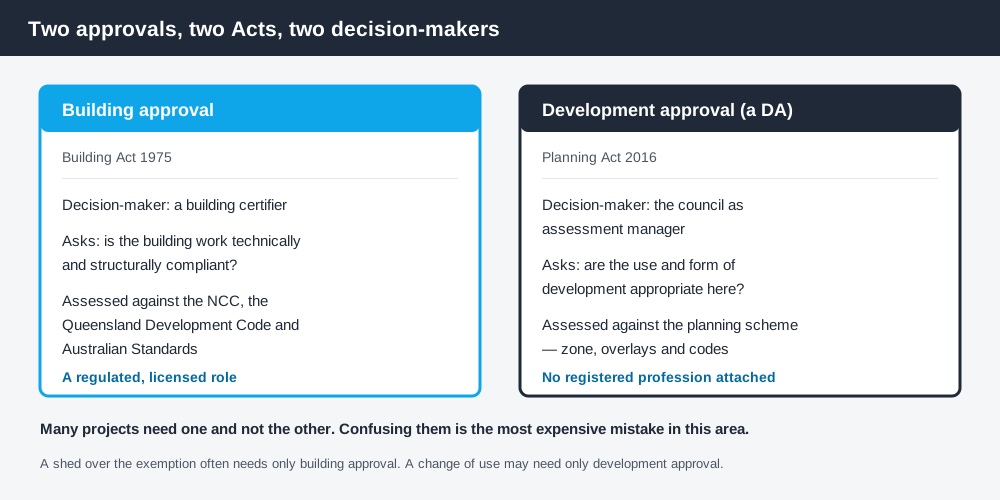
Figure 2: Two approvals, two Acts, two decision-makers.
Queensland runs two separate approval systems, and confusing them is the most common and most expensive mistake in this area.
Building approval sits under the Building Act 1975. The decision-maker is a building certifier. The question is whether the building work is structurally and technically compliant.
Development approval — a development application, or DA — sits under the Planning Act 2016. The decision-maker is the council as assessment manager. The question is whether the use and form of development are appropriate for the land under the planning scheme.
Plenty of projects need one and not the other. A shed over the exemption threshold needs building approval and often no development approval at all. A change of use in an existing building may need development approval and little or no building work. Working out which you need is the first question, and it determines which professional you are actually looking for.
Who can lodge a development application
Nobody's title restricts this. A development application may be made by the owner of the land, or by another person with the owner's written consent. There is no requirement that the applicant hold a planning qualification or any registration.
The state mandates the forms and they apply across every council, the most commonly used being DA Form 1 — Development application details, published by the Queensland Government with the other development assessment forms and templates.
So the choice of professional is a question of capability and value, not of legal permission.
How to work out who you need
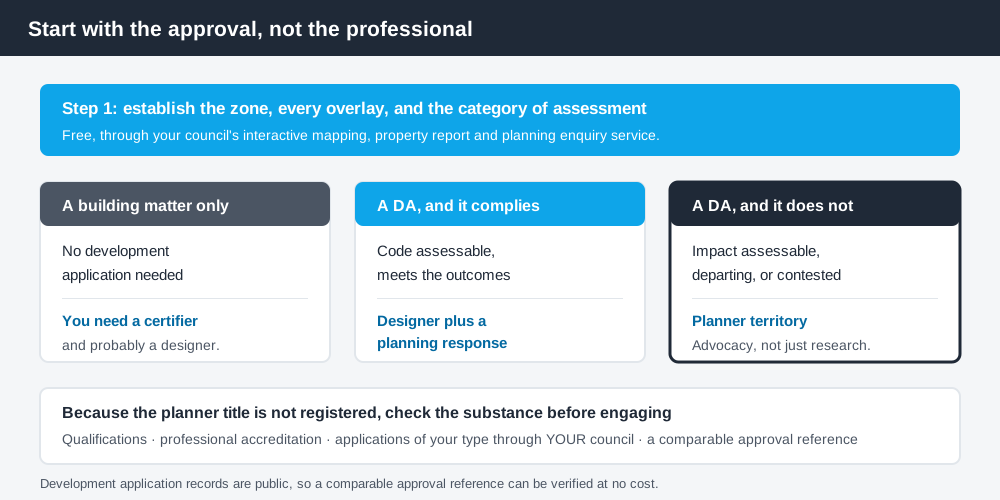
Figure 3: Start with the approval, not the professional.
- ✓Establish your zone and every overlay — free, through your council's mapping and property report
- ✓Work out whether the project is accepted development, code assessable or impact assessable
- ✓If it is a building matter only, you need a certifier and probably a designer
- ✓If it needs a development application and complies, a designer plus a planning response may be enough
- ✓If it does not comply, is impact assessable, or is likely to be contested, that is planner territory
Because "town planner" and "planning consultant" are unregulated titles, when you do engage one, check the substance:
- ✓What planning qualifications do they hold?
- ✓Do they hold professional accreditation, and with whom?
- ✓How many applications of your type have they taken through your specific council?
- ✓Can they give you the reference number of a recent comparable approval, which you can look up yourself?
Development application records are public, so that last question is verifiable at no cost — you can read the decision notice and see what the council actually required.
Queensland's planning schemes follow the Queensland Planning Provisions structure, but each council layers its own codes, overlays and definitions on top. They are not uniform, which is why council-specific experience is worth more than a job title.
What to do next
Work out which approval you need before you decide which professional to call. That single question resolves most of the confusion between these roles, and it is answerable for free using your council's mapping, property report and planning enquiry service.
If you'd rather see your zone, your overlays and your likely category of assessment set out in one document than work through a planning scheme yourself, an instantDA planning report does that for your address for $169 — against the $800–$1,500 a town planner typically charges for a preliminary opinion. You can start a report in a few minutes.
If the answer turns out to be that you do need planning help, do you actually need a town planner in QLD sets out when the engagement is worth it, and architect or town planner in QLD covers the other comparison people commonly face at the same time.
Then confirm the position with your council in writing before engaging anyone.
Frequently asked questions
What is the difference between a planning consultant and a town planner in Queensland?
Is a town planner licensed in Queensland?
Who can lodge a development application in Queensland?
What is the difference between building approval and development approval?
Do I need a planner or a building designer?
How do I check an unregistered planner's credentials?
Ready to generate your report?
Skip the writing. Get a council-ready planning report in 5 minutes.
Get your report