Key takeaways
- ✓Brisbane's Character residential zone is a real mapped zone, not just an overlay, with two precincts: Character and Infill housing.
- ✓City Plan notes that all land in the zone, other than sites covered by the Heritage overlay, is also covered by the Traditional building character overlay.
- ✓The zone protects the streetscape. The overlay is the instrument that controls demolition and building work.
- ✓The Infill housing precinct anticipates additional housing where it can be delivered without damaging character.
- ✓Buying here means accepting that what you can do to the front of the house is constrained. That is the deal.
Character Residential Zone Explained
You'll usually hear this called a development application, or DA — that's the formal name for council approval under the Planning Act 2016. In Brisbane's Character residential zone, you will need one for things that would be routine two streets away, and the reason is that the council has decided the street itself is worth protecting.
The confusion here is understandable. Brisbane has both a Character residential zone and a Traditional building character overlay, they cover much the same land, and people use the terms interchangeably. They are different instruments doing different jobs, and knowing which one is constraining you is the difference between a workable design and a refused application.
Get a council-ready planning report in 5 minutes — no planner, no waiting.
Get your report →The short answer
Brisbane City Plan 2014 maps a Character residential zone with two precincts — Character, and Infill housing. City Plan notes that all land in the zone, other than sites covered by the Heritage overlay, is also covered by the Traditional building character overlay. The zone sets the intent; the overlay controls demolition and building work.
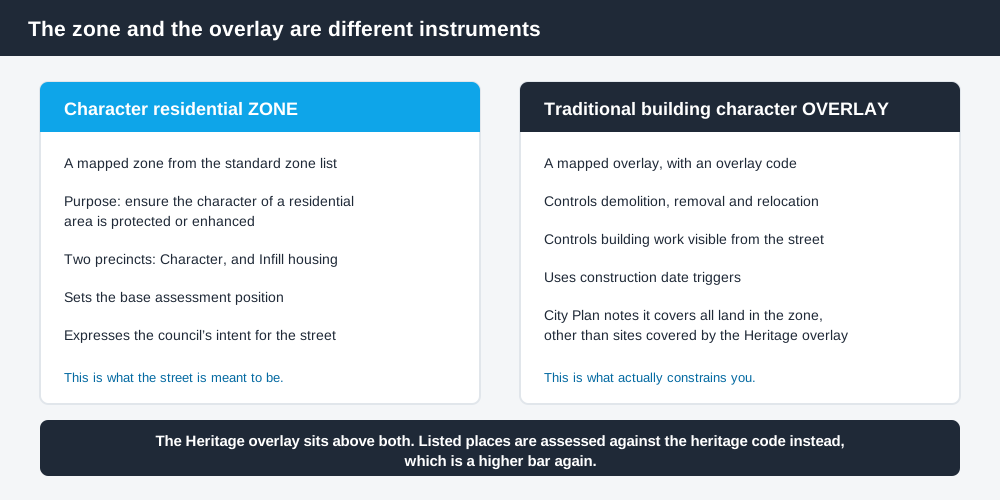
Figure 1: Two instruments, working together, doing different jobs.
The zone is real, not just an overlay
Character residential is one of the standard zones available under Schedule 2 (Zones) of the Planning Regulation 2017, which fixes the permitted zone names and the purpose statement every Queensland scheme must adopt.
Brisbane maps it as an actual zone alongside its other residential zones — low density residential, low-medium density residential, medium density residential, high density residential and emerging community. The Character residential zone code states its purpose in terms of ensuring the character of a residential area is protected or enhanced.
City Plan's own note on the zone is the sentence worth memorising: all land within the Character residential zone, with the exception of sites covered by the Heritage overlay, is covered by the Traditional building character overlay.
That is why the two get conflated. In practice, if you are in the zone you are almost certainly also in the overlay.
The two precincts
Spend 5 minutes, not 3 weeks
instantDA generates a council-ready planning report for Queensland development applications. No town planner. No waiting.
Get your report →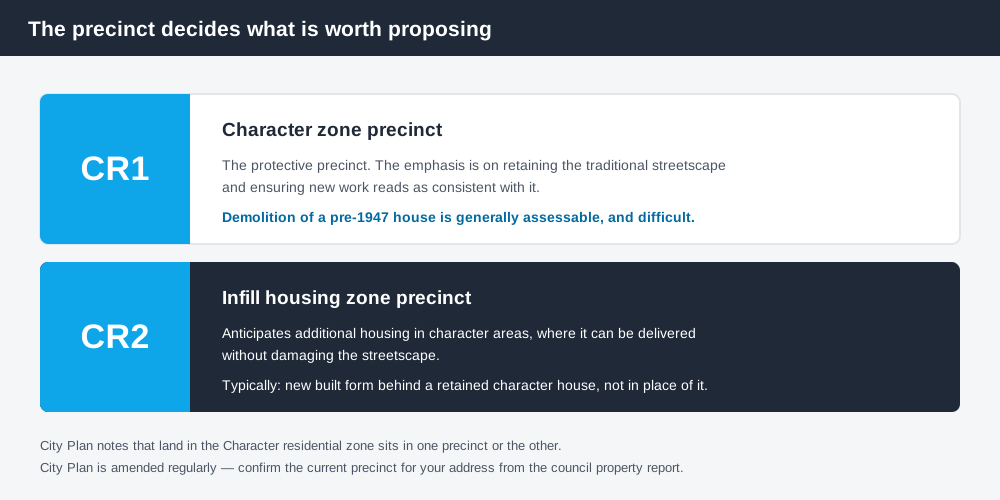
Figure 2: Confirm the current precinct for your address — City Plan is amended regularly.
The zone is divided into two precincts, and City Plan notes that land in the zone sits in one or the other:
CR1 — Character residential (Character zone precinct). The protective precinct. The emphasis is on retaining the traditional streetscape and ensuring new work reads as consistent with it.
CR2 — Character residential (Infill housing zone precinct). Anticipates additional housing in character areas, on the basis that it can be delivered without damaging the streetscape — typically by placing new built form behind a retained character house rather than in place of it.
The precinct is the first thing to establish, because it changes what kind of proposal is worth putting time into. Because City Plan is amended frequently, take the precinct from the council property report rather than from any published list, including this one.
- ✓Which precinct is the site in?
- ✓Is the house pre-1911 or pre-1947?
- ✓Does the Heritage overlay apply instead of the character overlay?
- ✓Is there a neighbourhood plan?
- ✓What does the character overlay code require for work visible from the street?
What is realistically achievable
The controls in character areas are directed at what the street sees. That framing explains most of what follows.
Demolition and removal. This is where applications fail. Demolition, removal or relocation of a pre-1947 house in a character area is generally assessable, with the strongest protection on the oldest stock. Assessment turns on the house's contribution to the traditional streetscape and whether the character of the street survives its loss. Character overlays in QLD covers how these overlay codes work across Queensland councils.
Extensions. Generally achievable, but the design logic is fixed: keep the front elevation and roof form reading as traditional, and put the new work at the rear or underneath. Raising and building under is the classic Brisbane solution and is well understood by council.
New buildings. Expected to be sympathetic in form, scale, roof shape, materials and setback. Contemporary architecture is not prohibited — indifference to the streetscape is.
Additional dwellings. More viable in the Infill housing precinct than in the Character precinct, and typically requiring the character house to be retained and the new form to be recessive.
Subdivision. Constrained, because splitting a lot in a character street usually produces a built outcome the streetscape provisions are designed to prevent.
Zone, overlay, heritage
Three instruments can apply and they escalate.
The zone sets the intent and the base assessment position for the area.
The Traditional building character overlay and its code carry the operative controls on demolition, removal and building work, applying across nearly all of the zone.
The Heritage overlay sits above both. City Plan's note carves out heritage-listed sites from the character overlay, because a listed place is assessed against the heritage code instead, and that is a higher bar again. Buying a heritage-listed QLD property covers the heritage layer, including the separate state register.
Add any applicable neighbourhood plan and the ordinary overlays — flood in particular affects a lot of Brisbane's older character stock — and the picture is complete. Brisbane City Plan 2014 explained covers how these tables of assessment combine, and remember the rule that the highest level of assessment prevails.
Before you buy here
The single most valuable thing to establish before contract is what the council's position would be on the specific thing you intend to do.
If your plan is to demolish and rebuild, assume that is difficult and get advice before signing, not after. If your plan is to renovate and extend at the rear, you are working with the grain of the controls rather than against them, and the position is usually much better than buyers fear.
Pull the property report for the address so you have the zone, precinct, overlays and any neighbourhood plan in one place, and cross-check the site on the Queensland Globe for state layers.
Owners in character areas often find the constraint reasonable once they understand it. What causes grief is discovering it after buying a house on the assumption that the front of it was negotiable.
What to do next
Establish the precinct and whether the character overlay or the heritage overlay applies. Then read the applicable overlay code before you engage a designer, because the design response it expects is specific and well established, and a designer who works in Brisbane's character suburbs will already know it.
If you'd rather see the zone, the overlays and the likely category of assessment for an address than work through a planning scheme yourself, an instantDA planning report does that for $169 — against the $800–$1,500 a town planner typically charges for a preliminary opinion. You can start a report in a few minutes.
Then confirm with council. Character assessment is judgement-heavy, and a duty planner's view on your specific proposal is worth more than any general rule. The Low density residential zone explained covers the neighbouring zone that much of Brisbane's remaining pre-war stock sits in, under the character overlay but outside the character zone.
Frequently asked questions
Is the Character residential zone a real zone in Brisbane?
What are the Character residential zone precincts?
Does the character overlay apply as well as the zone?
Can I demolish a house in the Character residential zone?
Can I extend a character house?
What is the difference between the character zone and the heritage overlay?
Ready to generate your report?
Skip the writing. Get a council-ready planning report in 5 minutes.
Get your report