Key takeaways
- ✓The council application fee is usually the smallest and most predictable part of a material change of use budget.
- ✓Whether the application is code or impact assessable changes the fee, the timeframe and whether you pay for public notification.
- ✓Infrastructure charges are frequently the largest single line, and they are set by each council's charges resolution.
- ✓State referral fees apply only where a state interest is triggered, but they are substantial when they are.
- ✓Preparing the application — plans, planning response, specialist reports — is the cost most often underestimated.
What Does a Material Change of Use Cost in QLD?
A material change of use, or MCU, is the Planning Act 2016 term for changing what land is used for — turning a house into a childcare centre, a shop into a cafe, a shed into a workshop, or a single dwelling into two. Where the planning scheme makes that assessable, you need council approval, which you will usually hear called a development application, or DA.
The cost of that application is layered, and the layers are not the same size.
Get a council-ready planning report in 5 minutes — no planner, no waiting.
Get your report →The short answer
A material change of use costs the council application fee, the cost of preparing the application, public notification if the application is impact assessable, state referral fees where a state interest is triggered, and infrastructure charges. The council fee is usually the smallest layer. Infrastructure charges are often the largest.
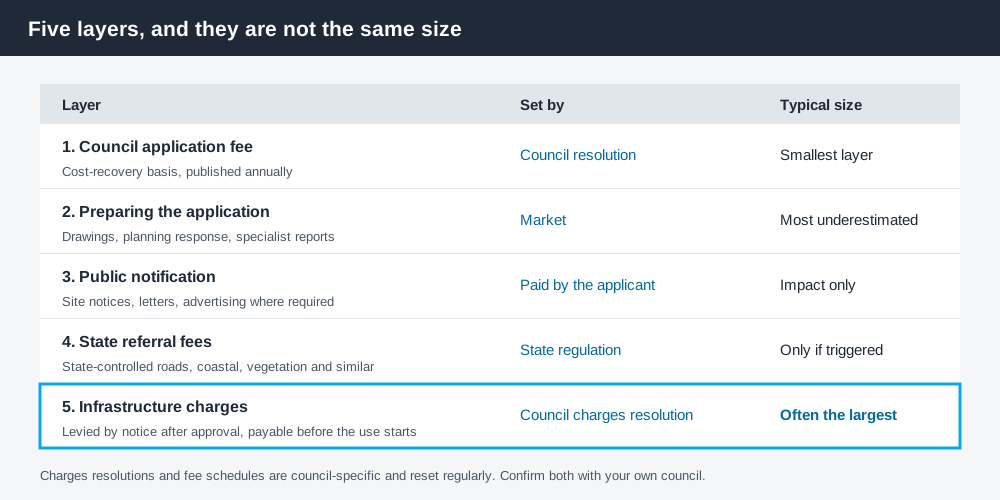
Figure 1: Five layers, and their relative size.
Layer one — the council application fee
Queensland councils set development application fees by resolution, usually annually, and publish them in a fees and charges schedule. Fees are set on a cost-recovery basis — designed to recover the cost of assessing the application rather than to raise revenue.
What the fee depends on varies with the council, but the common drivers are the same.
- ✓The type of use proposed
- ✓Whether the application is code or impact assessable
- ✓The zone
- ✓The scale — number of dwellings, or gross floor area
Councils also differ on when you pay. Some require the fee at lodgement for the application to be properly made. Brisbane calculates development assessment fees from a points-based schedule published each financial year and charges after lodgement rather than up front. Neither approach is cheaper; they differ in timing.
If you want the general picture across councils, council DA fees in QLD sets out how the schedules are structured and where to find yours.
Layer two — code or impact, and what that changes
Spend 5 minutes, not 3 weeks
instantDA generates a council-ready planning report for Queensland development applications. No town planner. No waiting.
Get your report →This is the single biggest fork in the process, and it affects cost, time and risk together.
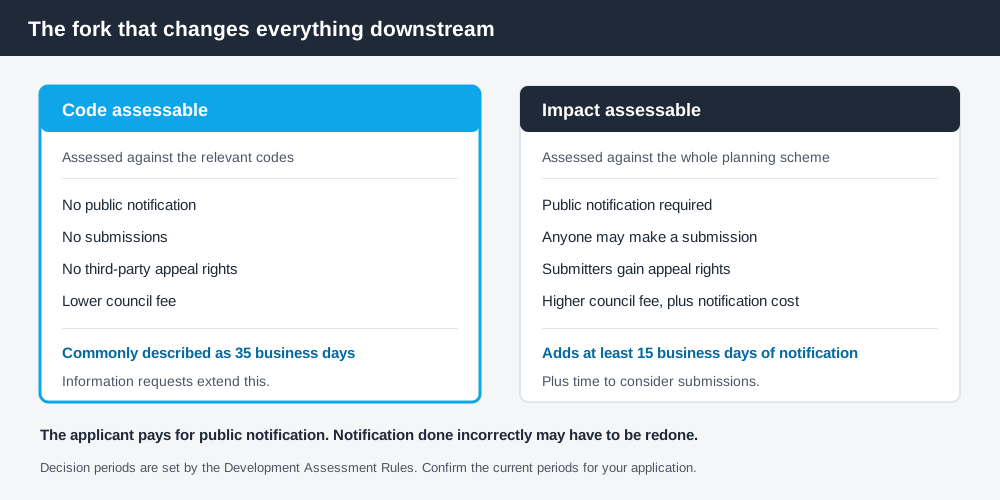
Figure 2: The fork that changes everything downstream.
Code assessment measures the proposal against the assessment benchmarks in the relevant codes. There is no public notification, no submissions, and no third-party appeal rights. Councils generally charge a lower fee.
Impact assessment measures the proposal against the whole planning scheme. It must be publicly notified, anyone may make a submission, and submitters gain appeal rights. Councils generally charge a higher fee, and there is a separate cost for notification itself.
The Development Assessment Rules set the decision periods. Councils commonly describe a decision period of 35 business days for code assessment, with impact assessment adding a public notification period of at least 15 business days — longer for certain applications — plus time to consider submissions. Confirm the current periods against the Development Assessment Rules, because information requests and applicant extensions change them in practice.
The applicant pays the notification costs. Depending on what the rules require, that can include site notices, letters to adjoining owners and newspaper advertising, plus the cost of having someone manage it correctly. Getting notification wrong is one of the more expensive procedural mistakes available, because it can have to be redone.
Which category you land in is set by the planning scheme's tables of assessment, adjusted by any overlay. Accepted versus assessable development in QLD explains how the categories work and why an overlay can move you up a level.
Layer three — preparing the application
This is the layer most often underestimated, because it is not a fee — it is professional work.
- ✓Architectural or design drawings to application standard
- ✓A planning response addressing the relevant codes
- ✓Survey and site plan
- ✓Traffic, acoustic, stormwater or ecology reports where the codes require them
- ✓Waste, parking and operational management detail for commercial uses
A simple code assessable change of use in a compatible zone may need very little of this. A commercial use in a sensitive location can need most of it. The reports are what the codes demand, not what the council prefers, so the cheapest way to reduce this layer is to propose something the codes already contemplate.
Layer four — state referral fees
Where a proposal triggers a state interest — access to a state-controlled road, coastal management, state-regulated vegetation, and similar — the state becomes a referral agency and charges its own fee under the state fee regulation. These are additional to the council's fee and are not trivial.
Most ordinary urban changes of use never touch this layer. Where it does apply, find out early, because it affects both budget and timeframe.
Layer five — infrastructure charges
For many material changes of use, this is the largest number on the page.
Under the Planning Act 2016 framework, councils levy adopted infrastructure charges for the increased demand a development places on trunk infrastructure — water, sewerage, transport, parks and stormwater. Each council adopts an infrastructure charges resolution setting its rates, capped by state-set maximums.
After the application is approved, the council issues an infrastructure charges notice stating the charge, how it was calculated and when it is payable. For a material change of use, the charge is generally payable before the use commences.
Two practical points. First, the charge is usually calculated on the increase in demand, so converting a use to something with a similar demand profile can attract far less than the headline rate suggests. Second, the rates and the credits available differ substantially between councils. Infrastructure charges in QLD explains how the calculation works and what a notice contains.
Why two similar proposals cost very differently
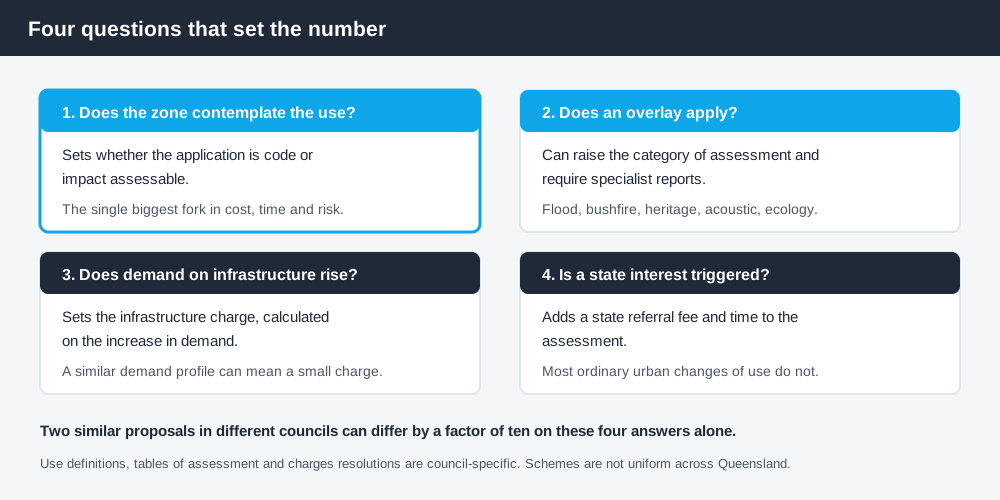
Figure 3: The questions that set the number.
Two cafes in two suburbs can differ by a factor of ten, and the difference is rarely the coffee machine. It is whether the zone contemplates the use, whether an overlay applies, whether the change increases infrastructure demand, and whether a state interest is triggered.
Queensland's planning schemes follow the Queensland Planning Provisions structure, but each council layers its own use definitions, tables of assessment and charges resolution on top. They are not uniform. A proposal that is code assessable in one council can be impact assessable next door, and the same building can attract very different charges.
What to do next
Before you commission anything, get four answers: the zone, the category of assessment for your proposed use, whether any overlay applies, and roughly what infrastructure charge the council's resolution would produce. Those four determine the shape of the budget. Everything else is detail.
If you'd rather see your zone, your overlays and your likely category of assessment set out in one document than work through a planning scheme yourself, an instantDA planning report does that for your address for $169 — against the $800–$1,500 a town planner typically charges for a preliminary opinion. You can start a report in a few minutes.
If the concept of a material change of use is still unfamiliar, material change of use in QLD sets out what counts as one and what does not, which is worth settling before you price anything.
Then confirm the fees and the charges resolution with your own council. Both are reset regularly, and both are council-specific.
Frequently asked questions
How much does a material change of use cost in Queensland?
What is the difference in cost between code and impact assessment?
Who pays for public notification of a development application?
When are infrastructure charges payable for a material change of use?
How long does a material change of use application take?
Do state referral fees always apply?
Ready to generate your report?
Skip the writing. Get a council-ready planning report in 5 minutes.
Get your report