Key takeaways
- ✓Every extension needs building approval, because it changes the building's floor area. That cost is unavoidable.
- ✓Whether a development application is added on top is decided by overlays, setbacks and site cover, not by the size of the build.
- ✓A character or heritage overlay is the single most common reason a Queensland extension needs planning approval.
- ✓Council fees are published annually and vary widely. The certifier's fee is a market price and is worth quoting more than once.
- ✓Establish the planning position before you brief a designer, because a redesign is more expensive than the answer.
What Does Extension Approval Cost in QLD?
You'll usually hear council approval called a development application, or DA — that's the formal name for it under the Planning Act 2016. For a house extension, there are really two approvals in play, and only one of them is guaranteed.
Building approval is always required, because an extension changes the building's floor area. A development application is required only in certain circumstances, and it is that second question — not the size of the extension — that determines whether your approval budget is a few thousand dollars or something considerably larger.
Get a council-ready planning report in 5 minutes — no planner, no waiting.
Get your report →The short answer
Every extension needs building approval, so the private certifier's fee, council lodgement fee and engineering are unavoidable. A development application is added only where an overlay applies, setbacks or site cover are breached, or the use changes. That second approval is what moves the budget.
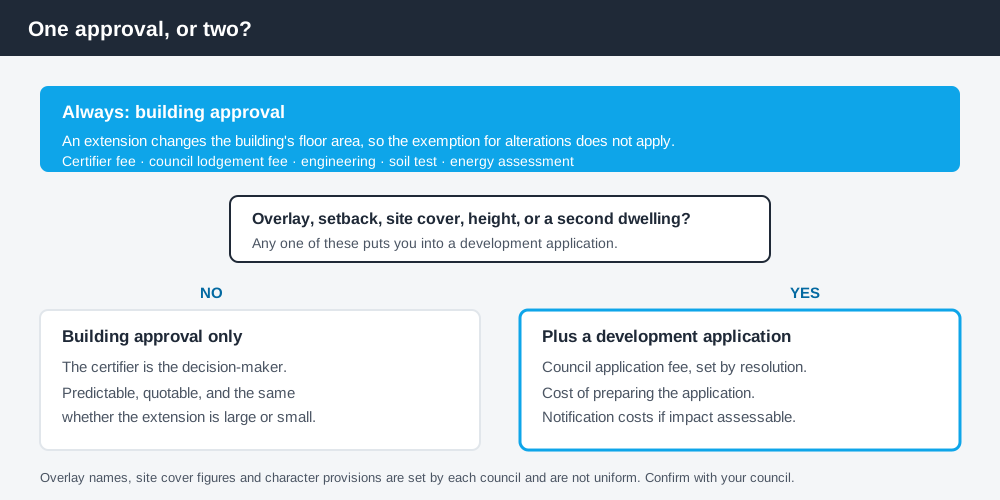
Figure 1: One approval or two, and what each adds.
An extension adds floor area, which takes it outside the exemption for alterations to an existing building under the Building Regulation 2021. Building approval, assessed by a private building certifier under the Building Act 1975, follows.
- ✓Private building certifier — plan assessment, inspections and final certificate
- ✓Council lodgement or archival fee
- ✓Structural engineering for footings, beams and the connection to the existing house
- ✓Soil test and site classification
- ✓Energy efficiency assessment
- ✓Plumbing where wet areas are added, generally handled by your licensed plumber
The certifier's fee is a market price, not a council charge, and it is worth getting more than one quote and asking each what is included. Council charges around it are usually modest and are published annually in the fees and charges register — the only reliable figure is the one on your council's current schedule.
Engineering is where extension costs diverge from a new build. Tying new structure into an existing house means the engineer has to work with what is there, which on an older Queensland home can mean investigating footings, stumps or a roof frame that was never documented. That is a real cost and it is not a council fee.
The costs that depend on your planning position
Spend 5 minutes, not 3 weeks
instantDA generates a council-ready planning report for Queensland development applications. No town planner. No waiting.
Get your report →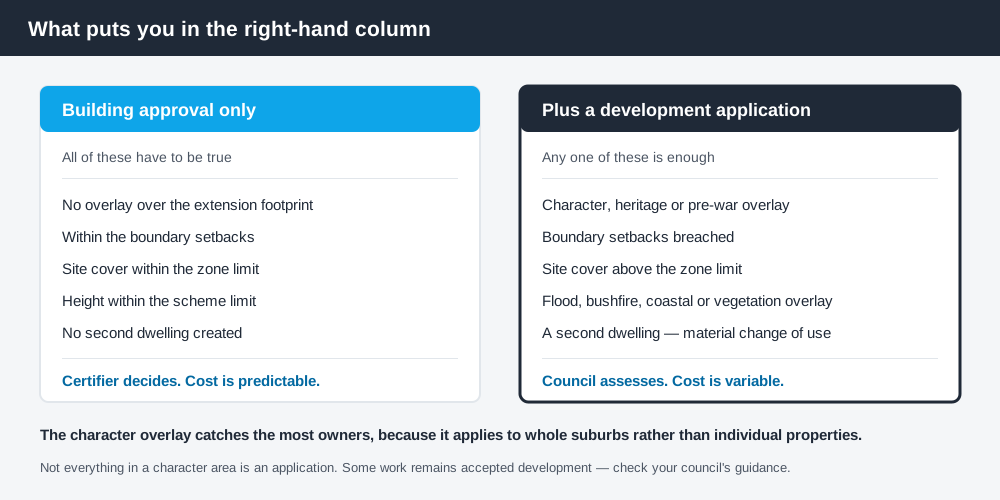
Figure 2: What puts you in the right-hand column.
An extension needs a development application where the planning scheme says it does. The usual triggers are these.
- ✓A character, heritage or pre-war overlay applies to the dwelling
- ✓The extension breaches the boundary setbacks in the Queensland Development Code or the scheme
- ✓Site cover goes above what the zone allows
- ✓A flood, bushfire, coastal hazard or vegetation overlay affects the extension's footprint
- ✓Building height exceeds the scheme limit
- ✓The extension creates a second dwelling, which is a material change of use
Of those, the character overlay is the one that catches the most people, because it applies to whole suburbs rather than individual properties. Brisbane City Council's traditional building character overlay is the best-known example: on a site in that overlay, work that would otherwise be accepted development can become assessable, and Brisbane's own guidance states that you will generally need planning approval for external extensions and that some extensions and renovations to a house built during or before 1946 require it.
Brisbane's guidance on extensions, raising or renovations also lists work that remains accepted development on those sites — enclosing under an existing building, an external stair or ramp, some carports, rear outbuildings, and raising a house where the new height does not exceed 9.5m. Not everything in a character area is an application.
Other councils have their own character and heritage provisions with different names and different thresholds. The character overlay in QLD covers how these generally work and what they typically control.
What a development application actually adds
Two things: the council's application fee, and the cost of preparing an application good enough to be assessed.
Council fees are set by each council by resolution and published annually, on a cost-recovery basis. Brisbane calculates development assessment fees using a points-based schedule published each financial year, with fees paid after lodgement rather than up front. Other councils require the fee at lodgement for the application to be properly made. Neither approach is cheaper — they differ only in timing.
The preparation cost is the larger variable. A straightforward code assessable extension in a character overlay may need little more than good drawings and a short planning response. A proposal that departs from the overlay code, or that ends up impact assessable, needs more.
- ✓Code assessment — no public notification, and a shorter path
- ✓Impact assessment — public notification is required, submissions can be made, and appeal rights follow
The Development Assessment Rules set the decision periods. Councils commonly describe a decision period of 35 business days for code assessment, with impact assessment adding a public notification period of at least 15 business days and time to consider submissions. Confirm the current periods against the Development Assessment Rules for your application, because they can be extended by information requests.
Where impact assessment applies, the applicant pays the notification costs — site notices, letters to adjoining owners, and any advertising the rules require. That is a separate line item from the council fee.
Infrastructure charges — usually not, sometimes yes
A straightforward extension to an existing house generally does not create a new dwelling, so it usually does not attract an infrastructure charge. Where the work creates an additional dwelling, or intensifies the use in a way the council's charges resolution captures, a charge can apply and will be set out in an infrastructure charges notice after the application is decided.
This is council-specific and worth asking about rather than assuming. Infrastructure charges in QLD explains how the charge is calculated and when it becomes payable.
Getting the sequence right
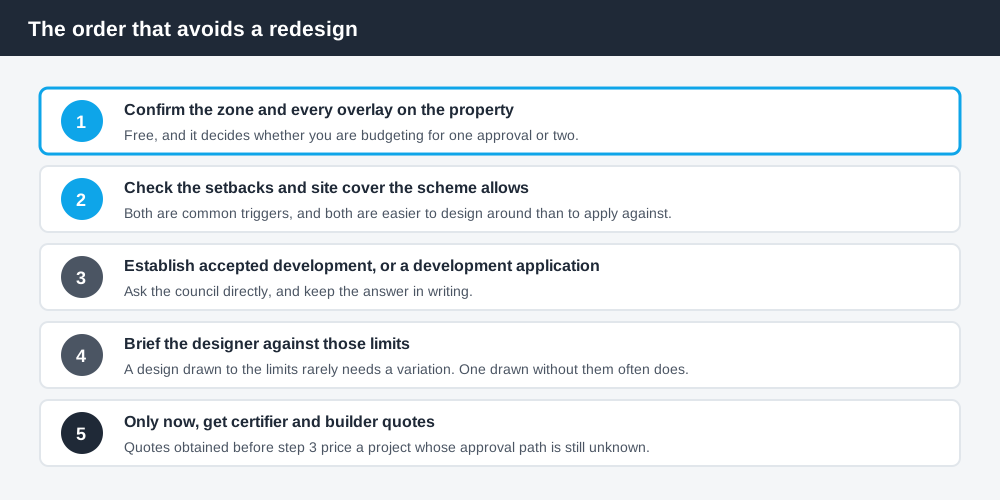
Figure 3: The order that avoids a redesign.
Most extension budgets go wrong for the same reason: the design is fixed before the planning position is known, and the drawings then have to change. The cheaper sequence runs the other way.
- ✓Confirm the zone and every overlay on the property
- ✓Check the setbacks and site cover the scheme allows
- ✓Establish whether the work is accepted development or needs an application
- ✓Brief the designer against those limits
- ✓Then get certifier and builder quotes
Queensland's planning schemes follow the Queensland Planning Provisions structure, but each council layers its own overlay codes, site cover figures and character provisions on top. They are not uniform. What one council allows as of right, the next may assess.
What to do next
Find your overlays first. That single step tells you whether you are budgeting for one approval or two, and it costs nothing but time.
If you'd rather see your zone, your overlays and your likely category of assessment set out in one document than work through a planning scheme yourself, an instantDA planning report does that for your address for $169 — against the $800–$1,500 a town planner typically charges for a preliminary opinion. You can start a report in a few minutes.
If you have not yet settled whether the extension needs planning approval at all, council approval for an extension in QLD works through the triggers, and reading it before you brief a designer usually saves a revision. Where the boundary is tight, boundary setbacks in QLD sets out what the standards actually require.
Then confirm the position with your council in writing before the drawings are finalised.
Frequently asked questions
How much does it cost to get a house extension approved in Queensland?
Does every extension need a development application in QLD?
Why do character overlays make extensions more expensive?
Do I pay infrastructure charges on an extension?
How long does approval take for an extension in Queensland?
Is the certifier's fee a council charge?
Ready to generate your report?
Skip the writing. Get a council-ready planning report in 5 minutes.
Get your report