Key takeaways
- ✓Adding a bathroom inside the existing footprint is often exempt from building approval, because nothing structural, dimensional or fire-related changes.
- ✓The exemption falls away the moment joists are cut, a load-bearing wall moves, or the footprint grows.
- ✓Plumbing is regulated separately — most bathroom work in an existing house is notifiable work, lodged by your plumber on a Form 4.
- ✓Exempt from approval does not mean exempt from the standards. Waterproofing and ventilation still have to comply.
- ✓A second bathroom plus a kitchen and separate access can create a secondary dwelling, which is a planning question, not a building one.
Do You Need Council Approval to Add a Bathroom in QLD?
You'll usually hear this called a development application, or DA — that's the formal name for council approval under the Planning Act 2016. Adding a bathroom rarely needs one. What it does involve is two separate systems: building regulation under the Building Act 1975, and plumbing regulation under the Plumbing and Drainage Act 2018.
Get a council-ready planning report in 5 minutes — no planner, no waiting.
Get your report →The short answer
Often no building approval is needed. Under the Building Regulation 2021, alterations to an existing building are accepted development unless they change floor area or height, affect a structural component, or affect the fire safety system. A bathroom inside the existing footprint usually does none of those. The plumbing is regulated separately.
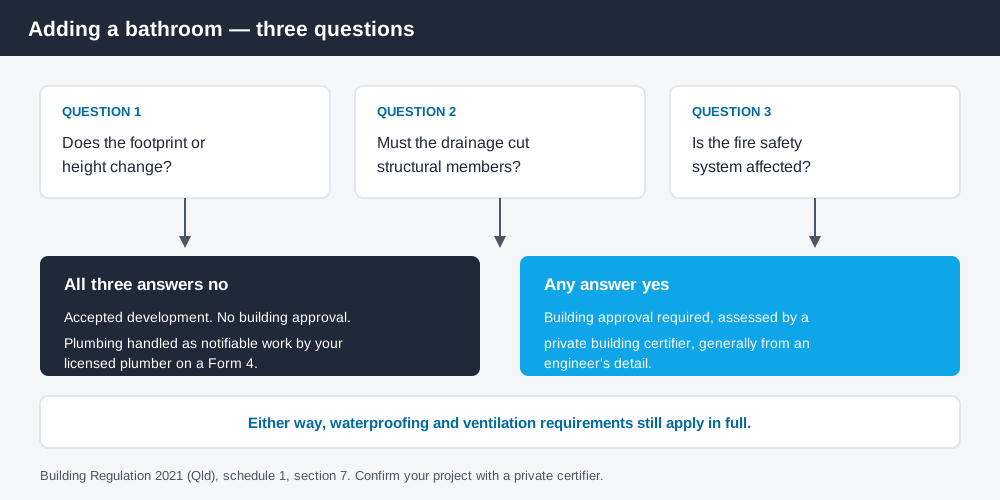
Figure 1: Where a new bathroom sits in the building approval system.
That answer surprises people, so it is worth being precise about where it comes from.
The exemption, and what removes it
Schedule 1, section 7 of the Building Regulation 2021 declares repairs, maintenance or alterations to an existing building to be accepted development. Section 7(2) then withdraws that exemption where the work does any of three things.
- ✓Changes the building's floor area or height
- ✓Affects a structural component
- ✓Affects the fire safety system
Converting a spare room, a large linen cupboard or part of an oversized bedroom into an ensuite typically does none of those. You are building non-structural stud partitions inside a space that already exists.
Now the ways that changes.
- ✓Cutting or notching floor joists to run drainage
- ✓Removing or relocating a load-bearing wall
- ✓Building out beyond the existing external walls
- ✓Working on a building where fire separation matters, such as an attached dwelling or unit
Drainage is the usual culprit. A new bathroom needs falls, and in a suspended timber floor the pipework has to get somewhere. If the plumber's route means cutting structural members, the work has affected a structural component and building approval is required — assessed by a private building certifier, generally from an engineer's detail.
The plumbing side is a separate system
Spend 5 minutes, not 3 weeks
instantDA generates a council-ready planning report for Queensland development applications. No town planner. No waiting.
Get your report →This is the part homeowners most often miss, because it does not feel like a separate approval — no form arrives, and no inspector visits.
Plumbing and drainage sits under the Plumbing and Drainage Act 2018 and has its own categories. Notifiable work is plumbing and drainage work carried out in existing buildings, including changes to existing water supply and drainage systems. The QBCC's notifiable work guide for home owners lists bathroom additions, extensions and renovations, and installing or relocating fixtures such as toilets, showers and sinks, as examples of exactly this.
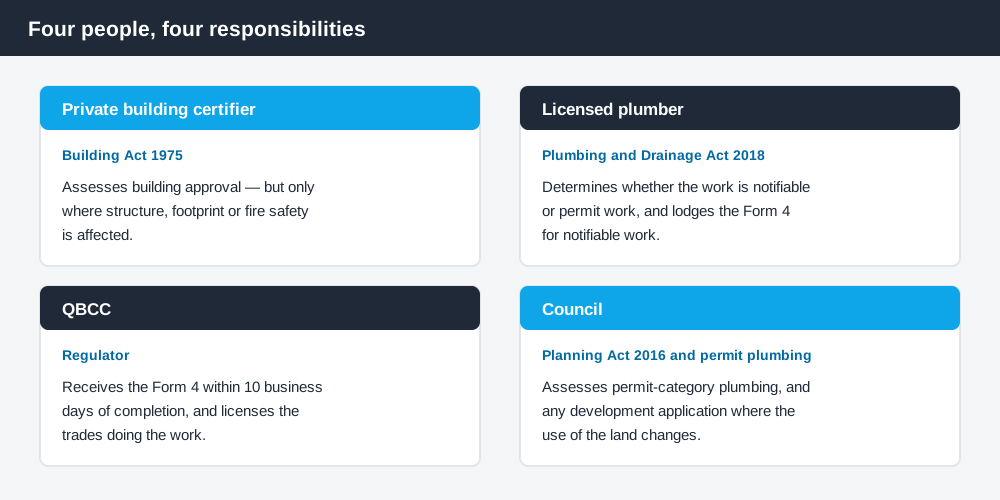
Figure 2: Four different people are responsible for four different things.
Notifiable work needs no council permit and no council inspection. Your licensed plumber does the work and lodges a Form 4 with the QBCC within 10 business days of finishing (Plumbing and Drainage Act 2018, s 83(1)), and must give you a copy of the notice and an explanatory statement within 20 business days (s 83(3)). Section 82 sets when the work counts as finished, which is what starts both clocks.
Permit work is the other pathway — anything outside notifiable, minor or unregulated work — and it does need council approval and inspection. Plumbing associated with new construction is expressly not notifiable work, so a bathroom in a new extension is treated differently from a bathroom carved out of an existing room. Your licensed plumber determines the category. It is not a choice you make.
Ask for the Form 4 and keep it. It is the only durable record that the plumbing was done lawfully, and it is what a buyer's solicitor will ask about later.
Exempt from approval is not exempt from the standards
This distinction matters more in a bathroom than almost anywhere else in a house. Accepted development means no one has to approve the work before it starts. It does not mean the work is free to be non-compliant.
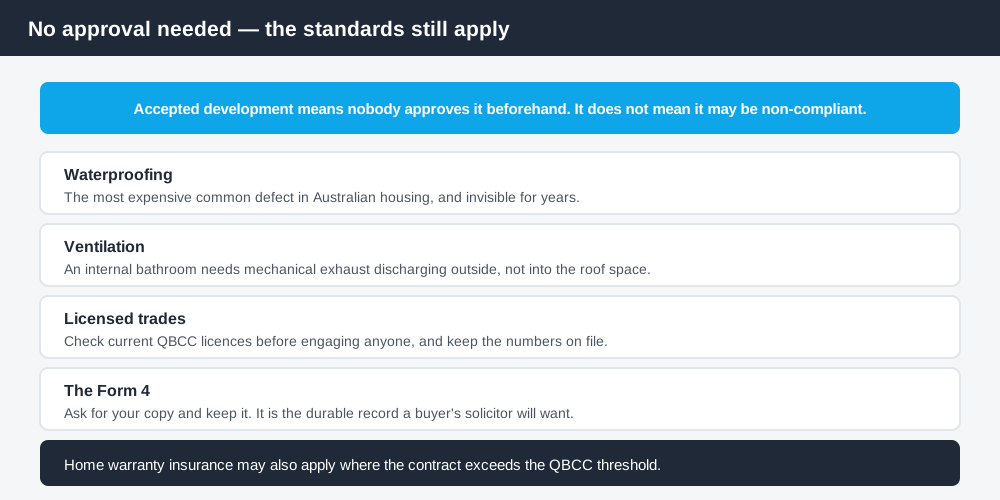
Figure 3: What still has to comply, approval or not.
Waterproofing is the big one. A failed shower membrane is the most expensive common defect in Australian housing, and it is invisible for years before it announces itself through a wall or a ceiling below. Ventilation is the second — a new internal bathroom with no window needs mechanical exhaust discharging outside, not into the roof space.
Use licensed trades and keep their paperwork: the plumber's Form 4, the waterproofer's certificate, and the QBCC licence numbers. If the work is over the QBCC's contract threshold, home warranty insurance may also apply, which your builder arranges.
The one scenario that becomes a planning question
If the new bathroom is part of creating a self-contained living area — bathroom, kitchen, separate entry — you may have created a secondary dwelling or a dual occupancy. That is a material change of use under the Planning Act 2016, and a material change of use requires a development application to your council as assessment manager.
Queensland's planning schemes follow the Queensland Planning Provisions structure, but each council layers its own codes and definitions on top. They are not uniform, so what counts as a secondary dwelling in one council is worth confirming against your own scheme rather than assumed. You can check the zone and overlays affecting your land on your council's planning scheme mapping and on the Queensland Globe.
What to do next
Answer three questions before the trades start. Does the footprint change? Does the drainage route require cutting structural members? Does the finished layout create a separate dwelling? If all three are no, you are very likely in the exemption, and the plumbing will be notifiable work.
If you'd rather see your zone, your overlays and your likely category of assessment in one document than work through a scheme yourself, an instantDA planning report does that for your address for $169 — against the $800–$1,500 a town planner typically charges for a preliminary opinion. You can start a report in a few minutes.
If the bathroom is one part of a wider project, council approval for internal renovations covers the same exemption across the whole house, including the limits on structural work. If the new bathroom is going into a self-contained space out the back, read building a granny flat without approval in QLD first, because that is where the planning risk sits. And if a bathroom has already been added without the right paperwork, retrospective approval in QLD sets out the options.
Then confirm the position with your plumber and, if there is any structural doubt, a private certifier.
Frequently asked questions
Do you need council approval to add a bathroom in QLD?
Does adding a bathroom need a plumbing permit in Queensland?
What is a Form 4 and why do I need it?
When does adding a bathroom need building approval?
Do I still need waterproofing and ventilation to comply if no approval is needed?
Can adding a bathroom create a granny flat?
Ready to generate your report?
Skip the writing. Get a council-ready planning report in 5 minutes.
Get your report