Key takeaways
- ✓Demolition is building work, so it usually needs building approval from a licensed building certifier.
- ✓Separately, the planning scheme can make demolition assessable development needing a DA decided by council.
- ✓Character and heritage overlays are where most people get caught, and the age cut-offs differ council to council.
- ✓A place on the Queensland Heritage Register adds a further layer under the Queensland Heritage Act 1992.
- ✓Pre-1990 buildings need an asbestos assessment, and licensed removal thresholds apply before the machine arrives.
Do You Need Council Approval to Demolish in QLD?
You'll usually hear this called a development application, or DA — that's the formal name for council approval under the Planning Act 2016. Demolition is the topic where Queensland's two separate approval systems collide hardest, because knocking a building down is building work under the Building Act 1975, and on a great many Queensland sites it is also assessable development under the planning scheme. Those are different approvals, from different decision-makers, and you can need both.
Get a council-ready planning report in 5 minutes — no planner, no waiting.
Get your report →The short answer
Usually yes. Demolishing a house is building work, so it needs building approval from a licensed building certifier. Separately, many councils make demolition assessable development under a character, heritage or centre-zone provision, which needs a development application decided by council. Check both before you book a machine.
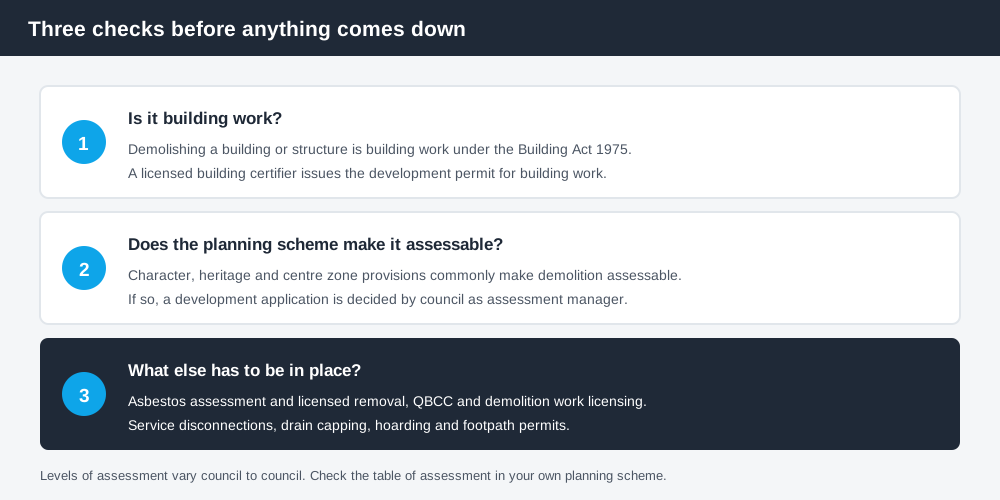
Figure 1: Demolition can trigger two separate approvals plus a set of side obligations.
Demolition is building work, so building approval comes first
"Building work" under the Building Act 1975 includes demolishing a building or other structure. That puts demolition inside the building approval system, administered by licensed building certifiers rather than by council's planning department. You engage a private certifier, supply scaled plans, and receive a development permit for building work — the thing people call a demolition permit.
There are narrow exemptions for very small class 10 structures in schedule 1 of the Building Regulation 2021. Section 13 of that schedule covers small non-habitable structures, and it excludes all building work within Wind Region C — the higher-wind coastal band — so the exemption is unavailable across large parts of northern and central Queensland. For a house or garage, assume building approval is required.
The planning scheme is the part people miss
Spend 5 minutes, not 3 weeks
instantDA generates a council-ready planning report for Queensland development applications. No town planner. No waiting.
Get your report →This is the step that derails demolition jobs. Building approval says the work can be done safely. It says nothing about whether the planning scheme permits the building to go. Queensland planning schemes follow the Queensland Planning Provisions structure, but each council layers its own zones, codes and overlays on top, so demolition triggers are council-specific and not uniform.
In Brisbane, City Plan 2014 requires planning approval to demolish where the site is in the traditional building character overlay and the building was built in or before 1946 — the houses commonly called pre-1947 or pre-war. A separate pre-1911 building overlay applies citywide to the oldest stock, and there is a commercial character building overlay for non-residential buildings. Demolition of any building in a principal or major centre zone also needs planning approval, as does demolition made assessable by a neighbourhood plan. Council's own demolition or removal guidance sets this out and is the authoritative source for Brisbane.
Brisbane's approach is Brisbane's, not the state's. Other south-east councils run comparable character provisions with their own mapping and their own cut-off dates, and many regional schemes have no such overlay at all. Whether your demolition is accepted development, code assessable or impact assessable depends on the table of assessment in your own scheme, so read it rather than assuming Brisbane's answer travels. Our guide to the character overlay in QLD explains how these provisions are mapped and what the benchmarks ask for.
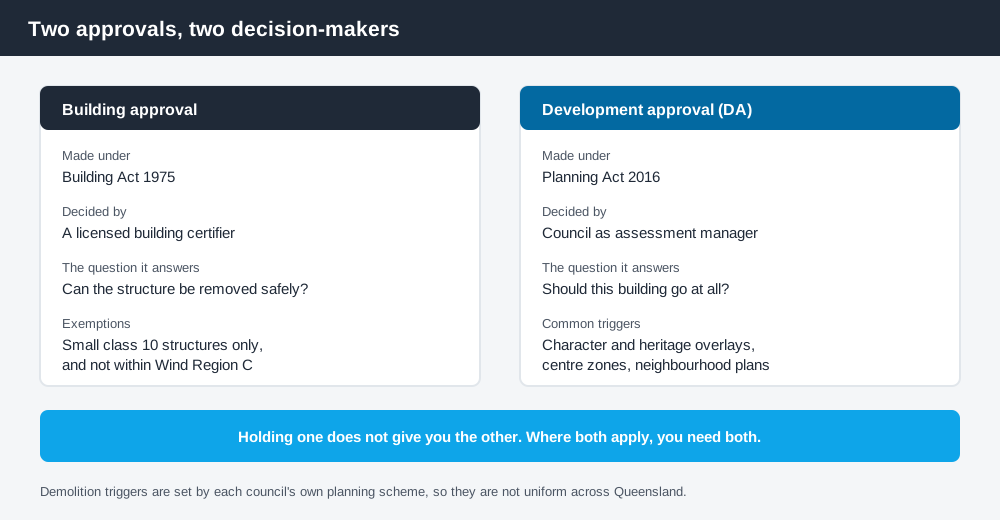
Figure 2: Two systems, two decision-makers, two applications.
Brisbane also carves out minor demolition inside those overlays — internal walls, stairs, post-1946 additions and outbuildings, and like-for-like replacement of original features. Those carve-outs sit in the scheme's prescribed accepted development table and change over time, which is why the table, not a summary, is the thing to check.
Heritage listing is a further layer again
A local heritage place identified in your council's heritage overlay is assessed under that overlay's code, and councils will often refuse demolition outright where significance is high. Some councils allow genuinely minor work on a local heritage place to proceed under a heritage exemption certificate instead of a full DA.
A place on the Queensland Heritage Register is a State heritage place under the Queensland Heritage Act 1992, and demolition there is assessable development assessed against the state's heritage provisions, with the state heritage agency involved rather than council alone. Exemption certificates exist under that Act for development with no more than minimal detrimental impact on cultural heritage significance — which demolition of significant fabric will rarely satisfy. If you are buying with demolition in mind, check the register and the overlay before you sign; heritage overlays in QLD covers what a listing restricts.
Asbestos, licences and disconnections
If the building dates from before 1990, treat asbestos as present until a competent person says otherwise. Under Queensland's Work Health and Safety Regulation 2011, removing any quantity of friable asbestos or asbestos-contaminated dust requires a Class A licensed removalist, and removing more than 10 m² of non-friable, bonded asbestos requires at least a Class B licence. Workplace Health and Safety Queensland administers that licensing and must be notified before certain demolition work begins.
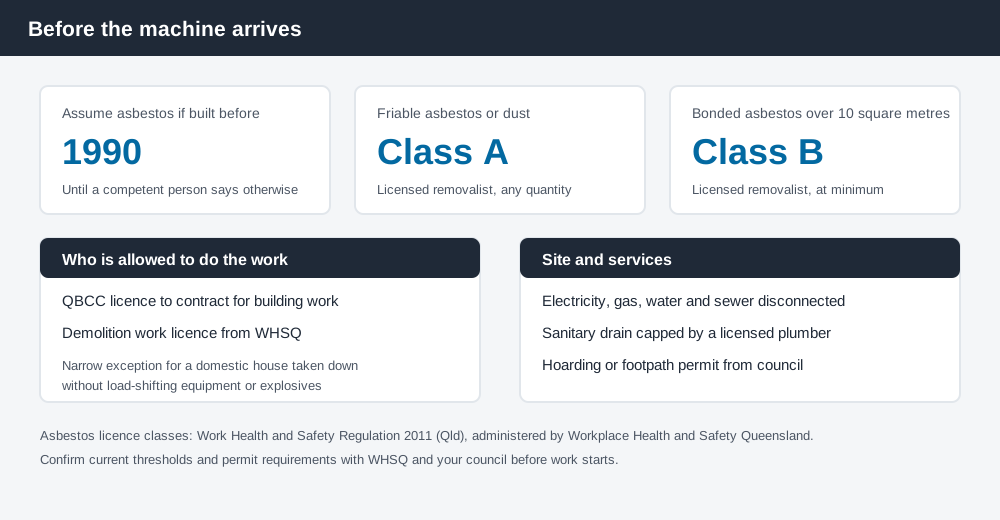
Figure 3: The obligations that sit alongside the two approvals.
Your contractor also needs the right licences. Contracting to carry out building work generally requires a QBCC licence, and a separate demolition work licence from Workplace Health and Safety Queensland is required for most demolition — with a limited exception for a domestic house with no pre-tensioned or post-tensioned components taken down without load-shifting equipment or explosives, which excludes almost every machine demolition.
Then there are the disconnections. Electricity, gas, water and sewer all have to be made safe by the relevant provider before work starts, and the sanitary drain generally has to be capped by a licensed plumber, which can need council plumbing approval in its own right. If a truck will cross the footpath or you need hoarding in the road reserve, that is another council permit, separate again.
Partial demolition, renovations and unapproved structures
Taking out internal walls as part of a renovation is still building work, and where the wall is structural the certifier will want engineering. Inside a character overlay the sequence flips: the planning question comes first, because removing part of a pre-1947 dwelling can be the trigger even when the building work is modest. Our guide to internal renovations in QLD covers where that line falls.
Demolition can also be a solution rather than a problem. If council has issued a notice about a structure built without approval, removing it is often the cleanest resolution — more certain than pursuing retrospective approval in QLD, which is not guaranteed and is assessed against today's benchmarks.
What to do next
Find out what your land is carrying before you commit. Zone, overlays and heritage listings are the difference between a certifier-only job and a contested DA.
An instantDA planning report sets out your zone, your overlays and your likely category of assessment for your address for $169 — against the $800–$1,500 a town planner typically charges for a preliminary opinion. You can start a report in a few minutes, then confirm the detail with your council before anything comes down.
Frequently asked questions
Do I need council approval to demolish a house in QLD?
Do I need approval to demolish a pre-1947 house in Brisbane?
Is a demolition permit the same as council approval?
How much asbestos can I remove myself in Queensland?
Can I demolish an unapproved shed or extension without approval?
Do I need to disconnect services before demolition in QLD?
Ready to generate your report?
Skip the writing. Get a council-ready planning report in 5 minutes.
Get your report