Key takeaways
- ✓A container kept on land for storage is generally a class 10a structure, and putting it there is building work.
- ✓The small-structure exemption in the Building Regulation 2021 caps plan area at 10m2 and any side at 5m — a standard 20ft container clears both.
- ✓That exemption does not apply at all in Wind Region C, the tropical cyclone area.
- ✓Councils vary enormously on containers, with local laws setting time limits, number, screening and colour.
- ✓A container during construction is often handled under a local law or temporary provision rather than the Planning Act 2016.
- ✓Turning a container into a habitable room or dwelling is a different question again.
Do You Need Council Approval for a Shipping Container in QLD?
You'll usually hear this called a development application, or DA — that's the formal name for council approval under the Planning Act 2016. Containers are unusual, though, because two separate systems reach for them at once, and because Queensland councils disagree about containers more than about almost anything else you can put on a block.
Get a council-ready planning report in 5 minutes — no planner, no waiting.
Get your report →The short answer
Usually yes. A container kept on your land is a structure, and once it is there permanently that is building work needing approval from a building certifier — a standard 20ft or 40ft container is too big for the small-structure exemption. Your council's scheme and local laws add a second layer.
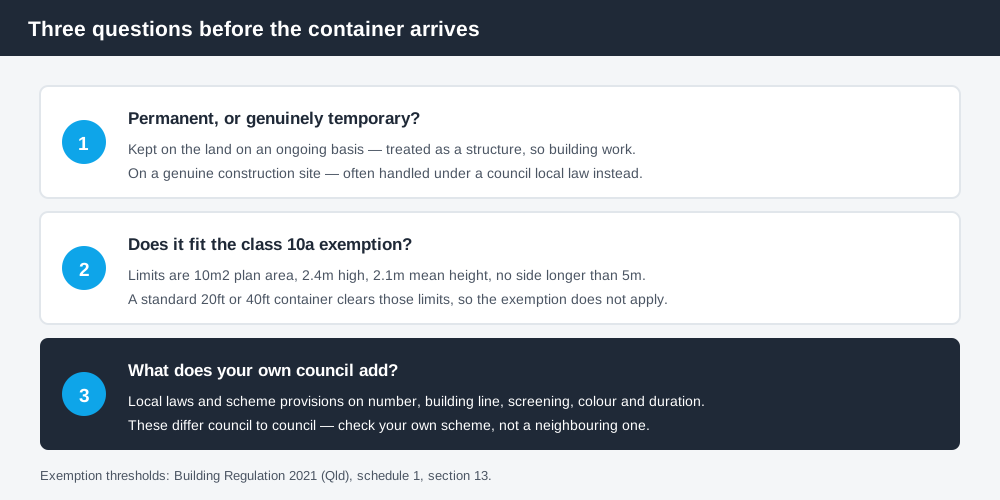
Figure 1: Three questions decide how a container is treated.
Why a container counts as a structure at all
People think of a container as an object — delivered, sat down, taken away again. Queensland's building system thinks of it as a structure the moment it stops being in transit and starts doing a job on the land.
A container used purely for storage is generally treated as a class 10a building, the same classification as a shed, garage or carport. Placing it and fixing it down is building work under the Building Act 1975, which is assessed and certified by a building certifier — not by council as assessment manager under the Planning Act 2016. Those are separate systems, and this is the point where most readers get tangled.
The small-structure exemption, and why it does not help
Spend 5 minutes, not 3 weeks
instantDA generates a council-ready planning report for Queensland development applications. No town planner. No waiting.
Get your report →The Building Regulation 2021 lists building work that is accepted development in schedule 1. Section 13 covers other work for class 10a buildings and structures, and it is the provision people hope will cover a container.
It sets four requirements. Plan area no more than 10m2. Height above natural ground surface no more than 2.4m. Mean height — total elevational area facing a boundary divided by the horizontal length facing it — no more than 2.1m. And no side longer than 5m.
A standard 20ft container is about 6.06m long and 2.44m wide — roughly 14.8m2 in plan and well over 5m on its long side. It is also about 2.59m high, or about 2.9m for a high cube. A 40ft container is nearly 30m2. Every common container size fails at least two of the four tests.
There is a further catch that matters in the north. Section 13 does not apply to building work within Wind Region C, the tropical cyclone area under AS 1170.2, so there the exemption is off the table regardless of size.
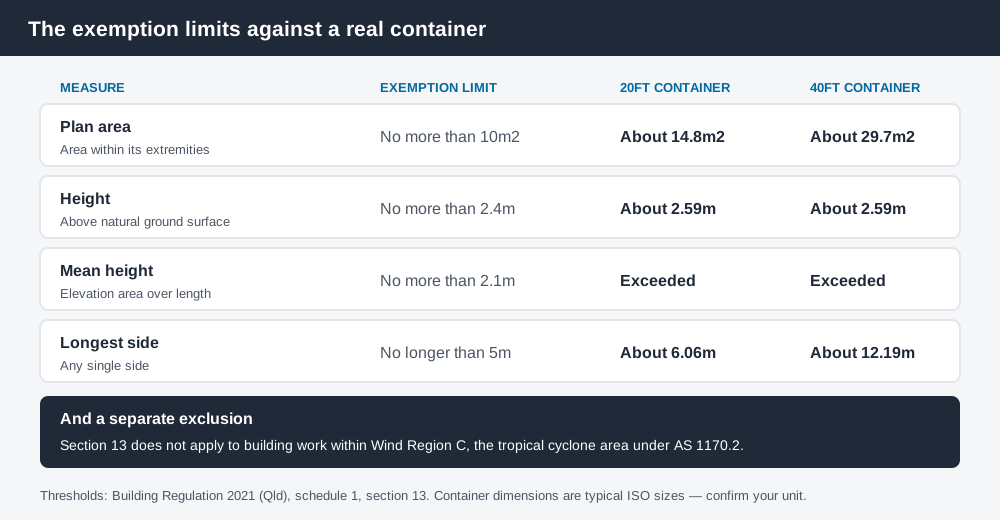
Figure 2: The exemption thresholds set against real container dimensions.
You can read the provision yourself in the Building Regulation 2021. If you want a broader view of what does slip through, what you can build without council approval in QLD works through the exempt categories.
Footings, tie-down and why the certifier cares
A container is strong in the corners and weak at holding itself down. Queensland spans several wind regions, and an empty container is essentially a sail. The certifier will want a footing and tie-down design appropriate to the site's wind classification, usually certified by a suitably qualified engineer.
This is why "it's not attached, so it doesn't count" rarely survives contact with a certifier. The absence of a tie-down is not evidence the container is exempt. It is closer to evidence of a problem.
What your council adds on top — and this genuinely varies
Here is where honest hedging matters. Queensland planning schemes follow the Queensland Planning Provisions structure, but each council layers its own codes, overlays and local laws on top, and containers are one of the least standardised subjects in the state.
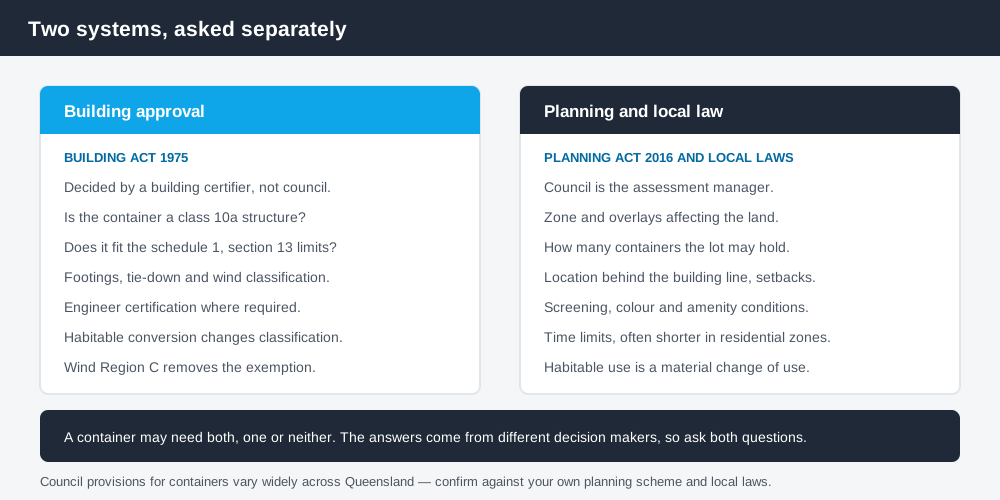
Figure 3: Two systems, two decision makers, asked separately.
Some councils regulate containers through a dedicated subordinate local law setting when a container is permitted outright and when approval is needed. Others use an amenity and aesthetics policy attached to building approval. Common themes include a limit on how many containers a residential lot may hold, a requirement that the container sit behind the building line and out of sight from the street frontage, screening by landscaping or fencing, and a colour scheme consistent with the house. Time limits are also common, often shorter in residential zones.
- ✓How many containers your zone allows
- ✓Whether it must sit behind the building line
- ✓Screening and colour requirements
- ✓Any time limit before approval is triggered
- ✓Setbacks to side and rear boundaries
- ✓Overlays such as character, heritage or flood
Rural and non-urban land is often treated more permissively, with longer permitted durations and fewer amenity conditions, on the reasoning that a container on a large rural lot is neither visible nor out of character. If yours is going on a working property, council approval for a farm shed in QLD covers the same rural logic. Overlays cut the other way — a character residential, heritage or flood overlay can add benchmarks that would not otherwise apply.
Because these rules differ council to council, do not rely on what a neighbouring council allows. Sunshine Coast Council's shipping container page shows how one council sets it out, but that is its position, not the state's. Check your own scheme and local laws.
Temporary containers during construction
A container brought in as a site store while an approved dwelling is built is handled differently again. Several councils allow it without approval provided it is on a genuine construction site, used for the construction, kept wholly within the property, causing no amenity or access problems, and removed when the work finishes. Others give a fixed window and require a local law approval past it.
That path is generally a local law or a temporary use provision rather than the Planning Act 2016. The condition that catches people is the last one — the container has to actually leave.
If you want to live in it
Storage and habitation are different questions. Converting a container into a dwelling, bedroom or self-contained studio changes its classification away from class 10a and will usually involve a material change of use as well as building approval against habitable-room standards. That is a longer conversation, and shipping container homes in QLD is where it belongs. If the container is really just a shed you bought cheaply, council approval for a shed in QLD is the closer comparison.
What to do next
Before the truck is booked, settle three things: whether the container is permanent or genuinely temporary, whether your council has a container-specific local law, and what your zone and overlays require.
If you'd rather see your zone, your overlays and your likely category of assessment in one document than read a planning scheme yourself, an instantDA planning report does that for your address for $169 — against the $800–$1,500 a town planner typically charges for a preliminary opinion. You can start a report in a few minutes.
Then confirm with your council. On containers, the answer is genuinely local.
Frequently asked questions
Do I need council approval for a shipping container in QLD?
Does the 10m2 exemption cover a shipping container?
Can I put a shipping container on a rural block in Queensland?
Can I keep a container on site while I build?
Do I need an engineer for a shipping container?
What if I want to turn the container into a room or a home?
Ready to generate your report?
Skip the writing. Get a council-ready planning report in 5 minutes.
Get your report