Key takeaways
- ✓The controlling question is not size — it is whether the tiny house is on wheels and temporary, or fixed to the land and lived in.
- ✓A genuine caravan on wheels, not connected to services, is regulated as a vehicle rather than a building — but local laws still control how long it can be occupied.
- ✓Fixed to the land and self-contained, a tiny house is a dwelling, and dwellings need building approval and plumbing and drainage approval.
- ✓The realistic legal path for a backyard tiny house is the secondary dwelling, which since September 2022 can be rented to anyone.
- ✓Living in an unapproved tiny house risks a show cause notice and then an enforcement notice that can require removal.
Tiny Houses in QLD — When Do You Need Council Approval?
You'll usually hear this called a development application, or DA — that's the formal name for council approval under the Planning Act 2016. Most people searching for a tiny house with no council approval in Queensland are hoping the answer is "none required". Occasionally it genuinely is. For most people who want to live in one it is not, and the reason has almost nothing to do with how small the building is.
Get a council-ready planning report in 5 minutes — no planner, no waiting.
Get your report →The short answer
A tiny house on wheels, used temporarily and not connected to services, is treated as a caravan rather than a building — but your council's local law still controls how long it can be occupied. Fixed to the land and lived in, it is a dwelling, and it needs building and plumbing approval.
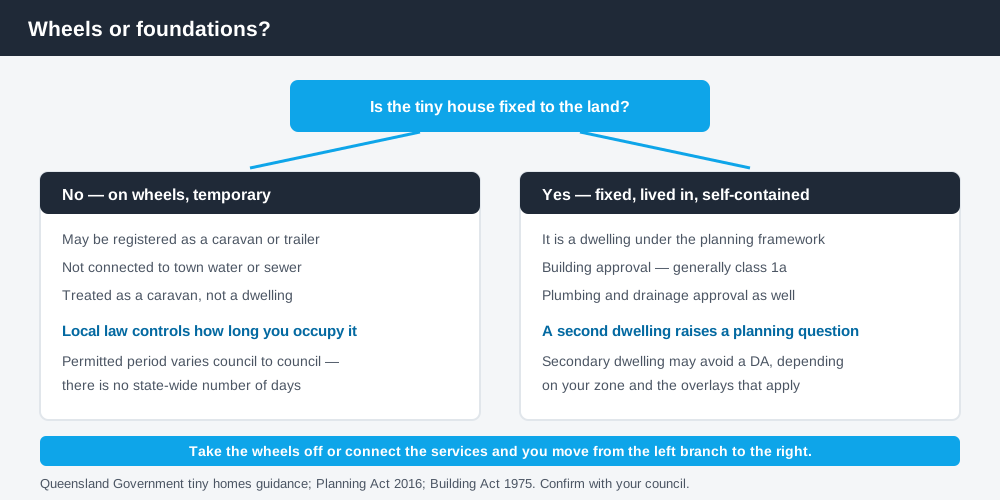
Figure 1: Wheels or foundations — the question that decides which rulebook applies.
Wheels or foundations — the distinction that decides everything
Queensland's planning framework does not define a "tiny home". The state's tiny homes guidance instead splits them into two kinds: temporary use tiny homes, typically on wheels, and fixed tiny homes intended for permanent accommodation.
A tiny home that may be on wheels, may be registered as a caravan or trailer, is intended only for temporary accommodation, and is not connected to services such as town water and sewer, is considered a caravan and not a dwelling. Caravans are regulated under the Transport Operations (Road Use Management) Act 1995, and councils may regulate them through local laws made under the Local Government Act 2009.
Fix that same tiny house to the land, make it self-contained with food preparation facilities, a bath or shower, a toilet, a wash basin and laundry facilities, and it is a dwelling. Everything else follows from that.
Does a tiny house on wheels need council approval in QLD?
Spend 5 minutes, not 3 weeks
instantDA generates a council-ready planning report for Queensland development applications. No town planner. No waiting.
Get your report →Storing a caravan or tiny house on wheels on your own land is not usually the problem. Occupying it as a home is, because that is a question about how the land is being used.
Many Queensland councils have made local laws allowing someone to live in a caravan or temporary tiny home for a limited period — commonly while a permanent house is being built. The state leaves this to each council's discretion, and the permitted period varies considerably: some councils count in weeks per year, others allow months under a temporary home approval, and some require approval for any occupation at all.
There is no state-wide number of days. Anyone quoting you one is guessing. Read your own council's local law and planning scheme first, and remember that removing the wheels, connecting to mains services or building a deck around it all point towards the caravan characterisation failing.
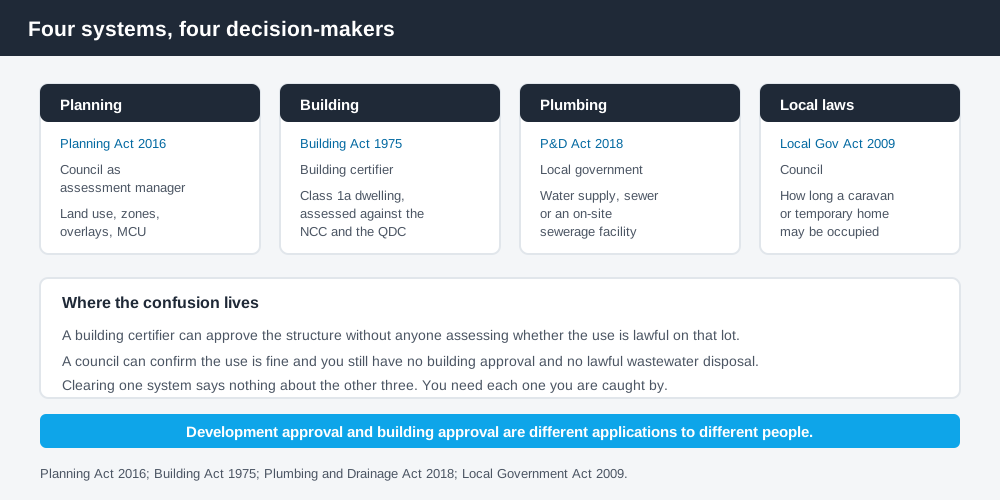
Figure 2: Four separate systems, four separate decision-makers.
Because a caravan-style tiny house raises nearly identical questions to a caravan, rules for keeping a caravan on your property in QLD is worth reading alongside this.
What happens when the tiny house is fixed to the land
Once the tiny house is fixed and used as a residence, it is building work. Building approval under the Building Act 1975 applies, and a habitable dwelling of this kind is generally a class 1a building. The National Construction Code and the Queensland Development Code then apply in full — structural adequacy, ceiling heights, fire separation, energy efficiency, natural light and ventilation.
This is where imported or self-built tiny houses come unstuck. The state's guidance warns that tiny homes not built to those standards may not offer a safe living choice, singling out low ceiling heights, structural and drainage characteristics, fixtures, energy efficiency and accessibility.
Building approval is decided by a building certifier, not the council's planning department. It is a separate system from the DA, and getting one does not answer the planning question.
Services are the third layer. On unsewered land, disposing of sewage means an on-site sewerage facility approved by your local government under the Plumbing and Drainage Act 2018, which needs enough land area, the right soil and adequate separation from boundaries and waterways.
The material change of use problem — and the secondary dwelling answer
If there is already a house on the lot, adding a second self-contained dwelling is usually a material change of use, which is assessable development unless something takes it out of that category.
The way out for most people is the secondary dwelling. Under Schedule 24 of the Planning Regulation 2017, a secondary dwelling is a dwelling used in conjunction with, but subordinate to, another dwelling on the same lot — and a dwelling house is defined to include two dwellings where one is a secondary dwelling.
Schedule 6 then stops a council making a material change of use for a dwelling house assessable development, but only where conditions are met: the use must be for a residential purpose in a residential zone other than a medium or high density residential zone, it must not involve a basement or underground parking, and either no relevant overlay applies, or the overlay does not itself make the use assessable. Miss any of those and you are back to needing a DA.
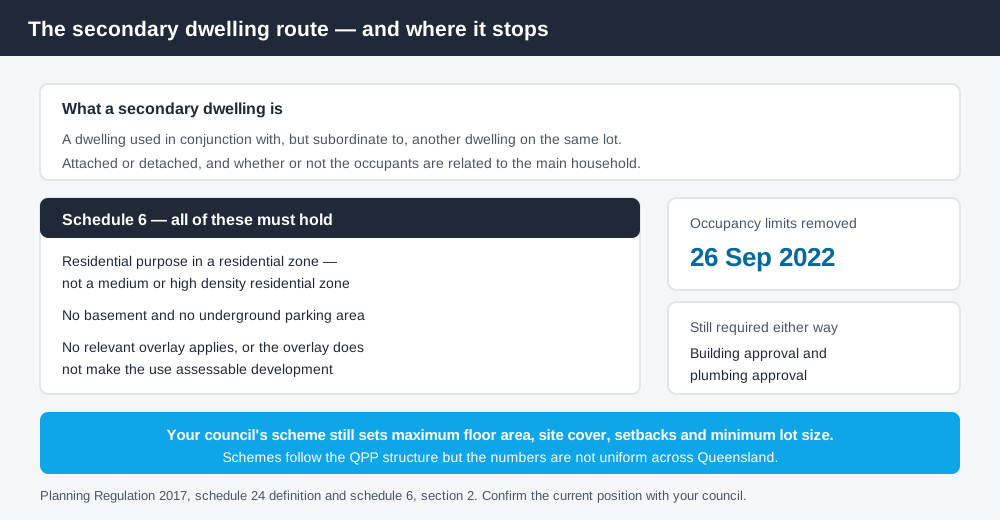
Figure 3: The secondary dwelling route, and where it stops working.
Since 26 September 2022 a secondary dwelling can be rented to anyone, related to the main household or not — the definition now says so expressly, and the state's page on changes to secondary dwellings confirms that position was still current at its September 2025 review. Two cautions: an older approval may carry occupancy conditions needing a change application, and renting out can trigger extra fire and sound requirements.
- ✓Confirm your zone and overlays
- ✓Check the maximum secondary dwelling size and site cover in your scheme
- ✓Check minimum lot size and setbacks
- ✓Confirm water, sewer or on-site wastewater capacity
- ✓Ask whether an existing approval limits occupancy
Queensland's planning schemes follow the Queensland Planning Provisions structure, but each council layers its own codes and overlays on top, so maximum floor area, site cover, setbacks and minimum lot size are council-specific. Granny flat rules in QLD covers those site limits.
Rural land is more permissive, not unregulated
Rural blocks tempt people because they are large and unwatched. The state's guidance is blunt that multiple permanent tiny homes on one lot would be multiple dwellings, better suited to residential zones, and that rural land is unlikely to have reticulated water and sewer. Space is not permission.
What happens if you just do it anyway
Occupying an unapproved dwelling is a development offence. Under section 167 of the Planning Act 2016 the council must first give a show cause notice, allowing at least 20 business days for representations. If it remains unsatisfied, section 168 lets it issue an enforcement notice requiring you to stop the use, or to remove the development and restore the premises.
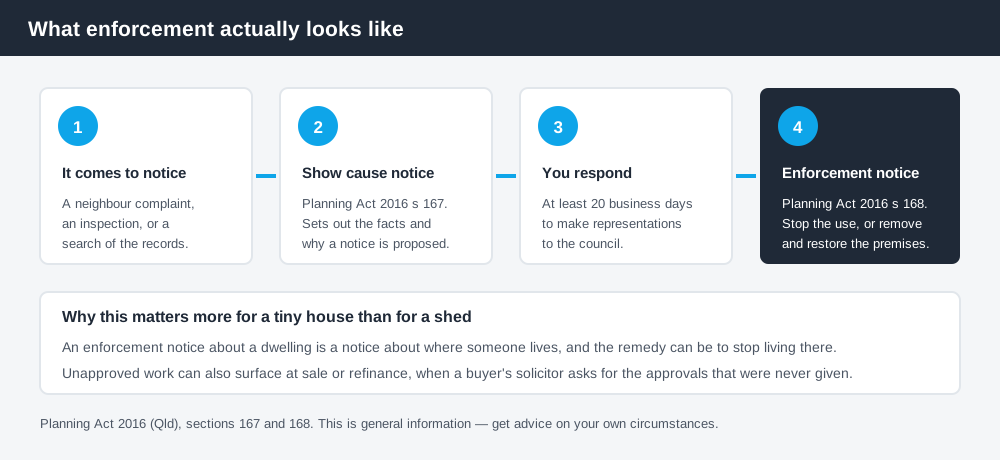
Figure 4: How an unapproved tiny house becomes an enforcement problem.
Getting the paperwork afterwards is possible but harder and slower than doing it first, as retrospective approval in QLD sets out.
What to do next
Answer three questions before you buy or build: is it on wheels and genuinely temporary, is there already a dwelling on the lot, and is the land sewered.
If you'd rather see your zone, your overlays and your likely category of assessment in one document than work through a planning scheme yourself, an instantDA planning report does that for your address for $169 — against the $800–$1,500 a town planner typically charges for a preliminary opinion. You can start a report in a few minutes.
Then confirm with your council. A tiny house is easy to move and expensive to be told to move.
Frequently asked questions
Can I live in a tiny house on wheels in QLD without council approval?
Does a tiny house on a slab need building approval in Queensland?
Can a tiny house be a granny flat in QLD?
Can I rent out a tiny house that is a secondary dwelling?
What happens if I live in a tiny house without approval?
Ready to generate your report?
Skip the writing. Get a council-ready planning report in 5 minutes.
Get your report