Key takeaways
- ✓Two dwellings on one Queensland lot are either a secondary dwelling or a dual occupancy — the difference is whether one is subordinate to the other.
- ✓Councils measure subordinate status with gross floor area caps, distance from the main house, shared address and services, single ownership and one per lot.
- ✓"Duplex" is a built-form word, not a planning term — in Queensland planning language a duplex is normally a dual occupancy.
- ✓A complying secondary dwelling is commonly accepted development; a dual occupancy normally needs a development application and attracts higher infrastructure charges.
- ✓A secondary dwelling can never be separately titled; a dual occupancy can potentially be split, but only through a separate reconfiguring a lot approval.
- ✓The definitions and thresholds sit in each council's planning scheme — they are not uniform across Queensland.
Granny Flat vs Duplex in QLD — Which Approval Do You Need?
Most people describe this as building a granny flat, or putting a duplex on the block. You'll usually hear the approval called a development application, or DA — that's the formal name for council approval in Queensland. But before anyone can tell you whether you need one, they have to work out which of two things you are proposing, because Queensland planning schemes recognise only two ways to put two dwellings on a single lot: a secondary dwelling, or a dual occupancy.
That classification decides whether you lodge an application at all, what you pay in infrastructure charges, how much parking you provide, and whether the lot can ever be split into two titles.
Get a council-ready planning report in 5 minutes — no planner, no waiting.
Get your report →The short answer
A secondary dwelling is a self-contained dwelling that is subordinate to the main house on the same lot. A dual occupancy is two independent dwellings on one lot with neither subordinate. A complying secondary dwelling is commonly accepted development. A dual occupancy normally needs a development application.
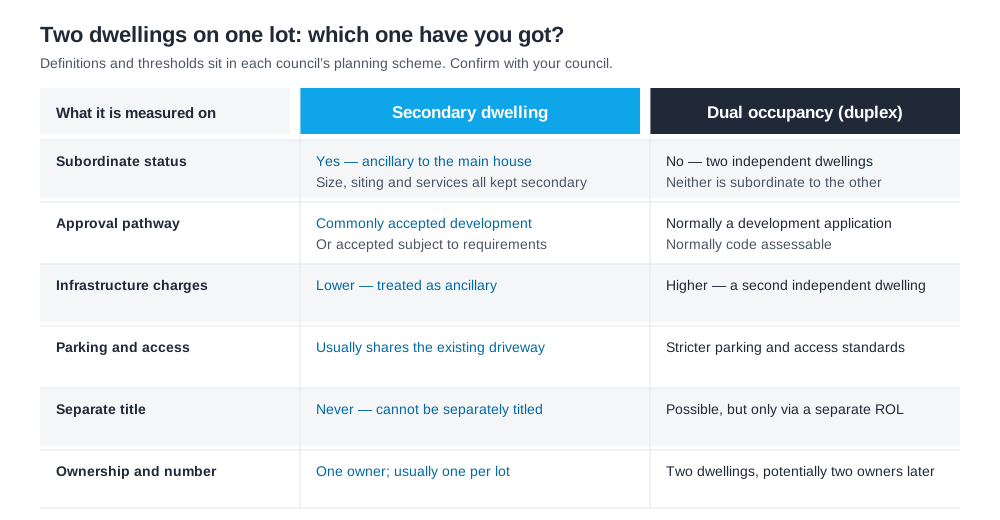
Figure 1: The two uses compared across the dimensions that decide cost and process.
What Queensland actually calls each one
A secondary dwelling is a self-contained dwelling on the same lot as, used in conjunction with, but subordinate to, a primary dwelling. It shares the lot and the title with the house, and cannot be carved off and sold separately. The State publishes a code for a dwelling house that is a secondary dwelling, and each council's scheme carries its own definition and thresholds on top of it.
A dual occupancy is two dwellings on one lot where neither is subordinate to the other — two equal front doors, rather than a main entrance and a side entrance. That equality triggers a different, heavier approval pathway. Everything in between is resolved by one question: is the second dwelling genuinely subordinate?
The subordinate test, and what councils measure
Spend 5 minutes, not 3 weeks
instantDA generates a council-ready planning report for Queensland development applications. No town planner. No waiting.
Get your report →"Subordinate" sounds like a judgement call. In practice councils turn it into a short list of measurable things, applied together rather than one at a time.
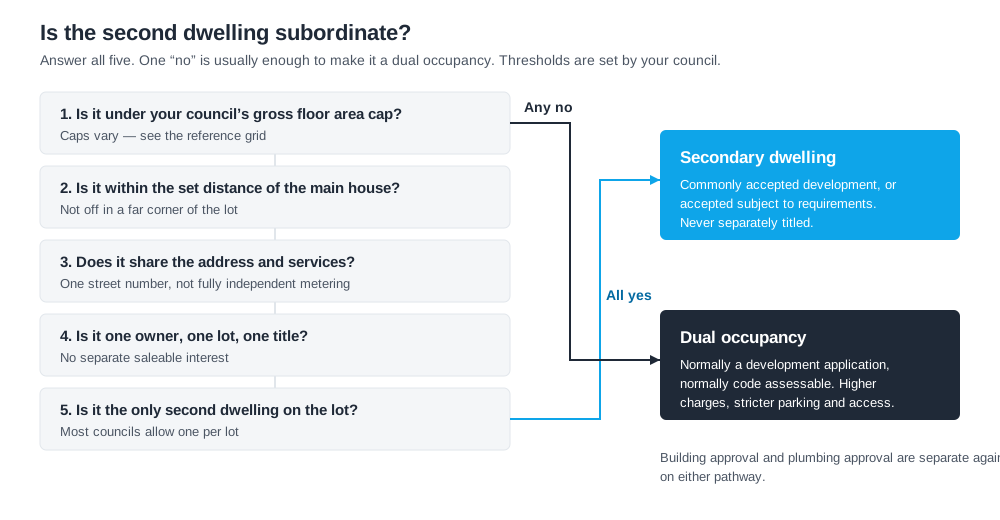
Figure 2: The questions councils ask, and where each answer lands you.
- ✓Gross floor area — the second dwelling must stay under a cap set by the council
- ✓Distance — it must sit within a set distance of the main house, not off in a far corner
- ✓Address and services — one street address, and shared or connected services rather than fully independent metering
- ✓Ownership — one owner, one lot, one title, with no separate saleable interest
- ✓Number — most councils allow only one secondary dwelling per lot
Miss the size cap and you have a second house, not a granny flat. Give it a separate street number, its own crossover and fully independent services and you have built two independent dwellings, whatever the plans call them.
Establishing a secondary dwelling is still a material change of use in the statutory sense — the dictionary in Schedule 2 of the Planning Act 2016 defines that to include the start of a new use of premises. Being accepted development means you don't lodge an application; it does not mean nothing is happening in planning terms. How that plays out is covered in the rules for granny flats in Queensland.
Why "duplex" is a built-form word, not a planning term
This is where a lot of confusion starts. "Duplex" describes a shape — two attached dwellings under one roofline, usually mirrored, with a shared party wall. It is builders' and real estate language. Open a Queensland planning scheme looking for a duplex code and you generally won't find one. You will find dual occupancy. In Queensland planning language a duplex is normally a dual occupancy, and it is assessed as one. The reverse also holds: two fully detached houses on one lot, with neither subordinate, is still a dual occupancy even though nobody would call it a duplex.
What changes the moment you cross the line
Under the Planning Act 2016, development falls into categories, and the category sets what you have to do. A secondary dwelling that complies is commonly accepted development, or accepted development subject to requirements — no development application either way. The difference is that the second only stays that way while you meet every requirement. Change one thing and it becomes assessable.
A dual occupancy normally needs a development application and is normally code assessable: assessed against the relevant codes, not publicly notified, no third-party appeal right. Assessment levels vary by zone and council — in Brisbane, practitioners report dual occupancy is generally code assessable in some residential zones and generally impact assessable in others, and Brisbane City Council has a City Plan amendment underway that would change how it is treated in a new low-medium density precinct. Check the Brisbane dual occupancy page and the current tables of assessment rather than anything second-hand. If Brisbane is your council, dual occupancy in Brisbane goes deeper.
A dual occupancy also typically attracts higher infrastructure charges — you are creating a second independent dwelling, not an ancillary one — and faces stricter parking and vehicle access requirements.
Can the lot ever be split?
A secondary dwelling cannot be separately titled. Not later, not with a variation. One lot, one title by definition — the moment it becomes separately saleable it is no longer a secondary dwelling.
A dual occupancy can potentially be subdivided later, but that does not come with the dual occupancy approval. Splitting the lot is reconfiguring a lot, the Planning Act term for subdivision and boundary changes, and it needs its own approval against the council's minimum lot size and design requirements. Many dual occupancy approvals never become two titles. If subdivision is the goal, read reconfiguring a lot in Queensland before committing to a design.
The confirmed council size caps
Gross floor area caps differ by council.
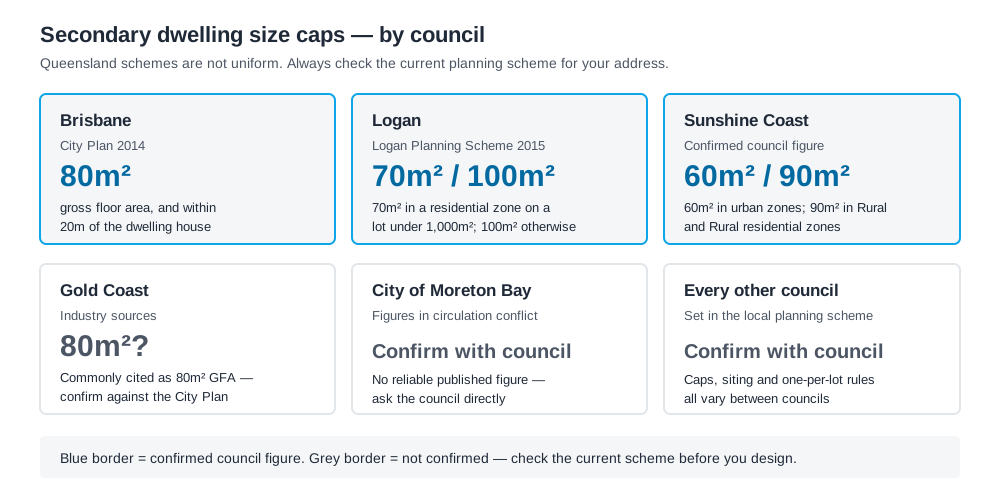
Figure 3: Confirmed council caps, with the rest flagged to confirm directly.
Brisbane City Plan 2014 sets a maximum of 80m² gross floor area, within 20 metres of the dwelling house. The Logan Planning Scheme 2015 allows 70m² in a residential zone on a lot under 1,000m², and 100m² otherwise. Sunshine Coast allows 60m² in urban zones and 90m² in Rural and Rural residential zones. Gold Coast is commonly cited as 80m², but confirm that against the current City Plan. For City of Moreton Bay the figures in circulation conflict badly — confirm the cap directly with the council. Every other Queensland council sets its own, so confirm with your council before you draw anything.
The 2022 renting change — and what it didn't change
Secondary dwellings used to carry a restriction limiting occupation to people related to, or associated with, the household of the main house. The Planning (Secondary Dwellings) Amendment Regulation 2022 removed that restriction with effect from 26 September 2022. Renting a secondary dwelling to a tenant unrelated to the household no longer, of itself, makes it something other than a secondary dwelling.
What it did not do is change the subordinate test. Losing subordinate status — through size, distance, separate address, separate services or separate ownership — still tips the use into dual occupancy, tenant or no tenant. Confirm with your council, since councils implement this through their own schemes. Whichever pathway you land in, building approval under the Building Act 1975 from a private certifier is separate again, and plumbing and drainage approval from council is usually needed too.
Which side of the line you fall on comes down to your zone, lot size, council cap and how the second dwelling relates to the house. An instantDA planning report sets that out against your address for $169 — against the $800–$1,500 a town planner typically charges for a preliminary opinion. You can start a report in a few minutes, before you pay for drawings.
Frequently asked questions
Is a granny flat the same as a secondary dwelling in Queensland?
Is a duplex a dual occupancy in Queensland?
Do I need a development application for a granny flat in QLD?
Can I subdivide a duplex in Queensland?
What makes a secondary dwelling become a dual occupancy?
Ready to generate your report?
Skip the writing. Get a council-ready planning report in 5 minutes.
Get your report