Key takeaways
- ✓Dual occupancy means two dwellings on one lot with neither subordinate to the other — that is what separates it from a secondary dwelling.
- ✓Brisbane City Plan 2014 has a stand-alone dual occupancy code, and dual occupancy is described as supported in Low density residential, Low-medium density residential and Character residential (Infill housing zone precinct) zones.
- ✓The level of assessment varies by zone and precinct and must be read off the current table of assessment — do not rely on a figure or a category you read in a forum.
- ✓Brisbane is actively amending its low-medium density provisions through More Homes, Sooner, so material written a year ago may already be out of date.
- ✓Splitting a dual occupancy into two titles is a separate reconfiguring a lot approval and does not come with the dual occupancy approval.
Dual Occupancy in Brisbane — What Council Allows
Most people arrive at this question sideways. You wanted a granny flat, you drew something slightly bigger, and someone told you that what you have drawn is now a dual occupancy. You'll usually hear the approval you need called a development application, or DA — in Brisbane, an application to Brisbane City Council assessed against City Plan 2014.
Get a council-ready planning report in 5 minutes — no planner, no waiting.
Get your report →The short answer
Dual occupancy means two dwellings on one lot, neither subordinate to the other. Brisbane City Plan 2014 has a stand-alone dual occupancy code, and dual occupancy is described as supported in the Low density residential, Low-medium density residential and Character residential (Infill housing zone precinct) zones. Levels of assessment vary by zone and precinct.
That last sentence is doing a lot of work, and this guide is honest about why. Brisbane's low-medium density provisions are mid-amendment. Anything you read that states a single confident rule for the whole city is either out of date or was never right.
Dual occupancy, secondary dwelling, multiple dwelling
These three are different defined uses, and picking the wrong one is the most common reason a project stalls.
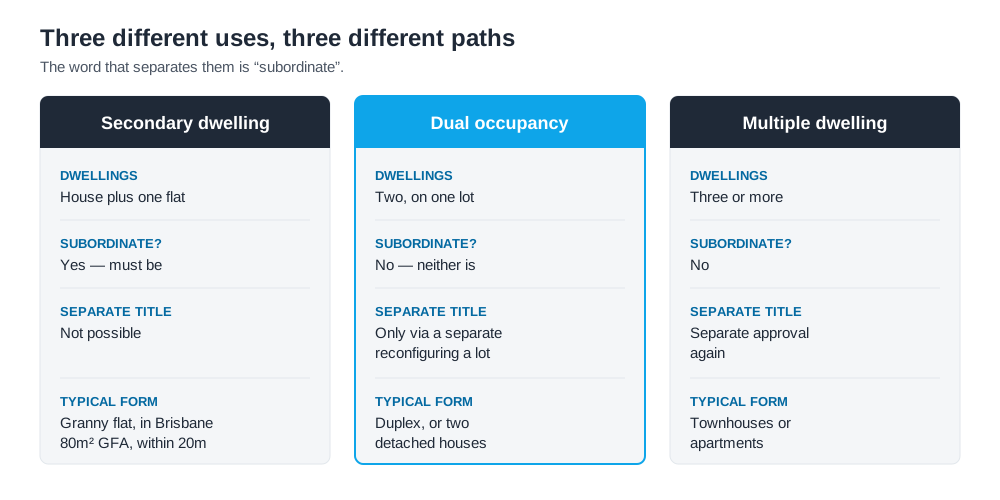
Figure 1: The three residential uses people confuse, and what separates them.
A secondary dwelling is a self-contained dwelling on the same lot as, used in conjunction with, but subordinate to, a house. Same lot, same title, and it cannot be separately titled. In Brisbane, council material confirms a secondary dwelling is limited to 80m² gross floor area and must sit within 20m of the dwelling house. Stay inside that envelope and you are usually dealing with a straightforward addition to a house.
A dual occupancy is two dwellings on one lot where neither is subordinate. A duplex is the usual built form, but two detached houses on one lot can also be a dual occupancy. Losing "subordinate" status — through size, separation, a separate driveway, or simply designing a second house rather than an ancillary flat — is what tips a project from one category into the other. That crossover is worth understanding properly before you commit to a design, and it is covered in detail in secondary dwelling versus dual occupancy.
A multiple dwelling is three or more dwellings on a lot, or dwellings in an arrangement City Plan treats as multi-unit rather than dual occupancy. It is a materially heavier assessment path.
Whichever you land on, this is a material change of use under the Planning Act 2016 — the dictionary in Schedule 2 defines that as the start of a new use of premises, the re-establishment of an abandoned use, or a material increase in the intensity or scale of a use. A second, non-subordinate dwelling is comfortably a new use.
Which Brisbane zones support dual occupancy
Spend 5 minutes, not 3 weeks
instantDA generates a council-ready planning report for Queensland development applications. No town planner. No waiting.
Get your report →Council-derived material describes dual occupancy as supported in three zones: Low density residential, Low-medium density residential, and Character residential in the Infill housing zone precinct. "Supported" is not the same as "approved without an application", and it is not the same as one level of assessment applying everywhere.
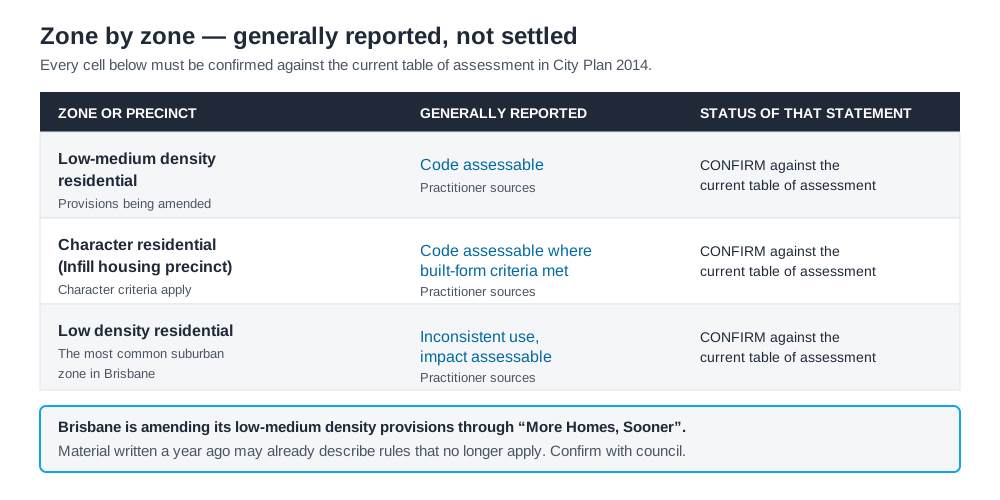
Figure 2: What practitioners generally report by zone — every cell needs confirming against the current table of assessment.
Practitioners generally report that dual occupancy is code assessable in the Low-medium density residential zone, and code assessable in the Character residential Infill housing zone precinct where the built-form and character criteria are met. In the Low density residential zone, practitioners generally report it is treated as an inconsistent use and is impact assessable — meaning public notification, submitters, and third-party appeal rights.
We are deliberately not stating any of that as settled fact. The level of assessment for your site is set by the table of assessment in City Plan 2014 for your specific zone and precinct, and that is the document you or your planner must read. The difference between code and impact assessment changes your timeframe, your cost and your risk profile completely — if that distinction is new to you, accepted versus assessable development sets out what each category actually obliges you to do.
Why last year's advice may be wrong: More Homes, Sooner
Brisbane City Council is running a City Plan amendment process badged "More Homes, Sooner — Low-medium density residential design". Its consultation material includes a 400m² minimum lot size for dual occupancies that meet design and built-form criteria, and proposes that dual occupancy become accepted development in a new low-medium density precinct.
Read that carefully. It describes where council wants to go, not the rule your application is assessed against today. Do not plan a purchase around it, and do not assume a brochure citing 400m² is describing current City Plan. Brisbane's own dual occupancy page is the right starting point, because it moves when the scheme moves.
For the same reason, we are not publishing a minimum lot size or a minimum frontage as the current Brisbane rule. Those figures circulate widely, they differ between sources, and they are exactly the kind of number that is about to change.
Two titles is a second, separate approval
This trips up more people than anything else. Approval for a dual occupancy lets you build and use two dwellings on one lot. It does not split the land. Selling or financing the halves separately requires reconfiguring a lot — the Planning Act term for subdivision — as its own development approval, by standard format plan or building format plan.
That second approval is assessed on its own benchmarks and can be refused even where the dual occupancy is approved. Treat it as a distinct project with a distinct risk, not paperwork that follows automatically. Reconfiguring a lot explains what that application involves.
The order to check things in
Work through these in sequence, because each one can end the project cheaply before you spend on the next.
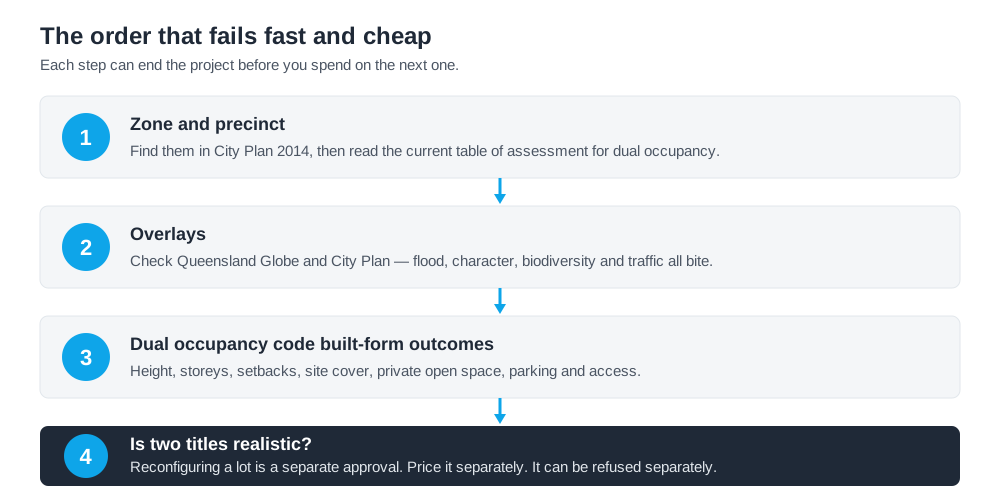
Figure 3: The order that fails fast and cheap.
- ✓Confirm your zone and precinct in City Plan 2014, then read the current table of assessment for dual occupancy in that zone and precinct
- ✓Check every overlay across the site on Queensland Globe and in City Plan — flood, character, biodiversity and traffic overlays all bite
- ✓Test your concept against the dual occupancy code's built-form outcomes: height, storeys, setbacks, site cover, private open space, parking and access
- ✓Only then ask whether a reconfiguration into two titles is realistic, and price it as a separate approval
Queensland Globe is free and will show you a great deal about the site's constraints before you speak to anyone. It will not tell you your level of assessment — that comes from City Plan.
If you want the zone, the precinct, the overlays and the likely assessment path set out for your actual address rather than in general terms, an instantDA planning report does that for $169, against the $800–$1,500 a town planner typically charges for a preliminary opinion. You can start a report in a few minutes, and it is a sensible thing to do before a contract goes unconditional.
Whatever you find, confirm it with Brisbane City Council in writing. City Plan is being amended right now, and the version in force on the day you lodge is the one that governs.
Frequently asked questions
Is dual occupancy allowed in the Low density residential zone in Brisbane?
What is the minimum lot size for a dual occupancy in Brisbane?
Can I subdivide a duplex into two lots in Brisbane?
What is the difference between a granny flat and a dual occupancy?
Is a dual occupancy code assessable or impact assessable in Brisbane?
Do I need a development application for a dual occupancy in Brisbane?
Ready to generate your report?
Skip the writing. Get a council-ready planning report in 5 minutes.
Get your report