Key takeaways
- ✓Queensland planning schemes call a granny flat a secondary dwelling — a self-contained dwelling on the same lot as, and subordinate to, the main house.
- ✓Everything turns on the subordinate test. Lose it and the proposal becomes a dual occupancy, with tougher assessment and higher charges.
- ✓Size caps are set by each council, not the State. Brisbane allows up to 80m² within 20m of the house; Logan and Sunshine Coast use different figures.
- ✓Since 26 September 2022 a secondary dwelling no longer has to be occupied by someone related to the household.
- ✓You can need up to three separate approvals: development approval from council, building approval from a private certifier, and plumbing approval.
Granny Flat Rules in Queensland (2026)
Most people call it a granny flat. Queensland planning schemes almost never use that phrase — they call it a secondary dwelling, and if you go looking for "granny flat" in your council's scheme you will often find nothing at all. When approval is needed, you'll usually hear that called a development application, or DA, and council decides it as the assessment manager. Learn more about the studio or sleepout approval.
Get a council-ready planning report in 5 minutes — no planner, no waiting.
Get your report →The short answer
A granny flat in Queensland is a secondary dwelling: self-contained, on the same lot and title as the main house, and subordinate to it. Size caps are set by each council, not the State. You will usually need building approval and plumbing approval, and often development approval as well.
That last sentence is where most of the confusion sits, so it is worth pulling apart.
What Queensland actually calls a granny flat
A secondary dwelling is a self-contained dwelling — its own kitchen, bathroom, living and sleeping space — that sits on the same lot as a primary dwelling, is used in conjunction with it, and is subordinate to it. It shares the lot and the title. It cannot be separately titled, and you cannot sell it off on its own without subdividing, which is a completely different application.
Councils commonly go further. Many require the secondary dwelling to share a street address, share services such as water and power connections, and sit within a set distance of the house. Most schemes allow only one secondary dwelling per lot. The State has published a code for a dwelling house that is a secondary dwelling, but the operative controls for your block sit in your council's planning scheme.
The subordinate test that everything hinges on
Spend 5 minutes, not 3 weeks
instantDA generates a council-ready planning report for Queensland development applications. No town planner. No waiting.
Get your report →Subordinate is the load-bearing word. It is not a single number — it is the overall relationship between the two dwellings. Councils read it through floor area, siting, whether the secondary dwelling reads as an ancillary structure rather than a second house, whether it shares access and services, and whether it presents to the street as a separate residence.
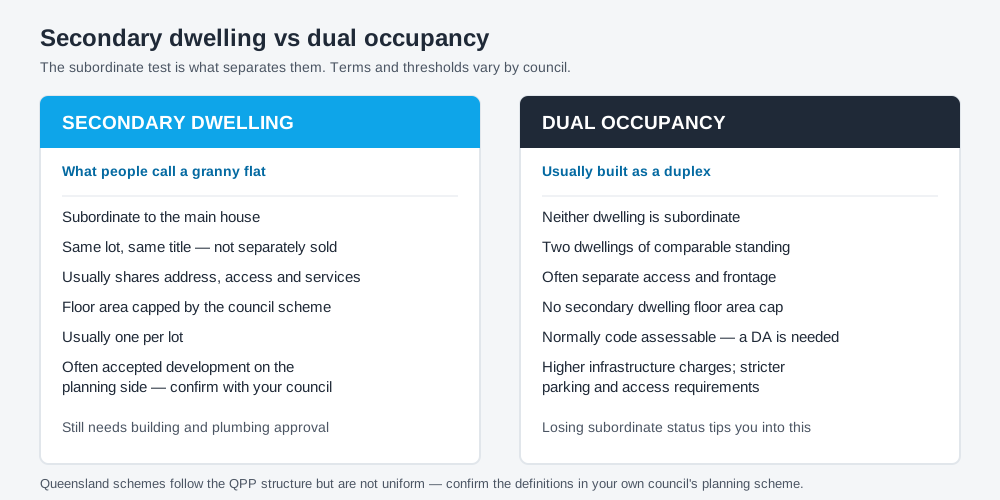
Figure 1: Where a secondary dwelling ends and a dual occupancy begins.
A dual occupancy is two dwellings on one lot where neither is subordinate — a duplex is the usual built form. Dual occupancy is normally code assessable, attracts higher infrastructure charges, and brings stricter parking and access requirements. So the moment your granny flat grows past the cap, gets its own driveway and its own frontage, and stops looking ancillary, you have not built a bigger granny flat. You have proposed a dual occupancy, and it will be assessed as one. The distinction is worth reading in full in secondary dwelling versus dual occupancy before you commission drawings.
Size caps: set by your council, not the State
There is no single Queensland granny flat size limit. Each council sets its own gross floor area cap in its planning scheme, and the figures genuinely differ.
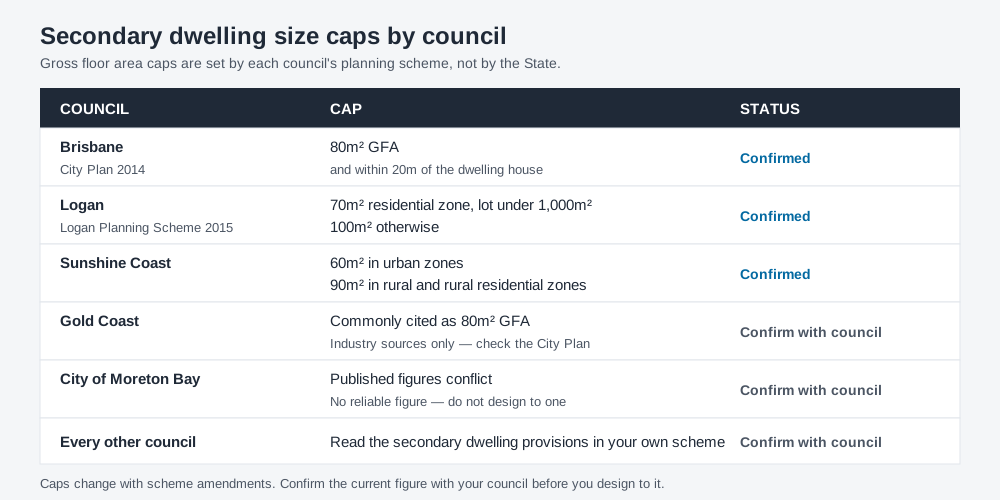
Figure 2: Confirmed size caps, and the councils where you must confirm directly.
Brisbane City Plan 2014 caps a secondary dwelling at 80m² gross floor area and requires it to sit within 20m of the dwelling house. The Logan Planning Scheme 2015 allows 70m² in a residential zone on a lot under 1,000m², and 100m² otherwise. Sunshine Coast allows 60m² in urban zones and 90m² in rural and rural residential zones.
Gold Coast is commonly cited as 80m² gross floor area, but confirm that against the current City Plan rather than relying on the figure. For City of Moreton Bay, figures in circulation conflict badly and we will not publish one — confirm directly with City of Moreton Bay. Beyond those councils, assume nothing. Queensland schemes follow the Queensland Planning Provisions structure, but every council layers its own codes and overlays on top, and they are not uniform. Confirm the cap with your council before you design to it.
The 26 September 2022 change: who can live there
For years, most Queensland schemes restricted a secondary dwelling to occupation by people related to, or associated with, the household of the primary dwelling. That is what made "granny flat" an accurate name.
The Planning (Secondary Dwellings) Amendment Regulation 2022 took effect on 26 September 2022 and removed that restriction. A secondary dwelling can now be occupied by people with no connection to the household — which is what makes renting one out viable. Nothing found since reinstates the restriction, but occupancy and letting conditions can still attach to an individual approval, so confirm with your council before you advertise.
Three approvals, not one
This is where granny flat projects most often stall. Under the Planning Act 2016, council is the assessment manager for development approval — whether you need one depends on your zone, your overlays and whether your proposal meets every requirement in the scheme. Building work is separate. Building approval is granted under the Building Act 1975, almost always by a private building certifier you engage yourself, and a secondary dwelling needs it even when the planning side is accepted development. Because you are adding a kitchen and bathroom, you will also need plumbing approval — council handles plumbing and drainage work under the Plumbing and Drainage Act 2018.
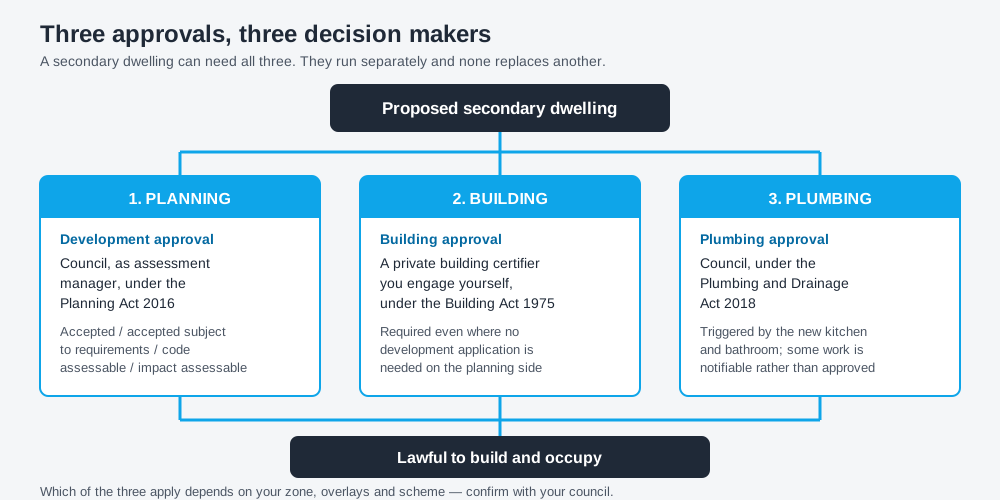
Figure 3: The three approval streams, and who grants each one.
- ✓Confirm your zone and overlays
- ✓Confirm the secondary dwelling cap and siting rules in your scheme
- ✓Confirm the category of assessment — accepted, accepted subject to requirements, code or impact
- ✓Engage a private building certifier
- ✓Lodge plumbing work with council
- ✓Check infrastructure charges before committing
People sometimes read "accepted development" as "no approval needed at all". It only ever means no development application. Where that line actually falls is set out in when a granny flat needs no approval, and the practical build sequence is covered in how to build a granny flat in QLD.
Start with the land, not the floor plan
The costly order is to settle on a design, price it, and only then discover the block carries a flood, bushfire or character overlay that pushes the proposal into assessable development. Work the other way around. Identify the lot, its zone and its overlays — Queensland Globe shows the mapping free — then read the secondary dwelling provisions against those layers, then design to what they allow. Adding a self-contained dwelling is a change to how the land is used, and the dictionary in Schedule 2 of the Planning Act 2016 defines a material change of use to include the start of a new use of the premises, or a material increase in the intensity or scale of an existing one.
Getting a straight answer for your address
The honest position is that half of this article's answer depends on your zone, your overlays and your council's scheme. An instantDA planning report sets those out for your specific property for $169, against the $800–$1,500 a town planner typically charges for a preliminary opinion. You can start a report in a few minutes and take the result to your certifier.
Whatever you do, confirm the final position with your council. Schemes are amended, and yours governs your block.
Frequently asked questions
How big can a granny flat be in Queensland?
Can I rent out a granny flat in Queensland?
Do I need council approval for a granny flat in QLD?
What is the difference between a secondary dwelling and a dual occupancy?
Can a granny flat be on its own title in Queensland?
Does a granny flat need its own driveway and services?
Ready to generate your report?
Skip the writing. Get a council-ready planning report in 5 minutes.
Get your report