Key takeaways
- ✓Carrying out assessable development without the necessary development permit carries a maximum penalty of 4,500 penalty units under the Planning Act 2016.
- ✓A Queensland penalty unit is $172.70 from 1 July 2026, so 4,500 units is a maximum above $777,000.
- ✓Maximum penalties are court-imposed ceilings, not standard fines. Most matters start with a show cause notice, not a prosecution.
- ✓The real cost is usually the rectification: retrospective approval, engineering certification, or demolition and rebuild.
- ✓Unlawful use of premises and contravening an enforcement notice are separate offences, each with their own maximum penalty.
Fines for Building Without Council Approval in QLD
You'll usually hear this called a development application, or DA — that's the formal name for council approval under the Planning Act 2016. Build something that needed one without getting one, and you have committed what the Act calls a development offence. The published maximum penalties are large enough to be alarming, so it is worth understanding both what the law allows and what councils actually do.
Get a council-ready planning report in 5 minutes — no planner, no waiting.
Get your report →The short answer
Under the Planning Act 2016, carrying out assessable development without the necessary development permit carries a maximum penalty of 4,500 penalty units. At $172.70 a unit from 1 July 2026, that is a ceiling above $777,000. In practice most matters begin with a show cause notice, and the real cost is rectification.
What the Planning Act 2016 actually says
The Act creates several distinct development offences, and more than one can apply to the same project.
Carrying out assessable development without permit is section 163. A person must not carry out assessable development unless all necessary development permits are in effect. The maximum penalty is 4,500 penalty units, with a substantially higher maximum where the development affects a heritage place.
Compliance with development approval is section 164. Contravening a development approval, including any condition of it, is its own offence with a maximum of 4,500 penalty units. This one catches people who did get approval and then built something different.
Unlawful use of premises is section 165, again with a maximum of 4,500 penalty units. This is the one that applies when nothing was built but the use changed — a shed lived in, a home business run beyond what the scheme accepts, a dwelling operating as short-stay accommodation without approval.
Contravening an enforcement notice is dealt with in section 168, which both empowers the notice and makes failing to comply with it an offence, with a maximum of 4,500 penalty units.
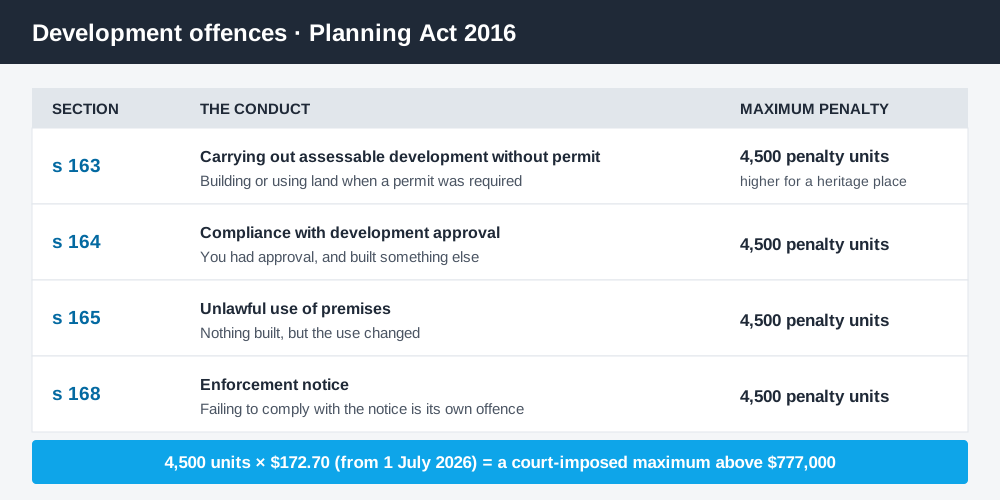
Figure 1: Four offences, each with its own maximum. More than one can apply to the same project.
What a penalty unit is worth in 2026
Spend 5 minutes, not 3 weeks
instantDA generates a council-ready planning report for Queensland development applications. No town planner. No waiting.
Get your report →Queensland expresses maximum penalties in penalty units rather than dollars, and the value is indexed each year on 1 July.
Multiply it out and 4,500 penalty units is a maximum of $777,150. That figure does real work in the conversation, because it tells you the legislature treats unlawful development as serious. But it is a ceiling available to a court after a successful prosecution, not a fine your council posts out on a Tuesday.
Because the unit value changes annually, always check the current figure before relying on any dollar conversion you read online, including this one. Queensland Government publishes the current penalty unit value with each update.
What councils actually do first
Very few unlawful development matters begin with a prosecution. The ordinary sequence runs the other way.
Councils typically become aware through a complaint from a neighbour, a routine inspection, or a search triggered by a sale. An officer inspects and forms a view. If they reasonably believe a development offence has been or is being committed, the Act provides for a show cause notice under section 167 — your opportunity to explain, and often the point at which the matter can be resolved without penalty.
If the response does not resolve it, the council may give an enforcement notice under section 168. That notice can require you to stop work, to do work, to demolish or remove, or to restore the land as far as practicable. The notice is the pressure point, because contravening it is itself an offence.
- ✓Complaint or inspection identifies the work
- ✓Council forms a reasonable belief
- ✓Show cause notice, with a period to respond
- ✓Enforcement notice if unresolved
- ✓Prosecution or Planning and Environment Court proceedings if the notice is ignored
Councils also have infringement notice powers for lower-level matters, which impose a set fine far below the statutory maximum. What you are penalised in practice depends on the seriousness of the breach, whether it was deliberate, whether you cooperated, and whether the work can be made lawful. If you have received a notice already, show cause and enforcement notices in QLD explains what each one obliges you to do and by when.
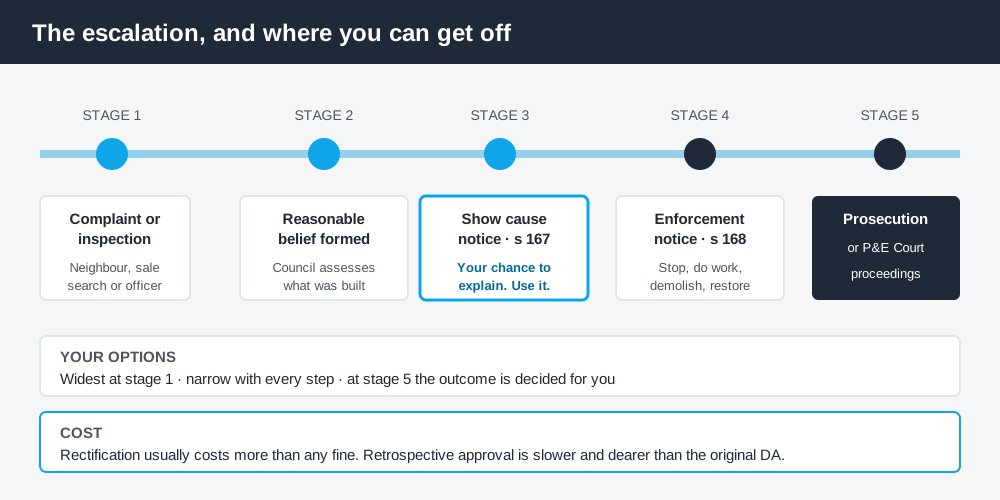
Figure 2: Every stage has an exit. The cheapest one is the earliest.
The building side is a separate penalty
The Planning Act is only half of it. Carrying out assessable building work without an effective development permit is a separate offence under the Building Act 1975, with its own penalty and its own enforcement pathway through the local government's building compliance team. A private certifier cannot certify work retrospectively in the way people often assume, and where the work cannot be certified, the outcome may be removal.
Queensland Building and Construction Commission licensing runs alongside this again. Building work valued above $3,300 generally must be carried out by an appropriately licensed contractor, and unlicensed work can sit outside the Queensland Home Warranty Scheme, so a defect you discover later may have no cover behind it.
Why the fine is rarely the biggest number
Homeowners fixate on the penalty. Owners who have been through it fixate on the rectification, because that is where the money actually goes.
Making unlawful work lawful usually means one of three things. Retrospective approval — lodging a development application, and often a building application, for work already done, with the assessment manager under no obligation to approve what is in front of them. Certification — engaging an engineer to inspect, and sometimes open up, completed work so it can be certified against the standards it should have been built to. Removal — demolishing and, if you still want the structure, rebuilding it properly.
Each of those costs more than doing it in the right order would have. Retrospective work also runs on the council's timetable, not yours, which matters enormously if you are trying to settle a sale. Retrospective building approval in QLD sets out what is realistically achievable and what is not.
There is also the quiet cost: an unapproved structure can affect insurance cover, complicate finance, and reduce what a buyer will pay once their searches surface it.
What to do if you are worried now
Do not start by ringing the council to confess, and do not keep building. Establish the facts first.
Order a building records search from your council to see what approvals exist for the property, and check your council's development.i or equivalent portal for the development application history. Use Queensland Globe for lot and plan details and state-mapped layers, and your council's scheme maps for the zone and overlays. Then work out whether the structure was actually assessable development at the time it was built — some of what people assume is unlawful turns out to have been accepted development all along.
If you'd rather read your zone, your overlays and what your scheme requires in one document than work through it yourself, an instantDA planning report does that for your address for $169, against the $800–$1,500 a town planner typically charges for a preliminary opinion. You can start a report in a few minutes.
For the wider picture on how these matters unfold and what your options are, building without council approval in QLD is the place to go next. If a notice has already arrived, or the sums involved are significant, get a planning lawyer involved early — the response to a show cause notice is the single most useful document in the whole process, and it is worth getting right.
Frequently asked questions
What is the fine for building without council approval in Queensland?
How much is a penalty unit in Queensland?
Will the council really fine me the maximum?
Can I be penalised for using a building rather than building it?
Does the liability pass to me if a previous owner built it?
What happens if I ignore an enforcement notice?
Ready to generate your report?
Skip the writing. Get a council-ready planning report in 5 minutes.
Get your report