Key takeaways
- ✓A home based business is a material change of use — it avoids a development application only while it meets every requirement in the council's home based business code.
- ✓The Queensland Planning Provisions definition turns on one word: the business activity must be subordinate to the residential use of the premises.
- ✓Councils set their own numbers. Gladstone allows up to 100m² of business floor area; Scenic Rim allows 50m²; Noosa works in a percentage of the dwelling.
- ✓A pure home office with no visitors, no staff, no signage and no deliveries is the easy case and almost never needs approval.
- ✓Even with no DA, you may still need a food business licence, building approval, plumbing approval, a personal appearance services licence or a local law licence.
Running a Home Business in QLD — Do You Need Council Approval?
Most people ask this as "do I need council permission to run my business from home?" You'll usually hear it called a development application, or DA — that's the formal name for council approval in Queensland. The reassuring answer is that the overwhelming majority of home based businesses never lodge one. The uncomfortable part is why. It is not because working from home sits outside the planning system. It is because most home businesses happen to fall inside their council's home based business code without the owner ever having read it.
Get a council-ready planning report in 5 minutes — no planner, no waiting.
Get your report →The short answer
Most home based businesses in Queensland need no development application, because they are accepted development under the council's home based business code. That status is conditional. Exceed one requirement — floor area, staff, customer visits, deliveries, hours or signage — and the same business becomes assessable and needs a DA.
And if you run a genuine home office — a laptop, no visitors, no staff, no signage, no deliveries beyond ordinary post — the answer is almost always no approval at all. Set that case aside now; most of what follows does not apply to it.
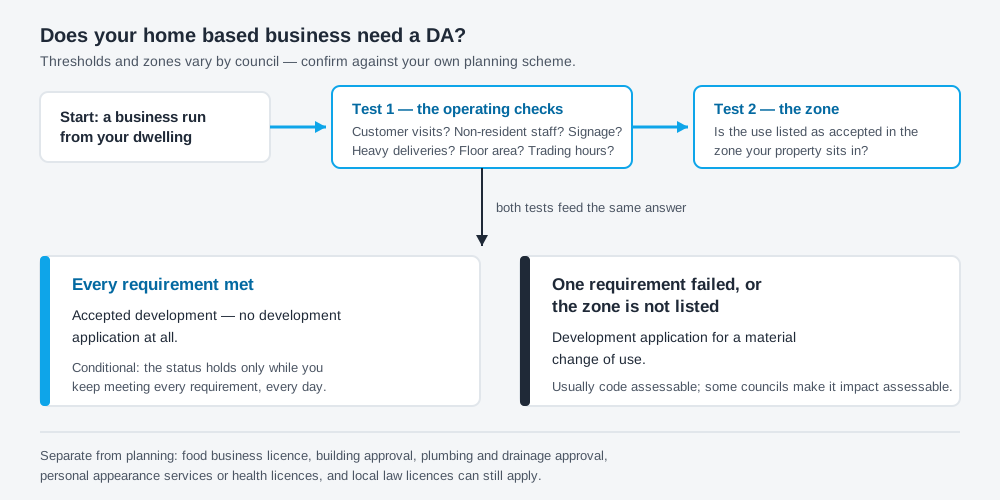
Figure 1: The questions that decide whether your home business stays accepted development.
Working from home is a material change of use
Starting a business in your house is the start of a new use of the premises, and the start of a new use is a material change of use (MCU) under the dictionary in Schedule 2 of the Planning Act 2016. An MCU is development, and development is either accepted or assessable.
What saves you is not an exemption from that logic — it is the category you land in. Councils write a home based business code and make the use accepted development for as long as every requirement in that code is met. That status is conditional, and the condition is live every day you trade. If you want the four categories set out properly, accepted versus assessable development explains what each obliges you to do, and material change of use covers why a change of use counts as development even when you never touch the building.
The definition, and the word that does all the work
Spend 5 minutes, not 3 weeks
instantDA generates a council-ready planning report for Queensland development applications. No town planner. No waiting.
Get your report →The Queensland Planning Provisions define it this way: "home-based business means the use of a dwelling or domestic outbuilding on premises for a business activity that is subordinate to the residential use of the premises."
Subordinate carries the whole thing. The land is a home that also has a business in it — not a business that happens to have someone sleeping upstairs. Every numeric threshold a council writes is an attempt to put a measurable edge on that one idea. If a neighbour walking past would read your property as a workplace rather than a house, you have almost certainly lost subordinate status, whatever the floor area says.
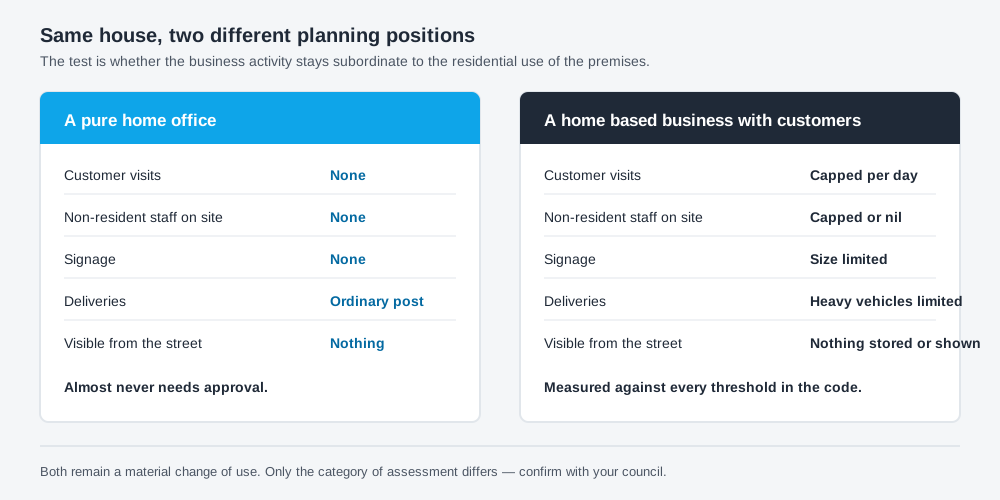
Figure 2: The same house, two very different planning positions.
The thresholds councils use
The kinds of threshold are broadly consistent across Queensland schemes, even though the numbers inside them are not. Expect a code to control most of the following.
- ✓The floor area given over to the business, as a figure or a share of the dwelling
- ✓The number of non-resident employees on site at any one time
- ✓Customer visits and total vehicle trips to and from the site per day
- ✓Business vehicles parked on the property
- ✓Deliveries by heavy vehicles, and how often
- ✓Hours of operation, including weekends and public holidays
- ✓Signage — size, number, and whether any is allowed at all
- ✓Nothing stored or displayed that is visible from the street
That last one is the quiet killer. Stock stacked in a carport, a logo trailer parked out front, or pallets visible over the fence can breach a requirement with no number attached to it at all.
The confirmed numbers, council by council
The figures below are what specific councils publish. They are not Queensland-wide standards, and quoting one council's number at another will not help you. Queensland's schemes follow the Queensland Planning Provisions structure, but each council layers its own codes and overlays on top — they are not uniform.
Gladstone Regional Council allows up to 100m² of gross floor area for the business use, no more than two non-resident employees on site at any one time, no more than ten vehicle trips to and from the site per day, no more than two business vehicles parked on site at any time, and no more than one delivery per week by a vehicle over 2.5 tonnes. Its hours are 7am to 7pm Monday to Friday and 7am to 1pm Saturday, closed Sundays and public holidays.
Scenic Rim Regional Council sets a maximum of 50m² of total gross floor area used for the business, excluding bed and breakfast and home based childcare. Noosa Shire Council instead limits the business to no more than 40% of the dwelling's floor area in residential zones. North Burnett Regional Council works mainly through operating conditions: hours generally 8am to 7pm Monday to Saturday excluding public holidays, and up to one delivery vehicle per day.
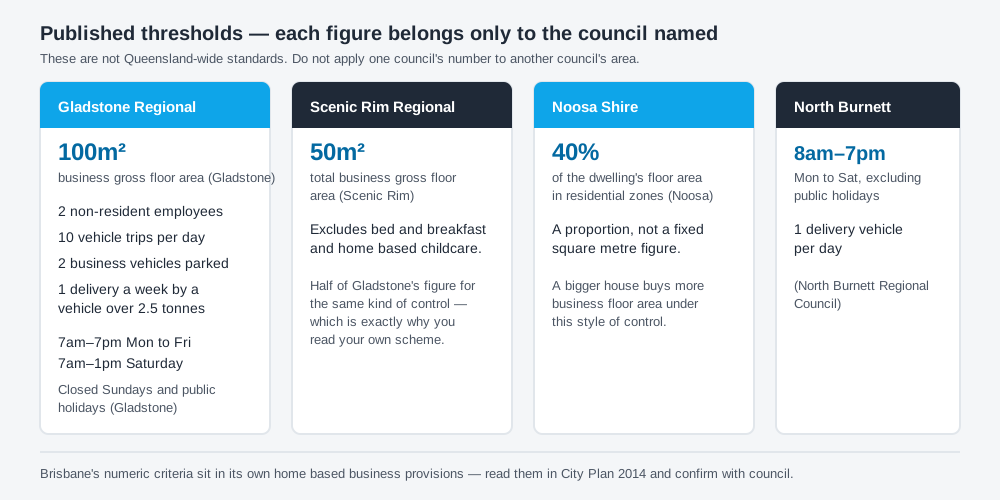
Figure 3: Published thresholds, each labelled with the council it comes from.
Brisbane's numeric criteria sit in its home based business provisions in City Plan 2014, and you should read them there rather than trust a number quoted second-hand — start from the council's home office and home business page. The City of Gold Coast and the City of Moreton Bay both publish the same structural position: no approval if the home based business code's required outcomes are met, an MCU application if they are not. Gladstone publishes its requirements openly too.
What tips you into needing a development application
Two things. The first is exceeding a threshold — one extra employee, a second delivery truck, opening on a Sunday, a sign that is too big. The second is the zone. Some councils make home based business accepted development only in listed residential zones, and assessable, sometimes impact assessable, in any zone not listed. The identical business can be accepted at one address and need a publicly notified application a suburb away.
Being over a threshold is not a refusal. It means an MCU application, usually code assessable. And if the business outgrows what a house can hold, the question becomes a change of use to a shop or commercial premises.
The approvals that have nothing to do with planning
Clearing the planning code does not clear everything else. If you prepare or manufacture food for sale you need a food business licence under the Food Act 2006. If there is building work, or the building's classification changes, you need building approval under the Building Act 1975. Plumbing and drainage approval can apply where you alter services. Hairdressing, beauty therapy, tattooing and body piercing require personal appearance services or health licences. Local laws can add their own licence on top.
Two more worth flagging with a caveat. For building and construction trade work, a QBCC licence is likely to be required under State licensing rules rather than under the planning scheme, so check that separately with the QBCC. And in a community titles scheme, the body corporate by-laws are a separate legal question sitting entirely outside the planning scheme — the council can be perfectly happy while your by-laws are not.
If you would rather see this worked through against your actual address, an instantDA planning report sets out your zone, your overlays and the likely category of assessment for $169 — against the $800–$1,500 a town planner typically charges for a preliminary opinion. You can start a report in a few minutes. Confirm the final position with your council, because your scheme is the one that governs.
Frequently asked questions
Do I need council approval to run a business from my home in Queensland?
How big can a home based business be in Queensland?
Can I have employees working at my home business?
Does a home office need council approval in QLD?
What happens if my home business breaches the code?
Do I need any other licences besides planning approval?
Ready to generate your report?
Skip the writing. Get a council-ready planning report in 5 minutes.
Get your report