Key takeaways
- ✓Rural residential is a settled acreage-living zone, not a transitional one. It is meant to stay as it is.
- ✓The Planning Regulation 2017 sets the zone name and its purpose. The minimum lot size comes from your council's planning scheme, not from state law.
- ✓Most lots are unsewered, so on-site wastewater capacity often decides what you can actually build.
- ✓Sheds are usually generous here compared with suburban zones, but size, height and siting limits still apply.
- ✓Subdividing is the common ambition and the common disappointment — the minimum lot size is normally the whole answer.
Rural Residential Zone Explained
You'll usually hear this called a development application, or DA — that's the formal name for council approval under the Planning Act 2016. In the Rural residential zone, the good news is that you will need one less often than a suburban owner does. The land is bigger, the neighbours are further away, and most of the reasons councils regulate suburban blocks apply with less force.
The bad news arrives in two places: subdividing, and anything that depends on services the street does not have.
Get a council-ready planning report in 5 minutes — no planner, no waiting.
Get your report →The short answer
The Rural residential zone provides for houses on large lots in a semi-rural setting, usually without reticulated sewer. The Planning Regulation 2017 sets the zone name and purpose; each council's planning scheme sets the minimum lot size, so the number varies between local government areas and often between precincts.
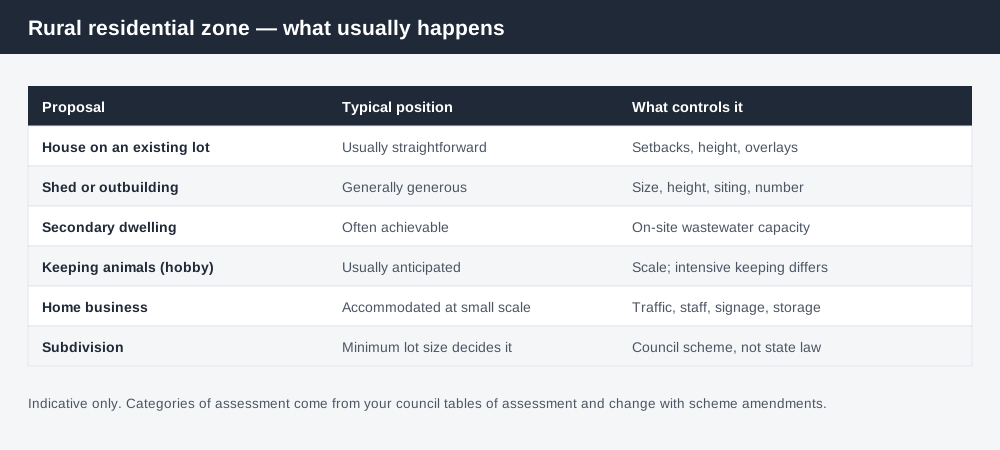
Figure 1: Indicative positions only — the category of assessment comes from your council's tables of assessment.
What the zone is for
Rural residential is one of the zones a Queensland council may apply under Schedule 2 of the Planning Regulation 2017, which lists the zones available to a local planning instrument and gives each a purpose statement. Councils choose from that list; they do not invent zone names.
The zone's job is to accommodate residential living on large lots in a rural or bushland setting — acreage, in ordinary language — while keeping that use from spreading into genuinely rural land needed for agriculture. Some councils use different labels for the same idea, including park residential and large lot residential, which is one reason people struggle to compare schemes.
The important framing is that this is a settled zone. Unlike the Emerging community zone, which is explicitly a waiting room for future urban development, rural residential is intended to remain what it is. Proposals that would gradually turn it into a suburb are working against the zone's purpose, not with it.
Where the minimum lot size comes from
Spend 5 minutes, not 3 weeks
instantDA generates a council-ready planning report for Queensland development applications. No town planner. No waiting.
Get your report →This is the single most misunderstood point, so it is worth being precise.
The Planning Regulation's schedule of zones fixes the zone name and a purpose statement. It does not fix a minimum lot size. There is no state-wide number for rural residential land in Queensland.
The minimum lot size for your land sits in your council's planning scheme — usually in the zone code or the reconfiguring a lot code, and often varying by precinct, by locality, or by whether the land is serviced. Two adjoining local government areas can require quite different lot sizes for land that looks identical.
Because the number is local, and because schemes are amended regularly, do not rely on a figure from a general article, a real estate listing, or a neighbour's recollection of what applied when their block was created. Take it from the current scheme or from the council's property report for the address. How to find out what zone your property is in covers where that mapping lives.
- ✓What is the minimum lot size in your zone and precinct?
- ✓Is the lot sewered or on-site?
- ✓What is your current lot area, exactly?
- ✓Is there a bushfire, flood or vegetation overlay?
- ✓Are secondary dwellings accepted development in this zone?
On-site wastewater quietly decides a lot
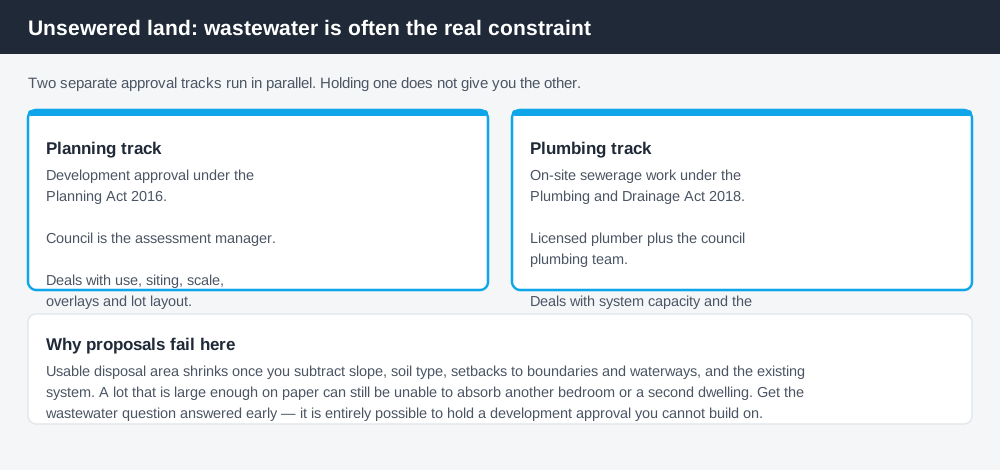
Figure 2: On unsewered land, the effluent disposal area is often the real constraint, not the planning scheme.
Most rural residential lots are not connected to reticulated sewer. That means every additional bedroom, every second dwelling and every change of use has to be absorbed by an on-site system and a disposal area on your own land.
The practical consequences are consistent. A site big enough on paper can still fail because the usable disposal area is too small once you subtract slope, setbacks to waterways and boundaries, soil type and the existing system. Adding bedrooms can require the system to be upgraded. And a proposal for a second dwelling frequently succeeds or fails on wastewater rather than on planning grounds.
Plumbing and on-site sewerage work in Queensland sits under the Plumbing and Drainage Act 2018 and is administered separately from your development approval, with your licensed plumber and the council's plumbing team involved. That is a distinct approval track from the planning one, and it is entirely possible to hold a development approval you cannot act on because the wastewater design does not work.
Sheds, animals, second dwellings and home business
Rural residential zones are generally more permissive than suburban ones on the things acreage owners actually want.
Sheds and outbuildings. Usually the most generous allowances of any residential zone, but not unlimited — size, height, setback and sometimes the number of outbuildings are controlled, and a shed large enough to look commercial can attract a different assessment. Farm and rural shed approvals in Queensland covers where the line falls.
Keeping animals. Commonly anticipated at a domestic or small-scale hobby level. Intensive animal keeping is a different use entirely and is normally assessable.
Secondary dwellings. Often achievable, and often limited by wastewater before it is limited by planning. Councils vary considerably on whether a secondary dwelling is accepted development in this zone.
Home business. Generally accommodated at a scale that keeps the residential character intact, with the usual controls on employees, vehicle movements, signage and storage.
Subdividing is where the disappointment lives
The most common plan for a large rural residential lot is to split it, and the most common outcome is that the minimum lot size makes it impossible.
The arithmetic is unforgiving: if your lot is 1.5 times the minimum, you cannot make two compliant lots from it. There is no rounding in your favour, and boundary realignment does not create the extra area.
Where subdivision is possible, expect the reconfiguring a lot application to deal with access, wastewater capability for each new lot, bushfire hazard where an overlay applies, and infrastructure charges. Minimum lot sizes in Queensland covers how these are set and the limited circumstances in which a below-minimum lot is arguable — which usually requires an impact assessable application and a genuinely strong planning case, not just a keen buyer.
Before you buy acreage
Check the zone and precinct, the minimum lot size, whether the lot is sewered, and which overlays apply — bushfire and flood are the two that most often change what acreage can be used for. Cross-check the site on the Queensland Globe for state layers including vegetation, which can constrain clearing for a house pad, a driveway or a firebreak.
If a subdivision potential is part of why you are buying, verify the lot area against the current minimum before you sign, not after. Agents' descriptions of "subdividable" land are frequently based on a superseded scheme.
What to do next
Establish the minimum lot size and the wastewater position for the address. Between them they answer most of the questions people bring to acreage.
If you'd rather see the zone, the overlays and the likely category of assessment for an address than work through a planning scheme yourself, an instantDA planning report does that for $169 — against the $800–$1,500 a town planner typically charges for a preliminary opinion. You can start a report in a few minutes.
Then confirm with your council, particularly on wastewater, where the answer is site-specific and a duty officer's view is worth more than any general rule.
Frequently asked questions
What does Rural residential zone mean in Queensland?
What is the minimum lot size in the Rural residential zone?
Can I subdivide a rural residential block?
Can I build a granny flat on rural residential land?
Are sheds easier to approve on rural residential land?
Is rural residential the same as rural zoning?
Ready to generate your report?
Skip the writing. Get a council-ready planning report in 5 minutes.
Get your report