Key takeaways
- ✓Queensland planning law calls subdivision reconfiguring a lot, or ROL — that is the term your council and its planning scheme will use.
- ✓Reconfiguring a lot is a development application, and it is a different kind of development from a material change of use.
- ✓Whether it is code assessable or impact assessable depends on your zone and whether the proposed lots meet the scheme's requirements.
- ✓Zone, lot size and dimensions, services, easements, overlays and access for a rear lot decide feasibility before you spend any real money.
- ✓Approval to reconfigure is the start — operational works, survey, plan sealing and registration all still have to happen.
Subdividing Land in QLD — Council Approval Explained
You'll usually hear this called a development application, or DA — and if you have been searching "can I subdivide my block", the term you actually need is reconfiguring a lot. That is the phrase Queensland planning law and every council planning scheme uses for splitting one lot into two or more, realigning a boundary, or otherwise changing lot boundaries. Search your council's website for "subdivision" and you may find very little. Search "reconfiguring a lot" and you will find the codes that decide your answer.
Get a council-ready planning report in 5 minutes — no planner, no waiting.
Get your report →The short answer
Subdividing land in Queensland is called reconfiguring a lot, and it always needs a development application to your council. Whether it is code assessable or impact assessable depends on your zone and whether the resulting lots meet your planning scheme's requirements. Approval to reconfigure is not the end of the process.
That last sentence is the one people underestimate. The approval gives you permission; it does not give you titles.
Why council calls it "reconfiguring a lot"
Under the Planning Act 2016, reconfiguring a lot is one of the defined kinds of development. It covers subdivision, but it is broader — a boundary realignment between two neighbours is a reconfiguration too, even though nobody would call that subdividing.
The practical consequence is a vocabulary one. Your planning scheme will have a Reconfiguring a lot code, and the tables of assessment will list reconfiguring a lot by zone. When you ring council, use their word, and you will get a straighter answer.
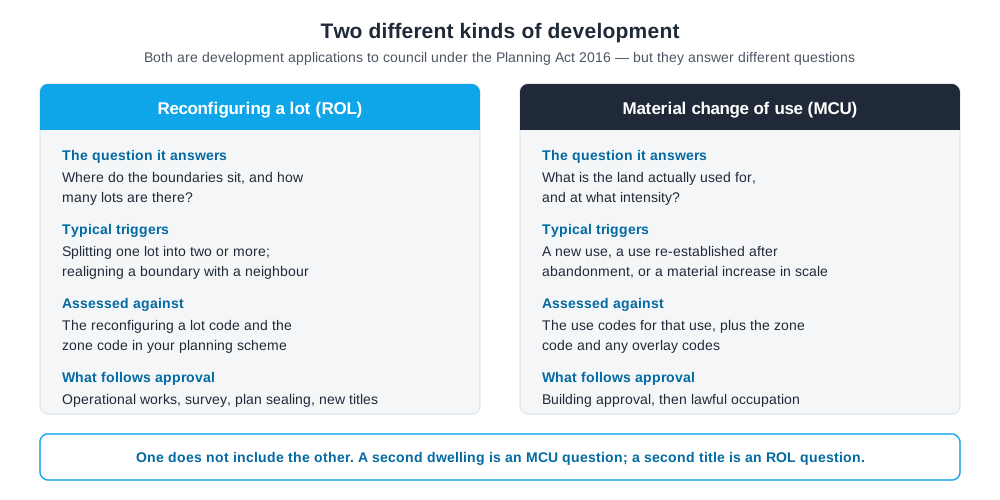
Figure 1: Reconfiguring a lot and material change of use are different kinds of development, assessed against different codes.
Reconfiguring a lot is not a material change of use
Spend 5 minutes, not 3 weeks
instantDA generates a council-ready planning report for Queensland development applications. No town planner. No waiting.
Get your report →This trips up a lot of people who arrive here from a granny flat or duplex project, so it is worth being blunt about.
A material change of use, or MCU, is about what happens on the land — starting a new use, re-establishing an abandoned one, or materially increasing the intensity or scale of an existing use. That is the definition in the dictionary in Schedule 2 of the Planning Act 2016. Building a second dwelling is an MCU question.
Reconfiguring a lot is about the lines on the plan — how many lots there are and where their boundaries sit. It says nothing about what you can build.
They are assessed against different codes and they do not substitute for each other. If you build a dual occupancy on one title and later want to sell the two halves separately, you need a separate reconfiguring a lot approval to create the second title. It does not come bundled with the dual occupancy approval. If both aspects are part of the same project, a development permit is generally needed for each assessable aspect, though they can be applied for together. The distinction between a second dwelling and a second title is explained further in our guide to secondary dwellings versus dual occupancy.
Code assessable or impact assessable?
Under the Planning Act 2016 there are four categories of development, and reconfiguring a lot lands in one of the assessable ones. Which one is set by your council's table of assessment for your zone.
Broadly: where your zone anticipates subdivision and the proposed lots comply with the scheme's requirements, reconfiguring a lot is commonly code assessable. That means a development application assessed against the relevant codes, not publicly notified, and no third-party appeal right for neighbours.
Where the zone does not anticipate it, or where the lots fall short of a requirement, it can be impact assessable instead. That means assessment against the whole planning scheme, a public notification period, and submitters who gain appeal rights. It is a longer, more expensive, less certain path, and it is the single biggest variable in a subdivision timeline.
Queensland schemes follow the Queensland Planning Provisions structure, but each council layers its own codes, overlays and tables of assessment on top. They are not uniform. Confirm the category with your council before you assume anything.
What decides feasibility before you spend money
Most blocks that people ask about cannot be subdivided, and the reasons are usually visible early. Six things do most of the deciding.
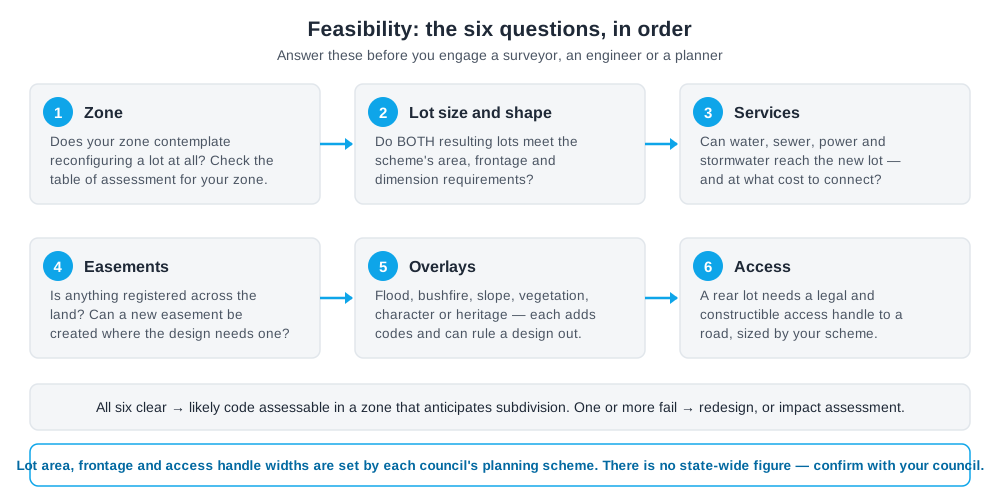
Figure 2: The feasibility questions worth answering before you engage anyone.
- ✓Zone — does your zone contemplate reconfiguring a lot at all
- ✓Lot size and dimensions — do both resulting lots meet the scheme's minimum area, frontage and shape requirements
- ✓Services — can water, sewer, power and stormwater reach the new lot, and at what cost
- ✓Easements — is there an existing easement across the land, and can a new one be created where the design needs it
- ✓Overlays — flood, bushfire, slope, character, vegetation or heritage overlays can each add codes or rule the design out
- ✓Access — a rear lot needs a legal, constructible access handle to a road
Minimum lot sizes, frontages and access handle widths are set by each council's planning scheme, not by the State. There is no Queensland-wide figure, and quoting one to you would be misleading. Read the reconfiguring a lot code and the zone code in your own scheme, and confirm with council. If your block sits close to a threshold, our guide to minimum lot sizes explains what the scheme controls and where to find it.
What to check before you commission anything
You can answer most of the feasibility questions yourself, for free, in an afternoon.
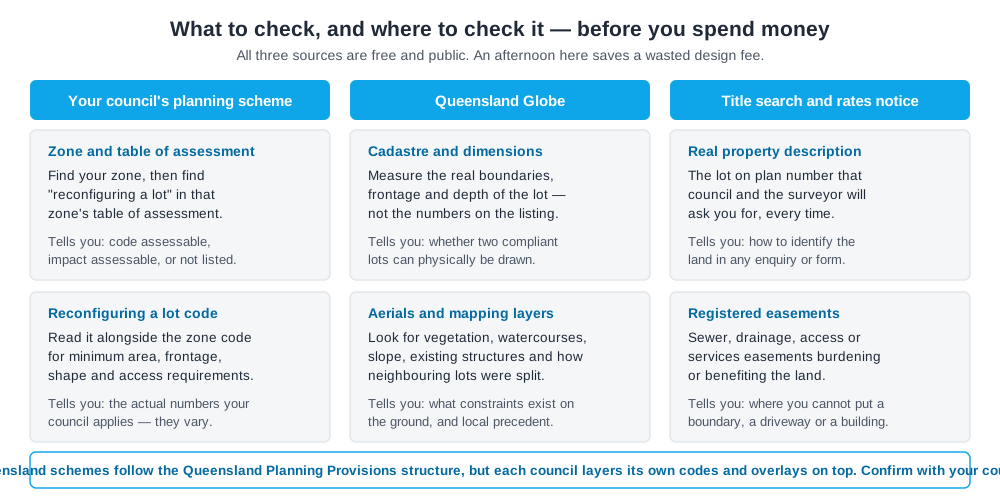
Figure 3: What to look up on your council's scheme and on Queensland Globe first.
Your council's online planning scheme gives you the zone, the tables of assessment, the reconfiguring a lot code and the overlay maps. Queensland Globe gives you cadastral boundaries, lot dimensions, aerial imagery and State mapping layers you can measure against. Your rates notice and a title search give you the real property description and any registered easements. Brisbane residents can also start with council's subdividing land page.
If you would rather have that read back to you against your actual address, an instantDA planning report sets out the zone, the overlays and the likely category of assessment for $169 — against the $800–$1,500 a town planner typically charges for a preliminary opinion. You can start a report in a few minutes.
Approval is not the finish line
A decision notice granting your reconfiguring a lot approval comes with conditions, and those conditions have to be satisfied before new titles exist. Depending on the site, that means an operational works approval and the civil works to go with it, a cadastral survey and survey plan prepared by a registered cadastral surveyor in a registrable format under the Land Title Act 1994, plan sealing by council once conditions and infrastructure charges are settled, and lodgement and registration with Titles Queensland.
Each of those is a stage with its own cost and its own timeframe, and the sequence is where most subdivision budgets go wrong. The full end-to-end process, stage by stage through to new titles issuing, is set out in our complete guide to land subdivision in Queensland — read that once you know your block is feasible.
One timing point worth carrying with you: where the approval itself states no period, a reconfiguring a lot approval gives you four years to give the plan to the local government, under section 85 of the Planning Act 2016. An extension can be requested before it lapses, but do not plan on one.
Frequently asked questions
Do I need council approval to subdivide my land in Queensland?
What is the difference between reconfiguring a lot and a material change of use?
How small can my block be to subdivide in QLD?
Does subdivision approval give me two titles?
Can I subdivide a block with a house already on it?
Is a rear or battle-axe lot harder to get approved?
Ready to generate your report?
Skip the writing. Get a council-ready planning report in 5 minutes.
Get your report