Key takeaways
- ✓Operational work is defined in the Planning Act 2016 as work that is not building work and not plumbing or drainage work, in, on, over or under premises, that materially affects the premises or its use.
- ✓Development approval, operational works approval and building approval are three separate things assessed by different people — council decides the first two, a private certifier usually issues the third.
- ✓An operational works permit most often arises as a condition of a reconfiguring a lot or material change of use approval, requiring civil and servicing design to be approved before construction starts.
- ✓It is a full development application in its own right, assessed under the Development Assessment Rules with the same statutory clock as any other DA.
- ✓On a subdivision the works must be built and accepted before council will seal the plan, which makes operational works the stage most likely to delay your titles.
- ✓Where the approval states no period, a part of an approval that is not a material change of use or a reconfiguring a lot must be substantially started within two years.
Operational Works Approval in QLD — When You Need It
Most people meet operational works late. You'll usually hear council approval in Queensland called a development application, or DA — and operational works is the DA that turns up after you already have one. It appears buried in the conditions of a subdivision or a change of use approval, worded as something you must design, lodge and have approved before you can turn a sod. By then the settlement date is booked.
Get a council-ready planning report in 5 minutes — no planner, no waiting.
Get your report →The short answer
An operational works approval is a development permit from your council for physical works — earthworks, roads, stormwater, water and sewer, driveways — that are not building work and not plumbing or drainage work. It most often arises as a condition of an approval you already hold, and it is a separate application.
That last point is the one that costs people time. It is not a formality bundled into the approval you already hold.
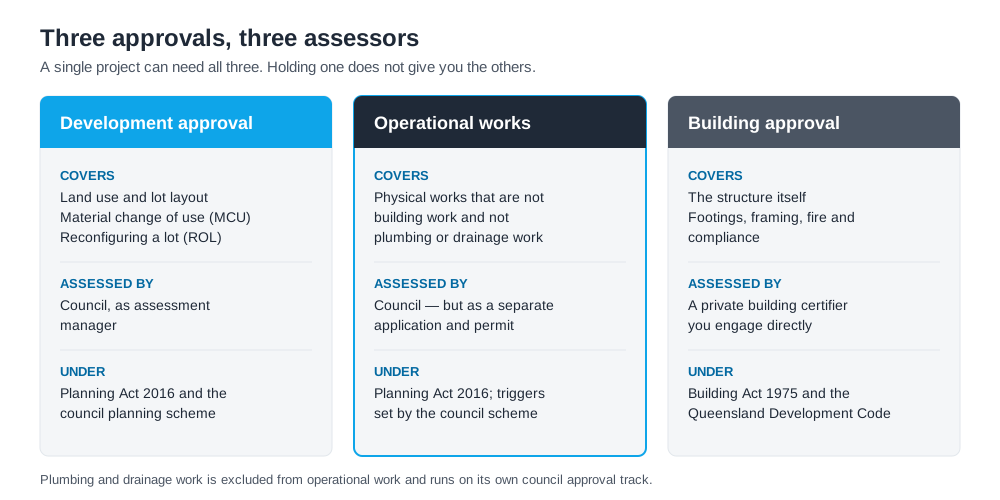
Figure 1: Three separate approvals, three separate assessors.
What "operational work" actually means — and what it excludes
The dictionary in Schedule 2 of the Planning Act 2016 defines operational work as "work, other than building work or plumbing or drainage work, in, on, over or under premises that materially affects premises or the use of premises."
Read the exclusions first, because the exclusions are the whole point. Operational work is defined by what it is not. It is not building work — that sits under the Building Act 1975 and is normally certified by a private building certifier, not by council. It is not plumbing or drainage work — that runs on its own approval track through council. What is left is the physical shaping and servicing of the land itself: moving dirt, forming roads, laying stormwater and reticulation, cutting driveways, clearing vegetation where the scheme says so.
The second half of the definition matters too. The work has to materially affect the premises or its use. Trivial site activity is not caught. Regrading a site, forming a road or building a detention basin plainly is.
Development approval, operational works, building approval
Spend 5 minutes, not 3 weeks
instantDA generates a council-ready planning report for Queensland development applications. No town planner. No waiting.
Get your report →This three-way split is the thing most often had backwards, because "council approval" gets used as one phrase for all of it.
Development approval is the land use and land configuration decision — a material change of use (MCU) or a reconfiguring a lot (ROL). Council is the assessment manager and decides it under the Planning Act 2016 and its planning scheme.
Operational works approval is also a development permit under the Planning Act 2016, and council also decides it — but it is a different aspect of development with its own application, assessment and decision notice. Having an ROL approval does not give you an operational works approval.
Building approval is the structural and compliance decision under the Building Act 1975, and is usually issued by a private building certifier you engage directly, not by council. If you are unsure which of these two you are dealing with, the difference is set out in our guide to building approval versus development approval.
A project can need all three, and a delay in one stalls the others.
What work commonly needs an operational works permit
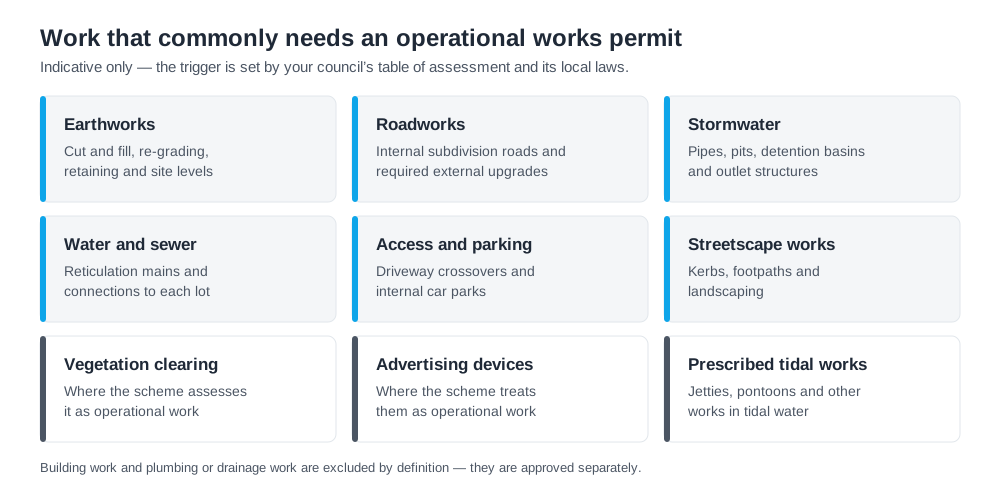
Figure 2: The work types that most often need their own operational works permit.
- ✓Earthworks — cut and fill, re-grading
- ✓Roadworks, including internal subdivision roads and required external road upgrades
- ✓Stormwater infrastructure — pipes, pits, detention basins, outlet structures
- ✓Water and sewer reticulation
- ✓Driveway crossovers and internal car parks
- ✓Streetscape works — kerbs, footpaths and landscaping
- ✓Vegetation clearing, where the scheme assesses it as operational work
- ✓Advertising devices, where the scheme treats them as operational work
- ✓Prescribed tidal works
The hedge here is not a small one: exactly what triggers an operational works permit is set by each council's table of assessment and by its local laws. Queensland's schemes follow the Queensland Planning Provisions structure, but every council layers its own codes, overlays and local laws on top, and they are not uniform. Two identical driveways in two local government areas can land in different categories. Confirm with your council before assuming anything on that list is or is not caught.
How it usually arises: as a condition of an approval you already have
The common pattern is this. You lodge an ROL or MCU application. Council approves it and issues a decision notice with conditions. Somewhere in them sits a requirement that the civil and servicing design be lodged as an operational works application and approved before construction starts.
That is the moment the project changes hands. Operational works is where engineering design meets the conditions, so the documents are prepared by civil engineers, not planners. The submission is drawings and calculations — earthworks and levels, road geometry, stormwater modelling, erosion and sediment control, servicing layouts — showing that what you intend to build satisfies the conditions and council's design standards.
If the conditions on your subdivision approval are unfamiliar territory, it is worth reading how the reconfiguring a lot process is structured, because the operational works requirement almost always originates there.
It is a full development application, with the same clock
Operational works is not a lesser process. It is assessed under the Development Assessment Rules like any other application, on the same statutory periods.
Council has 10 business days to give a confirmation notice or an action notice. It may make one information request, within 10 business days after the confirmation period ends, and you then have three months to respond, or longer by agreement. The decision period is 35 business days. These are stages, not a countdown running in parallel — an information request you take two months to answer adds two months to the end date. How the stages stack is covered in our guide to DA timeframes in Queensland.
Why operational works decides when you get your titles
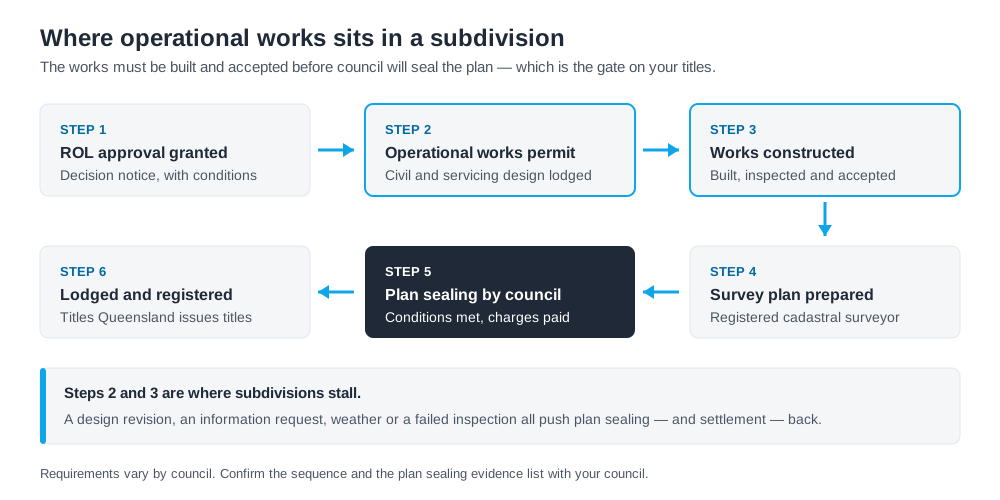
Figure 3: Where operational works sits between an ROL approval and plan sealing.
For a subdivision, the works approved under the operational works permit have to be physically built and accepted by council before council will seal the survey plan. Plan sealing is the checkpoint where council certifies that the approval conditions have been met and the infrastructure charges paid. Only after the plan is sealed can it be lodged with Titles Queensland and the new titles registered.
That is why operational works is the stage most likely to hold up titles. Design revisions, an information request, a wet season, a failed inspection — each pushes plan sealing back, and plan sealing is the gate on settlement. Councils publish their own requirements; the City of Gold Coast plan sealing page shows the evidence typically required, and Cairns Regional Council's operational works page shows how one council frames the application.
The currency period trap
Under section 85 of the Planning Act 2016, an approval lapses at the end of its currency period. Where the approval states no period, a part of an approval that is not a material change of use and not a reconfiguring a lot — which is precisely what an operational works approval is — must be substantially started within two years. An extension can be requested, but it must be requested before the approval lapses.
Two years disappears quickly when you are waiting on finance or a builder. Diarise the date the day the decision notice arrives.
If you want the zone, the overlays and the likely assessment path for your site set out before you commit to a civil design, an instantDA planning report covers your address for $169, against the $800–$1,500 a town planner typically charges for a preliminary opinion. You can start a report in a few minutes and take it to your engineer.
Whatever it says, confirm the final position with your council. The table of assessment that decides whether your works need a permit is your council's, and it is the one that governs.
Frequently asked questions
What is operational works approval in Queensland?
Do I need operational works approval for a driveway?
Is operational works approval the same as building approval?
Who prepares an operational works application?
How long does an operational works application take?
Why is my subdivision waiting on operational works?
Ready to generate your report?
Skip the writing. Get a council-ready planning report in 5 minutes.
Get your report