Key takeaways
- ✓Subdivision in Queensland is called reconfiguring a lot, and it runs as an eight-stage sequence from development application through to registered titles.
- ✓The decision notice conditions are the real specification for the whole project — everything after stage two exists to satisfy them.
- ✓Civil works usually need their own development permit for operational works, separate from the reconfiguring a lot approval.
- ✓Only a registered cadastral surveyor can prepare and certify a survey plan for registration under the Land Title Act 1994.
- ✓Plan sealing is the stage that stalls projects: council will not endorse the plan until conditions are met and infrastructure charges paid.
- ✓Where the approval states no period, a reconfiguring a lot approval lapses if the plan is not given to the local government within four years.
Subdividing Land in QLD — The Complete Guide
You'll usually hear this called a development application, or DA — and when the subject is splitting land, the correct Queensland term is reconfiguring a lot, or ROL. That single application is only the first of eight distinct stages. Most people starting a subdivision assume the hard part is getting the approval. In practice the approval is the easy part, and everything that follows it is where the money, the delays and the surprises live.
Get a council-ready planning report in 5 minutes — no planner, no waiting.
Get your report →The short answer
Subdividing land in Queensland runs in eight stages: a reconfiguring a lot development application, the decision notice and its conditions, operational works approval, construction of the civil works, the cadastral survey and survey plan, plan sealing by council, lodgement with Titles Queensland, and registration of the new titles.
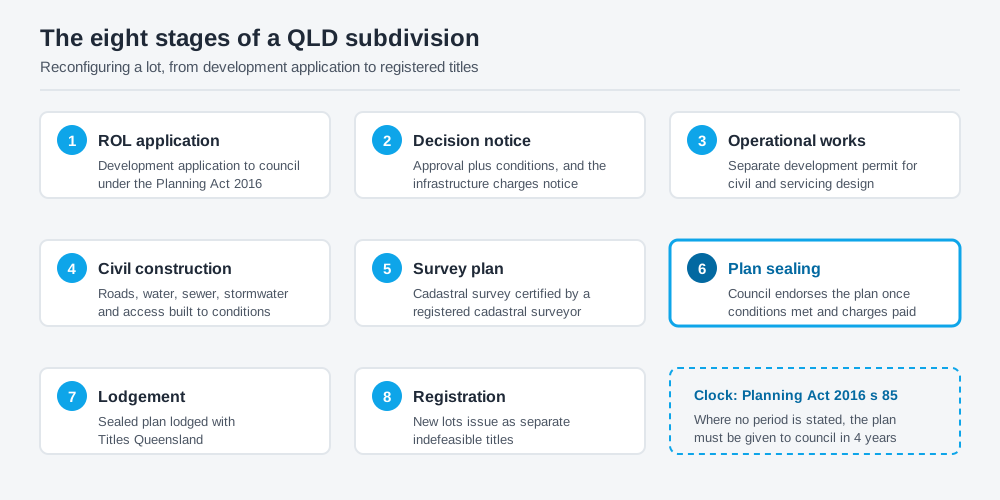
Figure 1: The eight stages of a Queensland subdivision, in order.
Stage 1: the reconfiguring a lot application
The process opens with a development application for reconfiguring a lot, made to your local council as assessment manager under the Planning Act 2016. What the application has to survive depends entirely on two things: the zone your land sits in, and whether the lots you are proposing meet the assessment benchmarks in the planning scheme.
If the proposed lots comply, the application is commonly code assessable — assessed against the relevant codes, not publicly notified, and no third-party appeal right. If they do not, or the zone does not anticipate subdivision, it can be impact assessable, which brings public notification and submitter appeal rights with it. Queensland schemes follow the Queensland Planning Provisions structure, but each council layers its own codes and overlays on top, so the level of assessment for an identical proposal genuinely differs across council boundaries. Confirm yours with your council.
Whether your block can be split at all — lot dimensions, access, servicing, overlays — is a separate exercise from the process below. If that is where you are, start with council approval for subdividing in Queensland, then come back to this sequence.
Stage 2: the decision notice and the charges that arrive with it
Spend 5 minutes, not 3 weeks
instantDA generates a council-ready planning report for Queensland development applications. No town planner. No waiting.
Get your report →If council approves, it issues a decision notice granting the reconfiguring a lot development approval, almost always with conditions. Read those conditions as the specification for the entire remaining project, because that is what they are. They will dictate road widths, stormwater treatment, sewer and water connections, driveway crossovers, retaining, landscaping, easements and often the staging.
Arriving with or shortly after the decision notice is the infrastructure charges notice. Councils levy infrastructure charges under the Planning Act 2016 for trunk infrastructure, with amounts set by a charges resolution the council has adopted. The notice states the amount and when it is payable. For a subdivision, payment is commonly required before council will seal the plan — a stage-six problem you find out about at stage two, and budgeting for it late is a classic cause of a stalled project.
The window to appeal the decision or its conditions is short, generally 20 business days, to the Planning and Environment Court or the Development Tribunal where jurisdiction exists. If a condition looks unworkable, that is the moment to act.
Stages 3 and 4: operational works approval, then construction
Physical works are a separate aspect of development and generally need their own development permit for operational works, covering the civil and servicing design — earthworks, roadworks, stormwater and drainage, water and sewer reticulation, access and landscaping. A civil engineer prepares the design to council's standards and to the decision notice conditions, and council assesses it. Expect several months and several rounds of comment.
Once the permit issues, a civil contractor builds it. Council or its engineers inspect the works, and a defects liability and maintenance period normally follows. Two things commonly go wrong: designs drawn before the site was properly investigated, and works built to the drawings but not to the conditions. Both are expensive to unwind. What falls inside this permit is covered in operational works approval in Queensland.
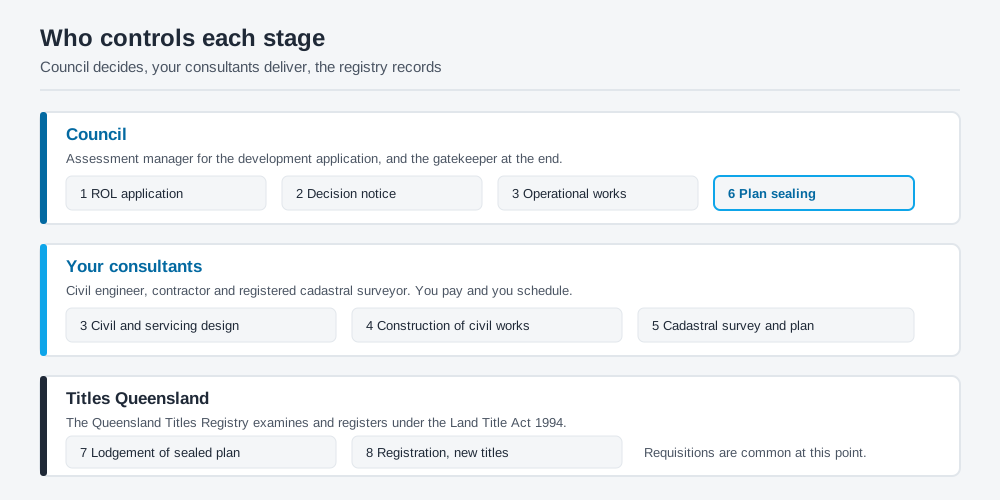
Figure 2: Who controls each stage — council, your surveyor, or the titles registry.
Stage 5: the cadastral survey and the survey plan
With the works in the ground, the new boundaries have to be surveyed and drawn in a form the registry will accept. Only a registered cadastral surveyor may carry out a cadastral survey and certify a survey plan for registration; surveyor registration is administered by the Surveyors Board of Queensland under the Surveyors Act 2003, alongside the Survey and Mapping Infrastructure Act 2003 and the Land Title Act 1994. The registry will not register a subdivision plan otherwise.
The plan must be in a registrable format under the Land Title Act 1994, and which format you use follows from what you are creating.
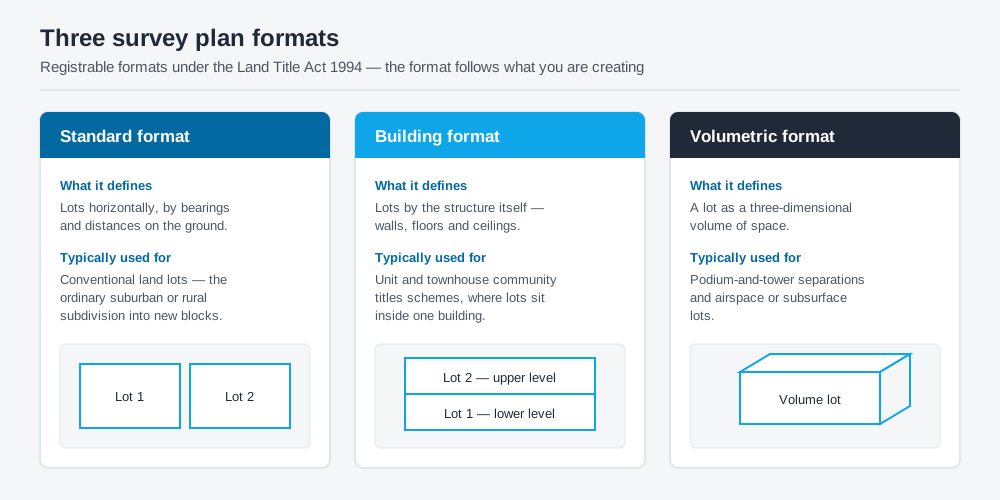
Figure 3: The three survey plan formats and what each one defines.
A standard format plan defines lots horizontally by bearings and distances — ordinary land lots with boundaries on the ground. A building format plan defines lots by the structure itself, by walls, floors and ceilings, and is what unit and townhouse community titles schemes use. A volumetric format plan defines a lot as a three-dimensional volume, used for podium-and-tower separations and airspace or subsurface lots. Choosing the wrong one is not a drafting error; it changes what you own. More on these documents in survey plans in Queensland.
Stage 6: plan sealing, and why it stalls projects
Plan sealing — also called survey plan endorsement — is council certifying that the approval conditions have been met and the infrastructure charges paid, and then endorsing the plan. The application is usually lodged by the surveyor on the owner's behalf.
This is the checkpoint, and it is where projects sit for months. Council is not re-assessing the merits; it is auditing compliance against every condition in the decision notice. One unpaid charge, one easement not created, one unsigned bond, and the plan is not sealed.
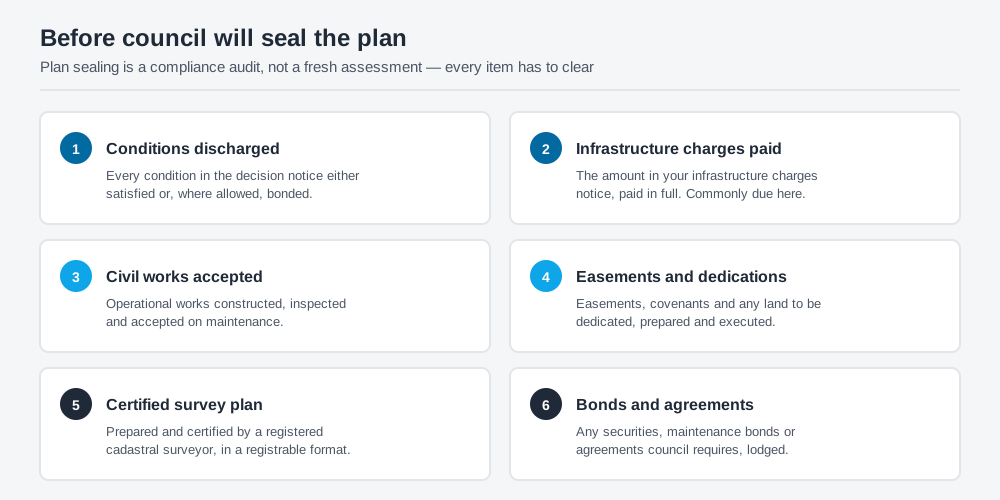
Figure 4: What has to be satisfied before council will seal the plan.
- ✓Every decision notice condition discharged or bonded
- ✓Infrastructure charges paid in full
- ✓Operational works constructed, inspected and accepted
- ✓Easements, covenants and dedications prepared and executed
- ✓Survey plan certified by a registered cadastral surveyor
- ✓Any required agreements, bonds or securities lodged
Stages 7 and 8: lodgement and registration
Once sealed, the plan is lodged with Titles Queensland, which operates the Queensland Titles Registry. The registry examines the plan and the accompanying dealings, and on registration each new lot becomes a separate indefeasible title under the Land Title Act 1994. Only at that point can a lot be sold or mortgaged in its own right. Registry requisitions are common, and are usually answered by the surveyor or conveyancer.
How long you have: the currency period
Approvals do not last forever. Under the Planning Act 2016 s 85, where the approval itself states no period, a reconfiguring a lot approval lapses if the plan is not given to the local government within four years. An extension can be requested, but it must be requested before the approval lapses.
Four years sounds generous until you set it against design, civil construction and a sealing queue. Treat the day the decision notice takes effect as the start of a countdown, not the finish line. Council guidance is worth reading early — Brisbane City Council's subdividing land page is a good example of the practical detail councils publish.
Before committing to any of this, it helps to know what the scheme says about your land. An instantDA planning report sets out the zone, the overlays and the likely level of assessment for your address for $169, against the $800–$1,500 a town planner typically charges for a preliminary opinion. You can start a report in a few minutes, then confirm the position with your council before you engage a surveyor.
Frequently asked questions
How long does a subdivision take in Queensland?
Do I need a separate approval for the civil works?
Who prepares the survey plan?
What is plan sealing?
When do infrastructure charges have to be paid?
What happens if my subdivision approval lapses?
Ready to generate your report?
Skip the writing. Get a council-ready planning report in 5 minutes.
Get your report