Key takeaways
- ✓All rights to the use, flow and control of water in Queensland are vested in the State under the Water Act 2000.
- ✓Reasonable stock and domestic use is generally exempt, but a declared groundwater area can change that even for a domestic bore.
- ✓Irrigation, commercial use, storing water behind a structure and diverting from a watercourse generally need a licence.
- ✓Bores deeper than six metres must be drilled by or under the supervision of a licensed water bore driller, with post-drilling reporting.
- ✓Excavating, filling or clearing in a watercourse, lake or spring generally needs a riverine protection permit — separate from a water licence.
Bores and Water Licences on QLD Property
You'll usually hear this called a development application, or DA — that's the formal name for council approval under the Planning Act 2016. Water is regulated by a different Act again, and the assumption that catches rural buyers out is that owning the land means owning the water under it.
It does not. Under the Water Act 2000, all rights to the use, flow and control of water in Queensland are vested in the State. What a landholder gets is an entitlement or an exemption, and which one depends on the purpose, the volume and — crucially — where the land is.
Get a council-ready planning report in 5 minutes — no planner, no waiting.
Get your report →The short answer
Under the Water Act 2000 all water rights are vested in the State. Reasonable stock and domestic use is generally exempt from licensing, but taking groundwater in a declared groundwater area, and taking water for irrigation or commercial use, generally requires a water licence, allocation or permit.
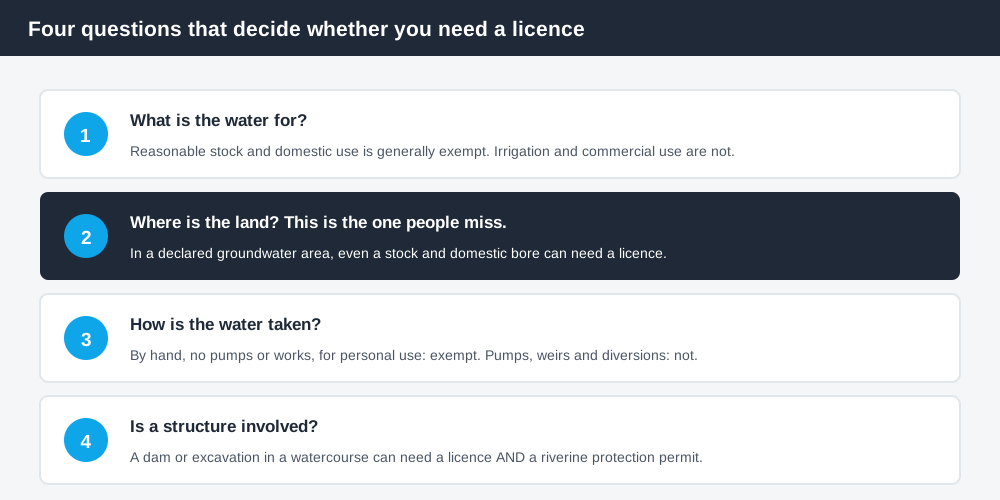
Figure 1: Purpose and location, in that order, decide it.
Stock and domestic bores
For most rural landholders the practical question is whether a household and stock bore needs a licence.
Outside a declared groundwater area, and subject to the applicable water plan, a small stock and domestic bore is typically exempt, provided the use is genuinely domestic and stock — household, garden, non-commercial livestock — and stays within what the water plan contemplates as reasonable.
Inside a declared groundwater area, the position changes. Groundwater areas are established through the Water Regulation 2016 or through an individual water plan, and Queensland Government guidance is that you will generally need a water licence to take underground water in those areas. That can extend to a stock and domestic bore.
There is no single statewide rule here. The first thing to establish is whether your land sits in a groundwater area or a water plan area, and then what that plan says about groundwater.
When a licence is definitely required
Spend 5 minutes, not 3 weeks
instantDA generates a council-ready planning report for Queensland development applications. No town planner. No waiting.
Get your report →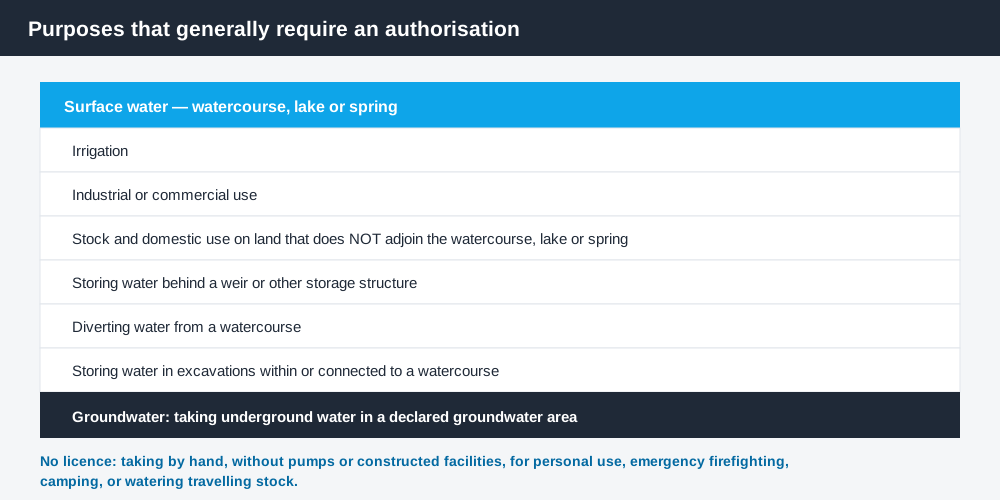
Figure 2: Purposes the state has identified as generally requiring authorisation.
Queensland Government guidance identifies the situations where you will generally need a water licence to take or interfere with water in a watercourse, lake or spring:
- ✓irrigation
- ✓industrial or commercial use
- ✓stock and domestic use on land that does not adjoin the watercourse, lake or spring
- ✓storing water behind a weir or other storage structure
- ✓diverting water from a watercourse
- ✓storing water in excavations that are within or connected to a watercourse
And for underground water, a licence is generally needed where the take occurs in a groundwater area established through the Water Regulation 2016 or a water plan.
Authorisations come in three forms: a water allocation, which is a tradeable entitlement with its own title; a water licence, attached to land for longer-term use; and a water permit, for temporary activities.
At the other end, taking water by hand from a natural stream, river or lake — without pumps or constructed facilities — for personal use, emergency firefighting, camping or watering travelling stock does not require a licence.
- ✓What is the water for?
- ✓Is the land in a water plan area or groundwater area?
- ✓Does the land adjoin the watercourse?
- ✓Will there be a pump or a constructed structure?
- ✓Is a dam or excavation involved?
Drilling and registering the bore
Two obligations apply regardless of whether a licence is required.
A licensed water bore driller. For bores deeper than six metres, drilling must be carried out by, or under the supervision of, a licensed water bore driller. This is a legal requirement, not best practice.
Post-drilling reporting. After drilling, a report must be submitted within the specified timeframe, which is how the bore enters the state's groundwater database. The database records location, construction details, depth and basic hydrogeological information, and registration matters for regulatory, planning and resource management purposes.
Bore construction can also require a development permit under the Planning Act 2016 and the Planning Regulation 2017 in some circumstances, in addition to any water authorisation. Confirm the current bore reporting form and process with the department responsible for water, since the forms are administrative and change.
Water supply for a new rural dwelling
Most rural lots are unserviced, and a new dwelling has three realistic options.
Rainwater tanks. Collecting roof water for domestic use is generally not treated as taking water under the Water Act 2000 and does not need a licence. Planning and building requirements still apply. Water tanks and council approval in QLD covers the structure side.
A bore. Subject to the groundwater area question above, plus the licensed driller and reporting obligations, and a development permit where one applies.
Surface water. Taking small quantities by hand for personal domestic use is generally exempt. Using a pump, or constructing works to supply a dwelling from a watercourse, will commonly require a water licence and a development permit for the works.
Councils generally want to see a demonstrated water supply as part of approving a rural dwelling, so this belongs in your feasibility rather than being left until after settlement. Building on rural land in QLD covers the wider servicing picture.
Dams and works in a watercourse
Two separate regimes apply to anything you build in or near a watercourse.
A water licence under the Water Act 2000 may be needed to interfere with the flow of a watercourse, lake or spring — for example impounding water behind a dam or weir. Farm dams capturing watercourse flow, or overland flow water in specified areas, fall within the licensing regime.
A riverine protection permit is generally needed before you excavate, place fill, or destroy native vegetation in a watercourse, lake or spring, unless an exemption applies. Extracting quarry material requires a separate quarry material allocation.
Both hinge on whether the feature is legally a watercourse. The state makes watercourse determinations and reflects them in mapping, so confirm that before you assume a gully on your property is not one. Clearing associated with the works brings in the vegetation framework as well — vegetation clearing laws in QLD covers those categories and exemptions.
Where to check
Start with the Queensland Globe, which shows water plan area boundaries and mapped watercourses, lakes and springs alongside tenure and environmental layers.
Then identify the water plan covering your catchment and read what it says about groundwater, surface water and overland flow — plans are catchment-specific and the rules genuinely differ. Cross-check the groundwater database for existing registered bores in the area and to confirm your own bore has been reported.
What to do next
Establish the water plan area and whether the land is in a declared groundwater area before you commit to a water strategy. If the plan is irrigation or any commercial use, assume a licence or allocation is required and price it accordingly, including the possibility that entitlements have to be purchased rather than granted.
Engage a licensed water bore driller for anything deeper than six metres and make sure the post-drilling report is lodged so the bore is properly registered.
If you'd rather see the zone, the overlays and the likely category of assessment for an address than work through a planning scheme yourself, an instantDA planning report does that for $169 — against the $800–$1,500 a town planner typically charges for a preliminary opinion. You can start a report in a few minutes.
Then confirm with the state water authority for the entitlement question and with your council for the development permit and dwelling servicing questions. They are separate agencies answering separate questions.
Frequently asked questions
Do I need a licence for a stock and domestic bore in Queensland?
When do I definitely need a water licence?
Do I need a licensed driller for a bore?
Do I need approval to build a farm dam?
Can I collect rainwater without a licence?
How do I find out whether my property is in a groundwater area?
Ready to generate your report?
Skip the writing. Get a council-ready planning report in 5 minutes.
Get your report