Key takeaways
- ✓Brisbane's planning scheme is Brisbane City Plan 2014, amended regularly rather than replaced.
- ✓City Plan online is the council's tool for checking zoning, overlays and generating a property report for an address.
- ✓Development approval and building approval are separate. One does not substitute for the other.
- ✓Brisbane's character controls are the constraint that most often surprises owners of pre-war housing.
- ✓Development.i is where you look up what has been applied for and approved near you.
Do You Need Council Approval in Brisbane?
You'll usually hear this called a development application, or DA — that's the formal name for council approval under the Planning Act 2016. In Brisbane, Council is the assessment manager for most of these, and the rules it applies come from Brisbane City Plan 2014.
Whether you need one depends on three things: what you want to do, where the property sits, and which overlays touch it. In Brisbane, the third of those does more work than most people expect.
Get a council-ready planning report in 5 minutes — no planner, no waiting.
Get your report →The short answer
In Brisbane, you need a development application when City Plan 2014 makes the work assessable for your zone, precinct and overlays. Much minor domestic work is accepted development. Building approval is separate and is usually decided by a private certifier, not by Council.
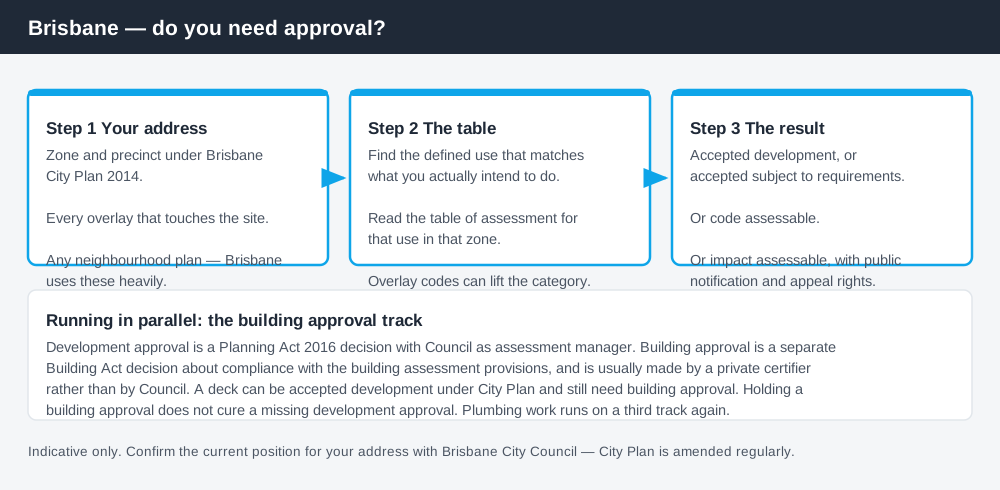
Figure 1: Two tracks run in parallel. Answering one does not answer the other.
Brisbane City Plan 2014
Brisbane's local planning scheme is Brisbane City Plan 2014. Council itself describes it in the present tense as the city's planning scheme, and it is kept current through amendments rather than replaced — the version published on Council's site carries an effective date and a status of current.
That matters practically. City Plan is amended often enough that a position you checked a year or two ago may have moved, particularly on residential density and design provisions, which have been an active area of amendment. Always take the current position from Council rather than from a saved PDF or an older report.
Like every Queensland scheme, City Plan is built on the standardised structure that runs across the state: a strategic framework, zone codes, overlay codes, and tables of assessment that tell you the category of assessment for a defined use. How to find out what zone your property is in covers reading that structure generally.
Two approval tracks, not one
Spend 5 minutes, not 3 weeks
instantDA generates a council-ready planning report for Queensland development applications. No town planner. No waiting.
Get your report →This is the single most useful distinction for a Brisbane homeowner, and it is where the majority of confusion lives.
Development approval is a Planning Act 2016 decision. Council is the assessment manager. It deals with land use, siting, scale, and compliance with the codes in City Plan.
Building approval is a Building Act decision about whether the structure complies with the building assessment provisions. It is usually given by a private certifier, not by Council.
They are separate approvals, from separate legislation, with separate decision-makers. A deck can be accepted development under City Plan and still need building approval. Conversely, holding a building approval does not cure the absence of a development approval where one was required. Building approval versus development approval covers the distinction in full.
Plumbing work adds a third track, administered under the Plumbing and Drainage Act 2018 with your licensed plumber and Council's plumbing team.
- ✓What is the zone and precinct for the address?
- ✓Which overlays apply?
- ✓Is the work assessable, or accepted development?
- ✓If accepted, is it accepted subject to requirements?
- ✓Do you also need building approval?
- ✓Does the work involve plumbing?
Checking your own address
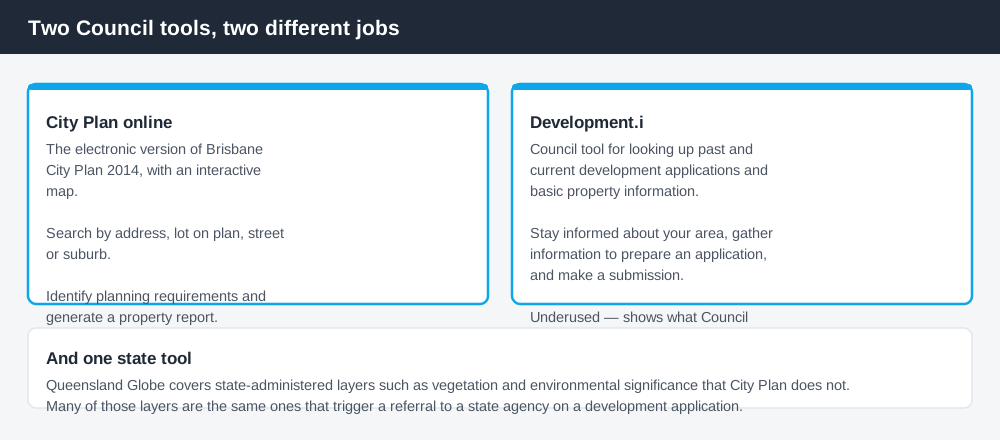
Figure 2: Two Council tools, doing two different jobs.
Council provides City Plan online, an electronic version of City Plan 2014 that includes an interactive map. You can search by address, lot on plan, street or suburb, identify the planning requirements that apply, generate a property report, and read the scheme itself.
For most homeowners, the property report is the fastest route. It brings the zone, precinct and overlays for an address together in one place, which is exactly the combination you need before reading any table of assessment.
Alongside that, Council runs Development.i, its online tool for looking up past and current development applications and basic property information. Council describes it as a way to stay informed about what is happening in your area, gather information to help prepare applications, and make a submission on an application.
Development.i is genuinely underused. Looking at what has been approved on comparable sites near you tells you what Council actually accepts and what conditions it attaches — which is often more informative than the code text.
For state-administered layers such as vegetation, cross-check the site on the Queensland Globe, which covers information City Plan does not.
What catches Brisbane owners out
Character controls. Brisbane has a large stock of pre-war housing and a Traditional building character overlay covering much of it, along with a Character residential zone. Demolition and work visible from the street are where applications get difficult, and the constraint is frequently discovered after purchase. The Character residential zone explained covers how the zone and the overlay work together. Confirm the specific age thresholds and triggers in the current overlay code, because these are precise and are set by Council.
Flood. A substantial part of Brisbane is affected by flood mapping, and the flood overlay code drives floor levels and, for some work, the category of assessment. Older character housing and flood affected land overlap considerably.
Neighbourhood plans. Brisbane makes heavy use of neighbourhood plans, which sit over the zone for defined areas and can change both what is anticipated and how it is assessed. Checking the zone without checking for a neighbourhood plan is a common and expensive omission.
Assuming a rule applies city-wide. It rarely does. Precinct, overlay and neighbourhood plan combine differently in different suburbs.
When you will probably need a DA
Without turning this into a rule you should rely on, the pattern in Brisbane is reasonably consistent. Work that changes the use of a property, adds a dwelling, subdivides, is visible from the street in a character area, sits in a flood or other hazard overlay, or exceeds the thresholds in the applicable code, is likely to be assessable.
Minor domestic work on an unconstrained suburban lot — a modest shed, a fence at standard height, internal alterations that do not change floor area, height, structure or fire safety systems — is much more often accepted development, subject to meeting any requirements attached to that acceptance.
The only reliable way through is the table of assessment for your defined use, read against your zone, precinct and overlays.
What to do next
Generate the property report for your address through City Plan online, list every overlay, then read the table of assessment for what you actually intend to do.
If you'd rather see the zone, the overlays and the likely category of assessment for a Brisbane address pulled together in one place, an instantDA planning report does that for $169 — against the $800–$1,500 a town planner typically charges for a preliminary opinion. You can start a report in a few minutes.
Then confirm with Council. Brisbane's duty planning service will tell you whether your reading of the table is right, and for anything involving character, flood or a neighbourhood plan, that conversation is worth having before you engage a designer. Brisbane City Plan 2014 explained covers the scheme itself in more depth.
Frequently asked questions
Do I need council approval in Brisbane for a shed or deck?
What is Brisbane's planning scheme?
How do I check the zoning of a Brisbane property?
What is Development.i?
Is building approval the same as council approval in Brisbane?
Why do character controls matter so much in Brisbane?
Ready to generate your report?
Skip the writing. Get a council-ready planning report in 5 minutes.
Get your report