Key takeaways
- ✓A fitout raises three separate questions — is the use approved, is the building work approved, and are the licences in place.
- ✓A development approval attaches to the land and to a defined use, not to the previous tenant's business name.
- ✓Cosmetic work is generally exempt, but new walls, changed exits, new sanitary facilities or anything touching the fire safety system is not.
- ✓A landlord saying the shop is already approved usually means the building exists — not that your use is approved.
- ✓Design food premises to the Food Standards Code before you build, because retrofitting a non-compliant fitout is expensive.
Do You Need Council Approval for a Shop Fitout in QLD?
You'll usually hear this called a development application, or DA — that's the formal name for council approval under the Planning Act 2016. For a shop fitout, though, "do I need a DA" is only one of three questions, and it is not always the one that catches people. The other two are building approval, which is a separate system entirely, and the licences that let you actually trade. Learn more about the medical centre approval.
Get a council-ready planning report in 5 minutes — no planner, no waiting.
Get your report →The short answer
Often yes — but not always for the reason you expect. If your business is the same defined use as the last tenant, you may need nothing. A different use is a material change of use needing a development application. Structural, egress, sanitary or fire safety work needs building approval separately.
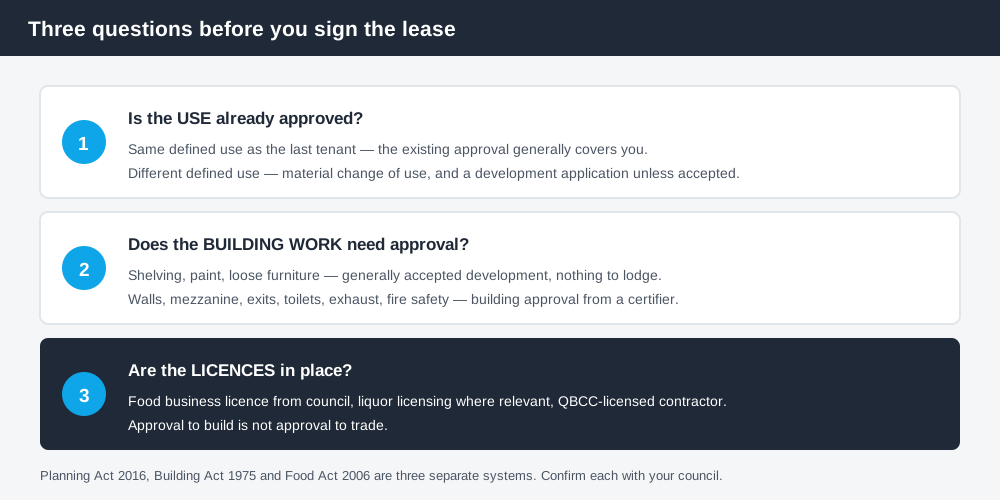
Figure 1: Three separate approval systems, three separate answers.
Question one — is the use already approved?
This is the one that costs people money, and it is decided before you touch a paintbrush.
A development approval attaches to the land, not to the business that used to occupy it. It approves a defined use — a category set out in your council's planning scheme. Queensland's schemes follow the Queensland Planning Provisions structure, so the administrative use definitions are broadly familiar across councils, but each council layers its own zones, codes and overlays on top, and the tables of assessment that decide your category are council-specific.
If the last tenant ran a clothing store and you are opening a homewares store, you are almost certainly the same defined use — a shop — and the existing approval already covers you. Open a café, a physiotherapy clinic, a small bar or a gym in that same tenancy and you are a different defined use. Changing the use of premises is a material change of use (MCU), and unless the scheme lists that use as accepted development in that zone, it needs a development application.
This is why the landlord's assurance that "the shop is already approved" needs unpacking. It usually means the building lawfully exists and has been used as a shop. It rarely means your particular use is approved. Ask which development approval applies, ask for the decision notice and its conditions, and check the defined use named in it against what you intend to do — before you sign, not after.
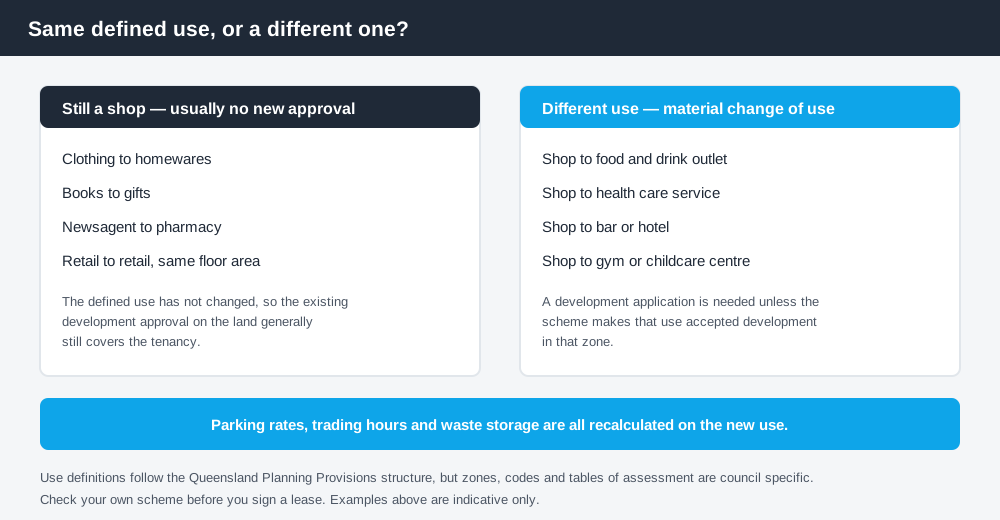
Figure 2: Same defined use, no change. Different defined use, material change of use.
Two related traps sit inside the use question. First, car parking. Schemes set parking rates by use, so a tenancy approved as a shop may carry a lower rate than a food and drink outlet or a gym in the same floor area. Recalculate on the new use and you can end up short, which is a common reason a change of use is conditioned or refused — our guide to car parking requirements in QLD explains how the rates are read. Second, hours, noise and waste. Existing approvals often condition trading hours, plant noise and bin storage, so late trading, a new exhaust fan or a bigger waste enclosure may need the approval changed even where the use does not.
If the use is changing at all, start with change of use for a shop in QLD, then work out your category of assessment — accepted versus assessable development explains why that distinction decides whether you lodge anything.
Question two — does the building work need approval?
Spend 5 minutes, not 3 weeks
instantDA generates a council-ready planning report for Queensland development applications. No town planner. No waiting.
Get your report →Building approval is a different Act and a different decision-maker. It sits under the Building Act 1975 and is normally issued by a private building certifier, not by council. You can need building approval with no DA at all, or a DA with no building work.
A genuinely cosmetic fitout — shelving, paint, signage inside the glass, loose furniture — generally needs nothing. Schedule 1, section 7 of the Building Regulation 2021 makes repairs, maintenance and alterations to an existing building accepted development. But that exemption drops out where the work changes the building's floor area or height, affects a structural component, or affects the fire safety system.
- ✓New or removed internal walls
- ✓A mezzanine or new floor area
- ✓Changed exit doors or egress paths
- ✓New or relocated sanitary facilities
- ✓Mechanical exhaust or ventilation
- ✓Anything touching sprinklers, alarms, detection or fire-rated construction
Any of those and you are back inside building approval. Kitchen exhaust and new toilets catch food and beauty tenancies constantly, and moving a wall that turns out to be a fire-rated separation between tenancies catches everyone.
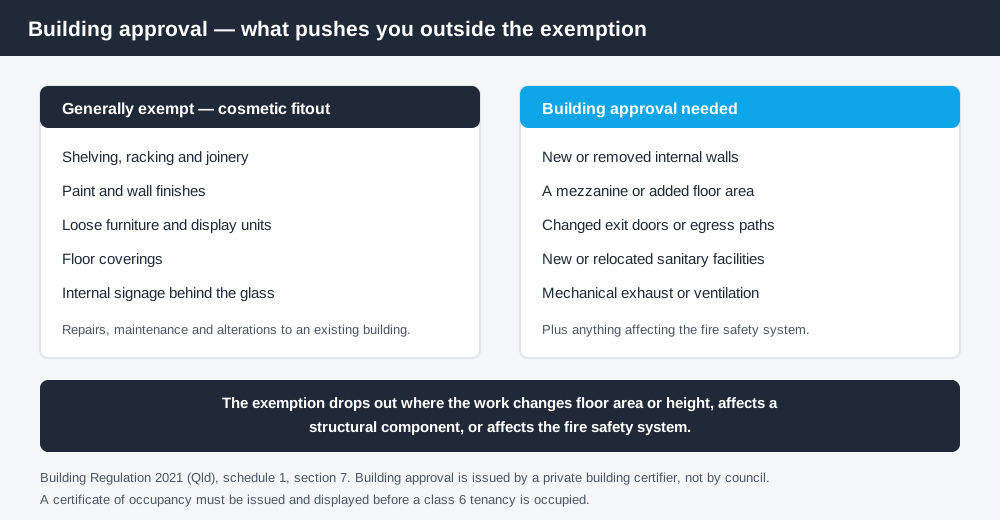
Figure 3: What keeps you inside the alterations exemption, and what pushes you out.
Two further things arrive with building approval. Accessibility: a shop is generally a class 6 building, and when you alter one, the new and altered parts are assessed against the current National Construction Code access provisions — accessible paths of travel, door widths, sanitary facilities and signage. The Disability Discrimination Act 1992 operates in parallel and can require reasonable adjustments beyond that minimum. Occupancy: for a class 6 building, a certificate of classification — now the certificate of occupancy — must be issued on substantial completion and displayed before the space is occupied. Your certifier issues it, so do not book an opening date before it exists.
Question three — the licences
Approval to build is not approval to trade.
Any food business needs a food business licence from the council under the Food Act 2006, and the council assesses your premises against the Food Standards Code before it issues one. Finishes, coving, hand basins, grease arrestors and equipment clearances have to be designed in, not retrofitted — submit plans for assessment before you build, because modifying a finished kitchen is brutally expensive. The Queensland Government's guidance on whether you need a food business licence sets out who is caught.
If you are selling alcohol, liquor licensing runs on its own track through the state and interacts with planning — the licence type and trading hours need to line up with what your development approval allows. Finally, building work above a low statutory value must be carried out by a QBCC-licensed contractor. Check the licence, and check its class covers the work.
The order to do it in
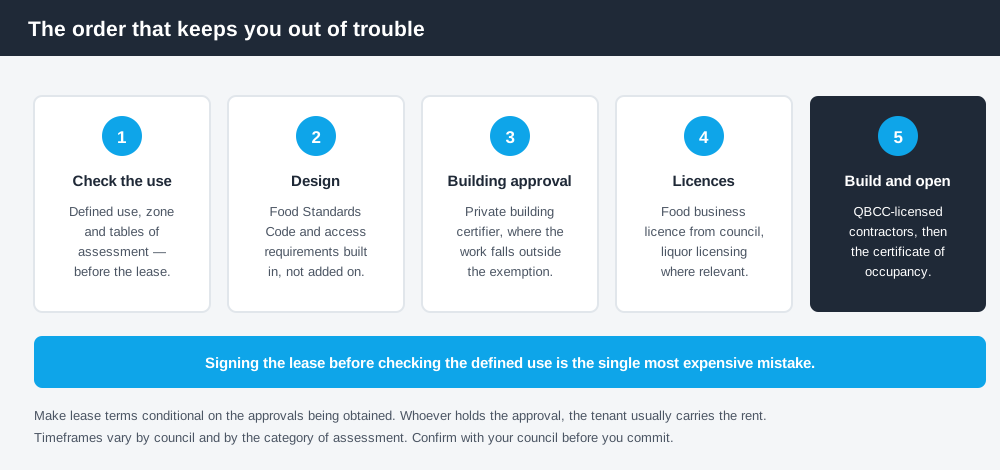
Figure 4: Check the use first — everything else is cheaper to fix.
Check the use first, because it decides whether you have a tenancy at all. Then design, with the Food Standards Code and access requirements built in. Then building approval through a certifier. Then licences, then fitout, then the certificate of occupancy, then open.
The riskiest sequence is the common one — sign the lease, engage a shopfitter, discover in week three that your use is impact assessable. Whoever holds the approval, it is usually the tenant paying rent while that is fixed, so make lease terms conditional on approvals being obtained.
If you'd rather see the zone, the overlays and the likely category of assessment for a tenancy before you commit to it, an instantDA planning report does that for the address for $169 — against the $800–$1,500 a town planner typically charges for a preliminary opinion. You can start a report in a few minutes. Then confirm the detail with your council.
Frequently asked questions
Do I need council approval for a shop fitout in QLD?
My landlord says the shop is already approved. Is that enough?
Does a café in a former retail shop need approval in Queensland?
What fitout work needs building approval in QLD?
Do I need a food business licence as well as approval?
Who decides building approval for a shop fitout in Queensland?
Ready to generate your report?
Skip the writing. Get a council-ready planning report in 5 minutes.
Get your report