Key takeaways
- ✓DA Form 1 is the approved form for development applications under the Planning Act 2016. It is a state form, identical whichever Queensland council you lodge with.
- ✓Building work on its own uses DA Form 2. Building work combined with another aspect of development uses DA Form 1 plus parts 4 to 6 of DA Form 2.
- ✓The form is only the cover sheet. Section 51 of the Planning Act also requires the documents the form calls for, the fee, and the owner's written consent where it applies.
- ✓Part 6 lets you waive your right to an information request. Waiving it removes the council's ability to ask for anything more before deciding.
- ✓The council has 10 business days to decide whether your application is properly made. Get the form wrong and you get an action notice instead of a confirmation notice.
DA Form 1 Explained: How to Fill In Queensland's Development Application Form
You'll usually hear this called a development application, or DA — that's the formal name for council approval. And whatever you are proposing, the paperwork starts in the same place: DA Form 1 — Development application details, the approved form made under the Planning Act 2016.
It is a state form, not a council form. The version you lodge in Cairns is the version you lodge in Logan. What changes between councils is the supporting material that hangs off it, and the fee.
Get a council-ready planning report in 5 minutes — no planner, no waiting.
Get your report →The short answer
DA Form 1 is Queensland's approved development application form under the Planning Act 2016, used for material change of use, reconfiguring a lot, operational work, and building work assessed against a planning scheme. Building work alone uses DA Form 2. Lodge it with the documents it calls for, the fee, and owner's consent where required.
What DA Form 1 is, and what it is not
Section 51 of the Planning Act 2016 sets the bar. A development application must be made in the approved form to the assessment manager, and must be accompanied by the documents the form requires and the required fee. Where the applicant is not the owner, and the application is for a material change of use or reconfiguring a lot, it must also be accompanied by the owner's written consent.
That last requirement catches more people than any other. A builder or designer lodging on a client's behalf is not the owner. Without the owner's signed consent the assessment manager cannot accept the application at all.
Get all of that right and your application is a properly made application — the term section 51 uses. That status matters, because it is what starts the clock.
The nine parts, in order
Spend 5 minutes, not 3 weeks
instantDA generates a council-ready planning report for Queensland development applications. No town planner. No waiting.
Get your report →DA Form 1 is structured as nine parts. The wording of each is set by the state, and the current approved version is published on the planning department's website — always download it fresh rather than reusing a copy from a previous job, because approved forms are reissued.
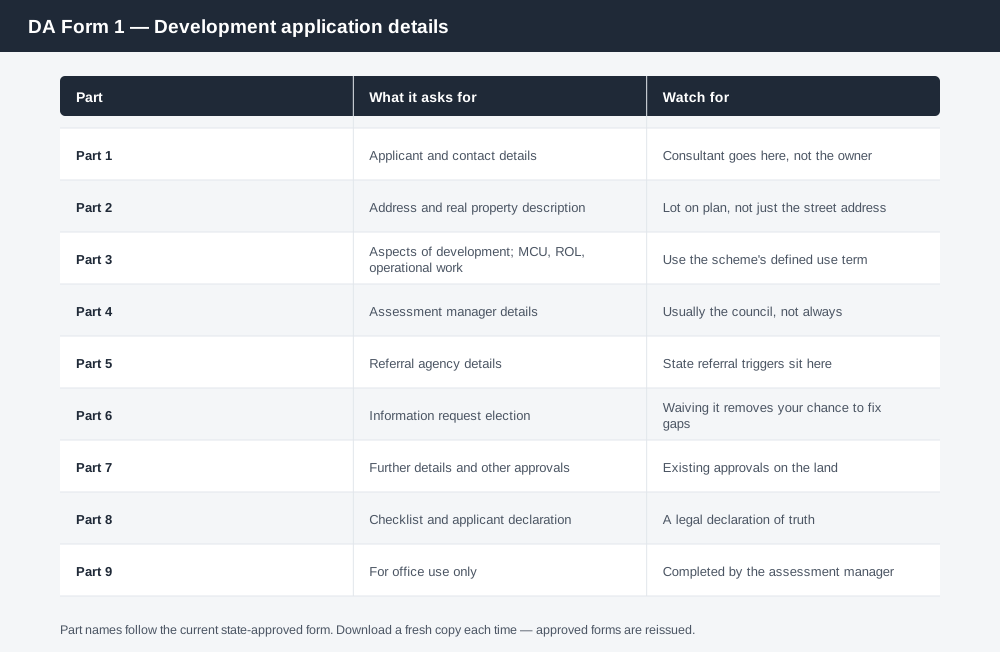
Figure 1: The nine parts of DA Form 1 and what each one is really asking.
Part 1 — Applicant details. Who is applying, and who council should correspond with. If a consultant is acting for you, they go here and you go in the owner's consent.
Part 2 — Location details. The street address and, more importantly, the real property description — the lot on plan. Council assesses land, not addresses. Get the lot on plan wrong and everything downstream is wrong.
Part 3 — Development details. The substantive part. Section 1 asks for the aspects of development involved, section 2 for further detail, with separate divisions for material change of use, reconfiguring a lot and operational work. This is where you name the use exactly as your council's planning scheme defines it — not in your own words.
Part 4 — Assessment manager details. Usually the council, but not always.
Part 5 — Referral details. Whether the application must be referred to a referral agency, most often the State Assessment and Referral Agency.
Part 6 — Information request. Covered below. Read it twice.
Part 7 — Further details. Any other approvals, notices or matters attaching to the land.
Part 8 — Checklist and applicant declaration. The declaration is a legal statement that the information is true.
Part 9 — For office use only. Council completes this.
DA Form 1 or DA Form 2?
This is the fork most homeowners hit first, and it maps onto a distinction Queensland keeps quite strictly: building approval and development approval are separate systems, run under separate Acts, decided by different people. The split between the two forms follows that line, and building approval versus development approval explains why the two so often run in parallel.
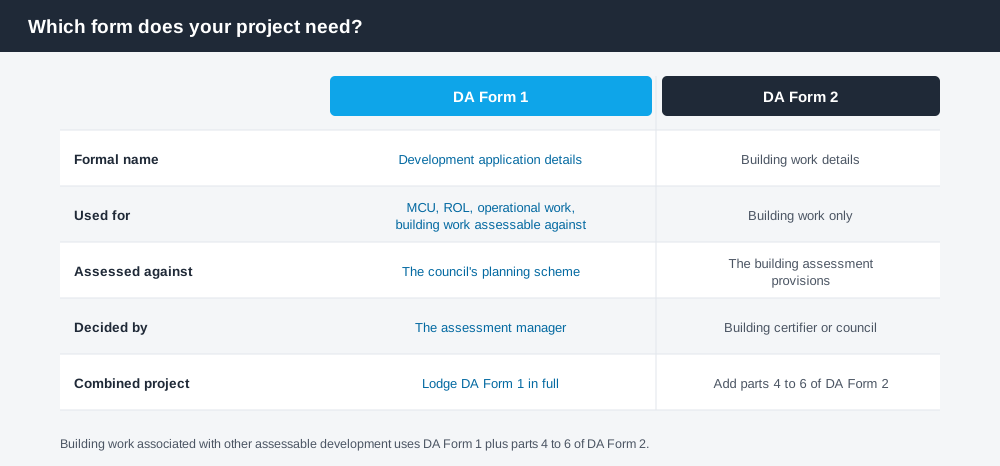
Figure 2: Which form, and when you need both.
Building work on its own — the shed, the carport, the deck that needs a building approval but not a planning approval — uses DA Form 2 — Building work details. Anything assessed against the planning scheme uses DA Form 1.
Where it gets fiddly is the combination. If your building work is associated with another aspect of assessable development, such as a material change of use, you use DA Form 1 and parts 4 to 6 of DA Form 2. One application, two forms, one fee schedule.
If you are not yet sure whether you need a DA at all, work that out before you touch either form. Do you need council approval in QLD walks the threshold question, and accepted versus code versus impact assessable explains what category you are likely to land in.
Part 6: the election worth understanding
Part 6 asks whether you want to receive an information request.
Under the Development Assessment Rules — made under section 68 of the Planning Act 2016 — the assessment manager and any referral agency may ask you for further information after lodgement. That request must be made within 10 business days, and you then have three months to respond, or a longer period if you agree one.
You may elect on the form not to receive an information request. Do that and the assessment manager and referral agencies cannot issue one. They must assess and decide the application on the material you lodged.
- ✓Waiving the request is only safe if your application is genuinely complete
- ✓It removes the council's ability to ask for the missing plan
- ✓It removes your opportunity to fix a gap before the decision
- ✓An incomplete application that cannot be topped up gets refused, not delayed
Applicants waive it to save time. It does save time when the package is complete. When it is not, the council's only remaining option is to decide against you.
What happens in the first ten business days
Once the application is received, the assessment manager has 10 business days — the confirmation period under the Development Assessment Rules — to work out whether the application is properly made.
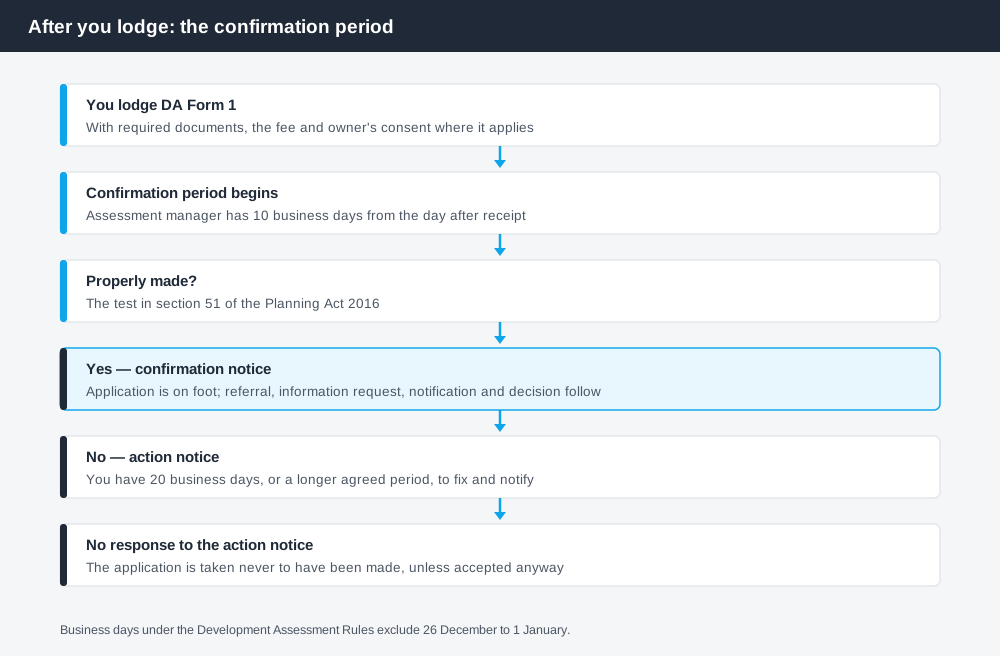
Figure 3: The first ten business days decide whether your DA is on foot.
If it is properly made you get a confirmation notice, and the process moves forward. If it is not, you get an action notice setting out what has to be fixed. You then have 20 business days, or a longer agreed period, to comply and tell the assessment manager you have. If you do not, and the assessment manager does not accept the application anyway, the application is taken never to have been made.
Note the DA Rules count in business days, and exclude the days between 26 December and 1 January. A DA lodged in mid-December moves more slowly than the calendar suggests.
Getting the attachments right
Nothing on the form saves a thin application. The assessable content sits in the plans and the planning report, and what documents council needs for your DA sets out what that package normally contains. Fees are set by each council's schedule rather than the state, which council DA fees in QLD covers.
You can download the current DA Form 1 and its companion guide from the Queensland Government's development assessment forms page. Requirements vary by scheme, so confirm the supporting material list with your council before you lodge.
What to do next
An instantDA planning report gives you the planning assessment that sits behind DA Form 1 — your land, your zone, your overlays, written against your council's assessment benchmarks — for $169. A town planner doing the same scope typically charges $800–$1,500.
Start with a planning report, or go straight to creating your report.
Frequently asked questions
What is DA Form 1 in Queensland?
What is the difference between DA Form 1 and DA Form 2?
Do I need the owner's consent to lodge DA Form 1?
Should I waive the information request in Part 6?
How long does council take to check my form?
Where do I get the current DA Form 1?
Ready to generate your report?
Skip the writing. Get a council-ready planning report in 5 minutes.
Get your report