Key takeaways
- ✓A pre-lodgement meeting is an administrative council service, not a statutory stage under the Planning Act 2016.
- ✓The advice is not binding — council can and does assess the lodged application differently.
- ✓It earns its keep on impact assessable, overlay-affected, unusual or precedent-setting proposals.
- ✓For straightforward accepted development it is usually a waste of everyone's hour.
- ✓Turn up with drawings and specific written questions, and get the council's notes in writing afterwards.
Pre-Lodgement Meetings — Are They Worth It? (QLD)
Builders call it a pre-DA, a pre-app, or just "going in to see the planner". Councils call it a pre-lodgement meeting, and the thing you're preparing for afterwards is a development application, or DA — the formal name for council approval in Queensland. It is one of the most misunderstood parts of the process, mostly because people walk out of one believing they have something they don't.
Get a council-ready planning report in 5 minutes — no planner, no waiting.
Get your report →The short answer
A pre-lodgement meeting is an informal advisory service, not a statutory stage under the Planning Act 2016. The advice is not binding — council can still decide differently. It is usually worth booking for impact assessable, overlay-affected or unusual proposals, and rarely worth it for straightforward accepted development.
That single distinction — advisory versus binding — is where most of the disappointment comes from.
What a pre-lodgement meeting actually is
It is a booked conversation, usually 45 to 60 minutes, between you and one or more council officers before you lodge anything. Depending on the proposal you might get a planner alone, or a planner plus someone from traffic, infrastructure, environmental health or heritage. You bring a concept; they tell you how it looks against the planning scheme and what they'd expect to see in an application.
What it is not is a step in the Planning Act 2016. The statutory process starts when you lodge. Nothing about a pre-lodgement meeting is required, and nothing said in one creates an entitlement. Councils offer it because a better-formed application is cheaper for them to assess too.
Officers will usually tell you this themselves, often in writing at the top of the meeting notes. Take that wording seriously. The officer you speak to may not be the officer who assesses your application, the scheme can be amended between the meeting and lodgement, and referral agencies form their own views. Council can decide differently, lawfully, and does.
Where it sits before the formal DA stages
Spend 5 minutes, not 3 weeks
instantDA generates a council-ready planning report for Queensland development applications. No town planner. No waiting.
Get your report →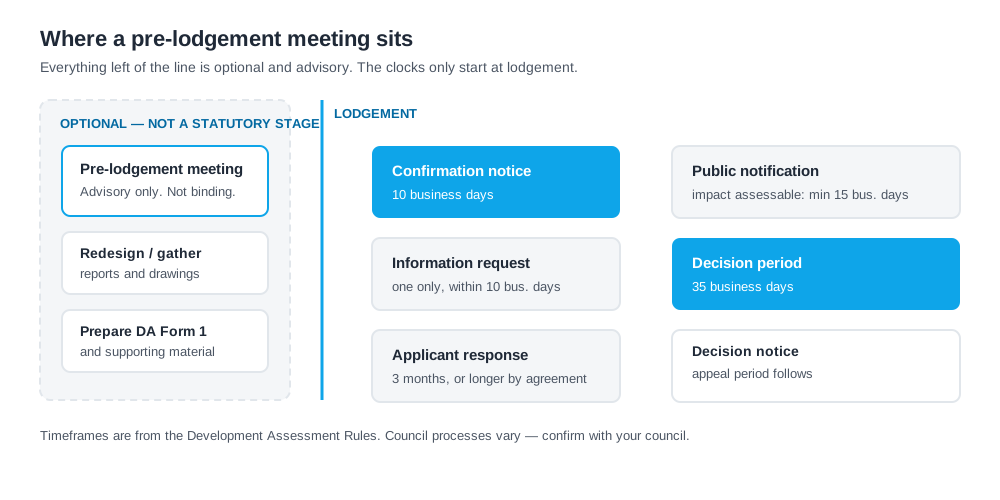
Figure 1: A pre-lodgement meeting sits outside the statutory process, before lodgement.
Once you do lodge, the Development Assessment Rules take over and the clock becomes real. The assessment manager has 10 business days to give you a confirmation notice or an action notice. If your application isn't properly made, you find out at that point. Council may then make one information request, within 10 business days after the confirmation period ends, and you get three months to respond unless you agree otherwise.
Impact assessable applications must be publicly notified for a minimum of 15 business days, or 30 business days where the application includes a variation request. The decision period is 35 business days for both code and impact assessment, running from the end of the last relevant stage. If you want those stages walked through end to end, how to lodge a DA in Queensland covers the sequence and the paperwork.
The value of a pre-lodgement meeting is that everything it fixes happens before any of those clocks start.
What you actually get out of one
At a good meeting you will leave knowing the zone and the overlays affecting the site, the category of assessment your proposal falls into, which codes it will be measured against, which technical reports council expects to see, and — most usefully — which parts of the concept the officers are uncomfortable with.
- ✓The category of assessment and why
- ✓The specific codes and overlays that apply
- ✓The reports and plans council expects with the application
- ✓Any referral agency likely to be involved
- ✓The two or three design elements officers flagged as problems
That last one is the real product. An officer saying "the setback to the northern boundary is going to be an issue" three months before you lodge is worth far more than the same sentence arriving in an information request. Reducing the odds of an information request is one of the more reliable ways to shorten an approval — see what an information request is and how to avoid one.
When it is worth booking, and when it isn't
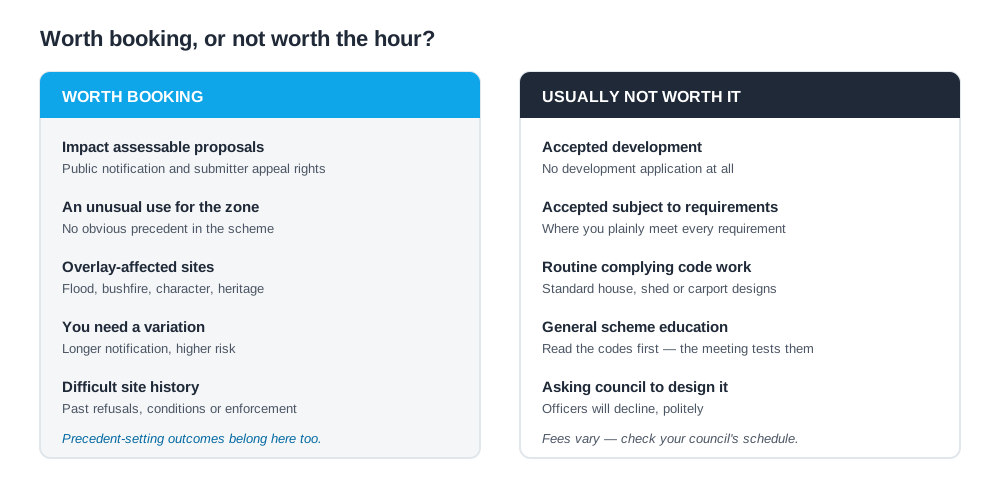
Figure 2: Where the hour pays for itself, and where it doesn't.
Book one when the proposal is impact assessable, because those applications get publicly notified, submitters gain appeal rights, and the cost of a refusal is measured in months. Book one when the use is unusual for the zone, when the site carries overlays such as flood, bushfire, character or heritage, when you are asking for a variation, when the site has an awkward history of past approvals or enforcement, or when the outcome would set a precedent the council will have to live with.
Don't book one for accepted development, or for accepted development subject to requirements, where the answer is simply whether you meet the written requirements. Don't book one for a routine code assessable proposal that plainly complies. And don't book one to get a general education on the scheme — officers will politely, and correctly, decline to design your project for you.
Fees vary between councils and are published in each council's fees and charges schedule, so check yours before you assume the meeting is free. Queensland's schemes follow the Queensland Planning Provisions structure, but each council layers its own codes, overlays and service arrangements on top, so confirm the format and cost with your council.
How to prepare so the hour isn't wasted
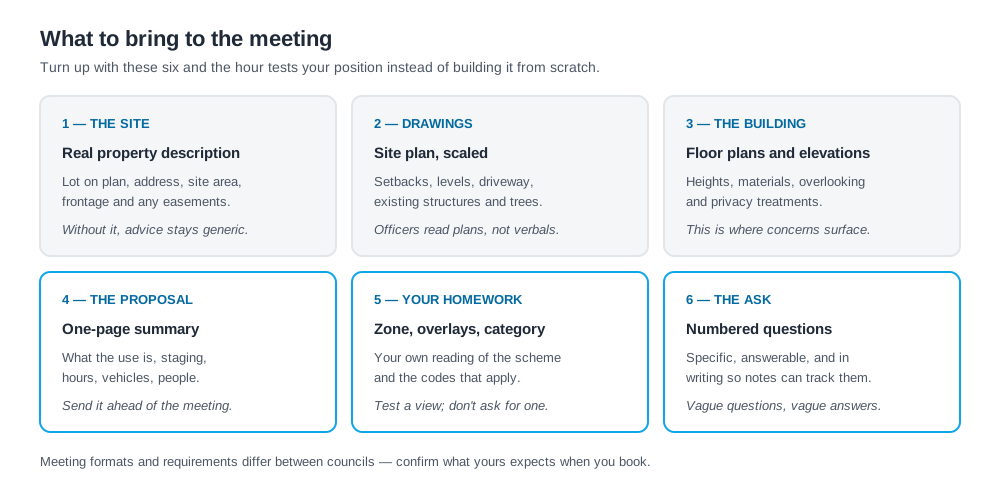
Figure 3: What to bring, and what to leave at the office.
The difference between a useful meeting and a wasted one is almost entirely preparation. Turn up with a real property description, a site plan, floor plans and elevations at a readable scale, a short written description of the proposal, and a numbered list of specific questions. Vague questions get vague answers.
Do your own scheme work first. Check the zone and overlays on your council's mapping or on Queensland Globe, read the codes that apply, and form a view on the category of assessment before you walk in. Then use the meeting to test that view rather than to obtain it.
If you'd rather have the zone, overlays and likely category of assessment worked out for your actual address before you book, an instantDA planning report does exactly that for $169 — against the $800–$1,500 a town planner typically charges for a preliminary opinion. You can start a report in a few minutes and take it to the meeting as your starting position.
What to do with the advice afterwards
Ask for the council's written notes and read them against your own. Where the two disagree, the council's version is the one that matters. Then treat every concern raised as a design task, not a debating point — most refusals trace back to issues that were visible early and never resolved, as the most common reasons DAs get refused sets out.
When you lodge, address the pre-lodgement points explicitly in your planning material: name the concern, explain what changed, and point to the drawing. Assessing officers notice that, and it is the closest thing to converting non-binding advice into a smoother assessment. Just don't cite the meeting as though it were a commitment — confirm the final position with your council, because theirs is the decision that counts.
Frequently asked questions
Is a pre-lodgement meeting compulsory in Queensland?
Is pre-lodgement advice binding on council?
What does a pre-lodgement meeting cost in QLD?
How long before lodging should I book one?
Can I bring my builder, architect or town planner?
Will council put pre-lodgement advice in writing?
Ready to generate your report?
Skip the writing. Get a council-ready planning report in 5 minutes.
Get your report