Key takeaways
- ✓A childcare centre needs four separate approvals from three different decision-makers, and none of them delivers the others.
- ✓Council decides the material change of use; the Department of Education decides whether the service may operate.
- ✓Whether a child care centre is code or impact assessable depends entirely on the zone and your council's table of assessment.
- ✓Childcare premises are generally a Class 9b assembly building, which usually rules out an ordinary house.
- ✓Service approval requires evidence that planning and building approvals are already in place — so the order matters.
Opening a Childcare Centre in QLD — Council Approval
You'll usually hear this called a development application, or DA — that's the formal name for council approval under the Planning Act 2016. For a childcare centre, council approval is genuinely only the first of four things you need, and the one that trips operators up is not the hardest one. It's the assumption that getting council over the line means you can open. Learn more about the medical centre da requirements. Learn more about the place of worship approval.
It doesn't. Council decides whether the use fits the land. A separate regulator decides whether the service may operate.
Get a council-ready planning report in 5 minutes — no planner, no waiting.
Get your report →The short answer
A childcare centre in Queensland generally needs a material change of use approval from council, referral to a referral agency where a state interest is triggered, building approval as a Class 9b building, and provider and service approval from the Department of Education under the Education and Care Services National Law.
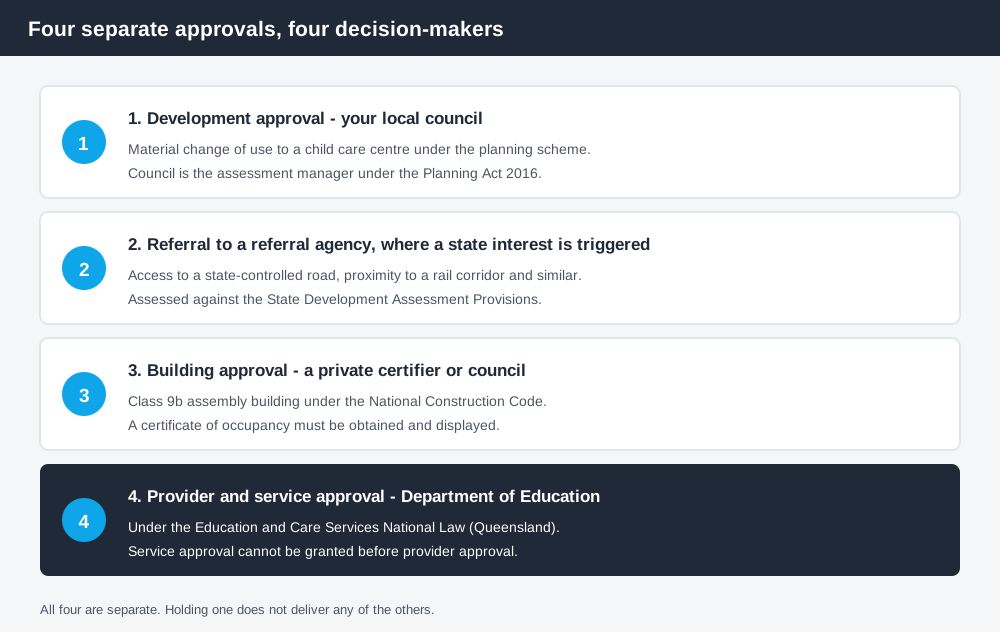
Figure 1: Four approvals, three decision-makers, no shortcuts between them.
The planning approval: a material change of use
A childcare centre is a defined use in Queensland planning schemes, and establishing one on a site that isn't already approved for it is a material change of use — the start of a new use of premises. That's the application council assesses as assessment manager.
Whether it's code assessable or impact assessable comes from the table of assessment for your zone. In centre, mixed use, community and some residential zones, a child care centre is often anticipated and assessed as code assessable. In low density residential and some other zones, it commonly falls to impact assessment — which means public notification, submissions from neighbours, and submitter appeal rights.
That distinction is worth more than any other single fact about your site. Our guide to accepted versus assessable development in QLD sets out what each category means for notification and appeal rights, and material change of use in QLD covers what counts as an MCU in the first place.
Queensland's planning schemes follow the Queensland Planning Provisions structure, but each council layers its own codes and overlays on top. They are not uniform. Brisbane's City Plan and the Gold Coast's scheme both regulate childcare centres, and both do it differently.
What the assessment actually turns on
Spend 5 minutes, not 3 weeks
instantDA generates a council-ready planning report for Queensland development applications. No town planner. No waiting.
Get your report →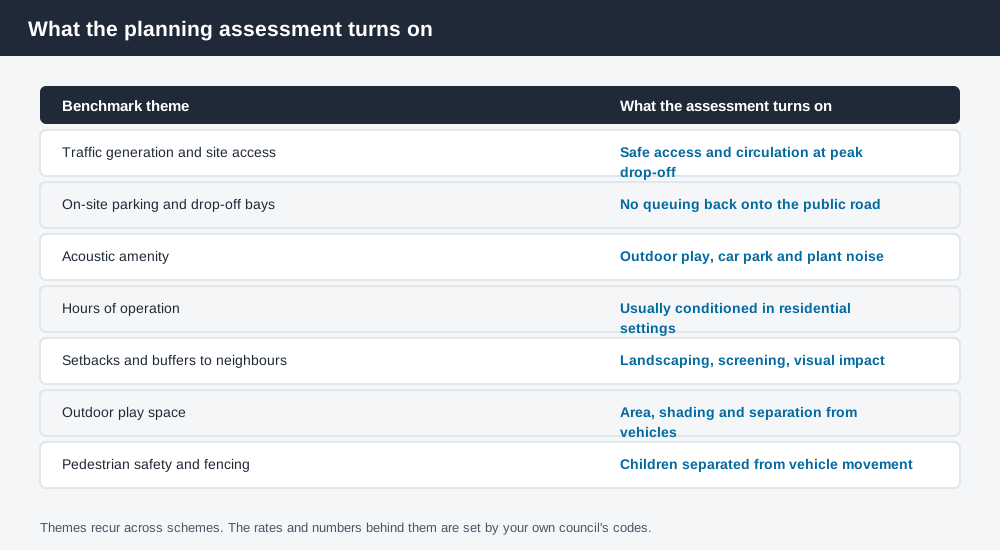
Figure 2: The recurring themes. Your council's codes set the numbers.
Childcare centres are assessed hard on traffic and amenity, because those are where the real neighbourhood impacts sit. A centre concentrates a large number of vehicle movements into two short windows each weekday, in a setting that is often residential.
- ✓Safe vehicle access and internal circulation
- ✓Enough on-site parking for staff and short-stay drop-off
- ✓No vehicle queuing back onto the public road
- ✓Acoustic management of outdoor play areas, car parks and plant
- ✓Hours of operation appropriate to the surrounding uses
- ✓Setbacks, screening and landscaping to neighbouring properties
- ✓Pedestrian safety and separation of children from vehicles
Acoustic assessment comes up repeatedly, particularly where the site is near a rail corridor or a busy road. Where a state code applies through a referral, it may set specific noise limits for childcare premises and require assessment by a suitably qualified consultant.
When the state gets involved
Some applications must be referred to a referral agency, which assesses against the State Development Assessment Provisions (SDAP). For childcare, the common triggers are transport-related: new or changed access to a state-controlled road, or development near a rail corridor. Childcare is treated as a sensitive land use in state codes, which is why proximity triggers matter more than for, say, a warehouse.
Referral adds a stage, and discovering it after lodgement adds months. SARA and referral agencies in QLD explains when referral is required and how the response works.
The Education and Care approvals — a completely separate system
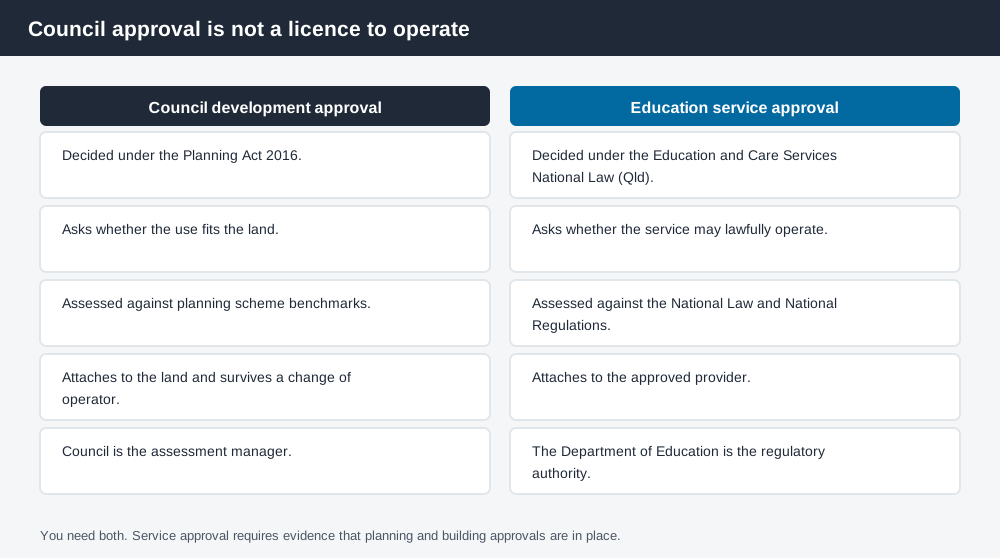
Figure 3: Different Acts, different regulators, different questions.
In Queensland the Department of Education is the regulatory authority under the Education and Care Services National Law (Queensland) and the National Regulations. Two approvals sit under that framework.
Provider approval applies to the person or entity operating services. Service approval applies to each individual service — each centre. Applications are lodged through the National Quality Agenda IT System, and while both can be lodged at the same time, service approval cannot be granted until provider approval has been.
The critical link back to council: a service approval application requires evidence of compliance with Queensland's planning and development laws, including the development approval where one was required, and the building approval and classification. That's the sequencing constraint. You cannot run the education approvals first and sort the planning out later.
Building approval and Class 9b
Childcare premises are generally a Class 9b assembly building under the National Construction Code. That has a practical consequence worth knowing before you fall in love with a site: departmental guidance notes that Class 9b classification generally cannot be given to a residential property. Converting a house is not the straightforward path it looks like.
Buildings in the relevant classes must have a certificate of occupancy, which has to be displayed before the building is used or occupied. It replaced the certificate of classification from 1 October 2020, and existing certificates continue in force. Building approval is separate from development approval and is usually issued by a private certifier — see building approval versus development approval in QLD.
Note that the Queensland Development Code part that used to deal specifically with child care centres was repealed in 2014, so current childcare buildings are assessed against the National Construction Code rather than that superseded part. Confirm the current building requirements with your certifier.
The order that saves money
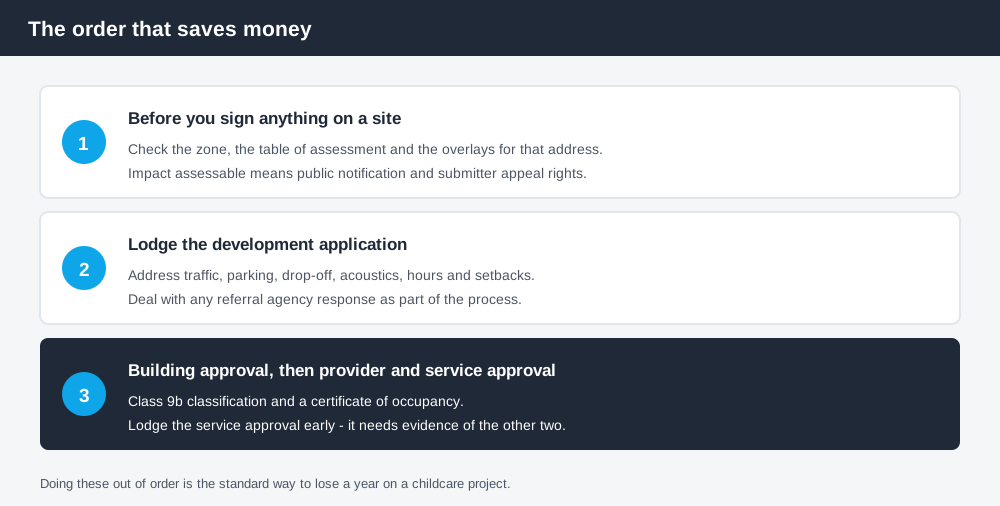
Figure 4: Site checks first. Everything expensive comes later.
Check the zone, the table of assessment and the overlays before you sign anything on a site. You can see zoning, overlays and constraints on your council's planning scheme mapping and on the Queensland Globe. The Department of Education's own opening a new service guidance sets out the education-side sequence and is worth reading before you lease.
If you'd rather see your zone, your overlays and your likely category of assessment set out for an address than work through a planning scheme yourself, an instantDA planning report does that for $169 — against the $800–$1,500 a town planner typically charges for a preliminary opinion. You can start a report in a few minutes.
Then confirm with your council and with the Department of Education before you commit capital. Childcare is one of the areas where the regulators genuinely will talk to you early, and it is worth taking them up on it.
Frequently asked questions
Do I need council approval to open a childcare centre in Queensland?
Can I run a childcare centre from a house in Queensland?
What is the difference between provider approval and service approval?
Does council approval let me start operating?
Will neighbours be notified about a childcare centre application?
What usually causes a childcare application to be refused or conditioned heavily?
Ready to generate your report?
Skip the writing. Get a council-ready planning report in 5 minutes.
Get your report