Key takeaways
- ✓Queensland has no statutory list of planning report contents — the planning scheme and the approved form drive what you need.
- ✓A planning report's job is to walk the assessment manager through the applicable assessment benchmarks, in order.
- ✓Naming the zone, the overlays and the category of assessment on page one is what turns a description into an assessable document.
- ✓Stating non-compliance openly and justifying it beats hoping the assessing officer misses it.
- ✓The most common failure is a report that describes the building and never engages with a single benchmark.
Planning Report Example — What a QLD Council Expects
You'll usually hear this called a development application, or DA — that's the formal name for council approval under the Planning Act 2016. The written document that goes with the plans has no single official name. Consultants call it a town planning report, a planning report, or planning grounds. Councils just call it supporting information. Whatever the label, its job is the same: to walk the assessment manager through the benchmarks your proposal is measured against and show, benchmark by benchmark, why it stacks up. Learn more about the planning report vs see vs town planning report.
Get a council-ready planning report in 5 minutes — no planner, no waiting.
Get your report →The short answer
Queensland has no statutory list of planning report contents. A planning report is supporting information: it identifies the zone, overlays and category of assessment for the site, then works through each applicable assessment benchmark and explains how the proposal responds. The scheme and the approved form decide what's needed.
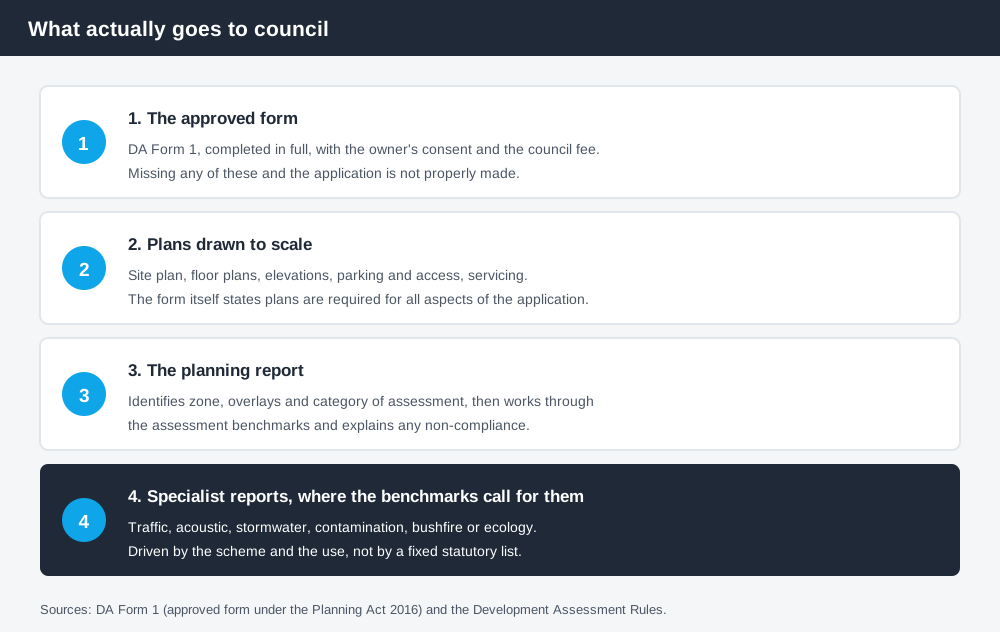
Figure 1: The planning report is one of four parts — it does not replace the plans or the form.
What goes to council, and where the report sits
Most development applications involving code assessment or impact assessment are made on DA Form 1, the approved form under the Planning Act 2016. The form itself says all parts must be completed in full and all required supporting information must accompany the application, and that relevant plans are required for all aspects of the application.
Alongside the form and the plans sit the owner's consent and the council's fee. Get any of those four wrong and the application is not properly made — which stalls it before assessment even begins.
The planning report is the part that reasons. The plans show what you propose; the report explains why it should be approved.
There is no statutory contents list — and that catches people out
Spend 5 minutes, not 3 weeks
instantDA generates a council-ready planning report for Queensland development applications. No town planner. No waiting.
Get your report →This surprises people who have dealt with other states. The Planning Act 2016 and the Planning Regulation 2017 do not set out a checklist of documents that every application must contain. What they do is establish the framework: the approved forms, the Development Assessment Rules that define when an application is properly made, and the planning instruments that supply the assessment benchmarks.
The benchmarks are what actually generate the report's contents. If the applicable code has a benchmark about acoustic amenity, your report needs to address acoustic amenity — and probably attach an acoustic assessment. If it doesn't, you don't.
Queensland's planning schemes follow the Queensland Planning Provisions structure, but each council layers its own codes and overlays on top. They are not uniform. That is exactly why a template downloaded from somewhere else rarely fits: the benchmarks it responds to are not the benchmarks your council will assess against.
What a planning report actually contains
Working through real Queensland reports, the structure is consistent even though the content isn't.
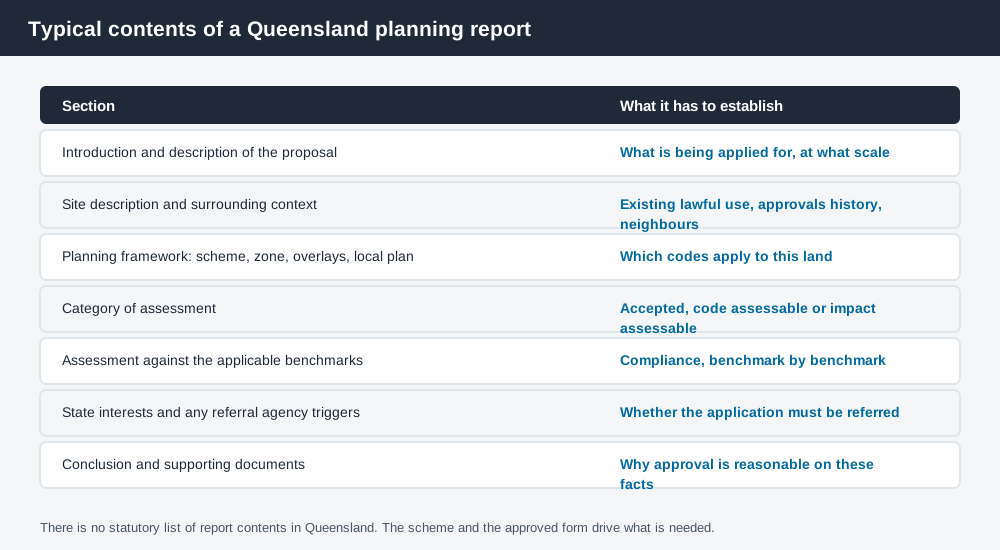
Figure 2: The sections are conventional. The content is site-specific.
- ✓What the proposal is, at what scale and intensity
- ✓What the site is, including its existing lawful use and approvals history
- ✓Which planning instruments apply — scheme, zone, overlays, local plan codes
- ✓What category of assessment applies
- ✓How the proposal responds to each applicable assessment benchmark
- ✓Whether any state interest triggers a referral
- ✓Why approval is reasonable on these facts
Two of those do most of the heavy lifting.
Category of assessment. Accepted, accepted subject to requirements, code assessable and impact assessable are four different things with four different consequences — public notification, appeal rights and assessment scope all turn on which one you're in. Getting it wrong at page one poisons everything after it. Our guide to accepted versus assessable development in QLD sets out how the categories differ and how to find yours.
Assessment against the benchmarks. This is the report. Everything else is scaffolding.
What separates a strong report from a weak one
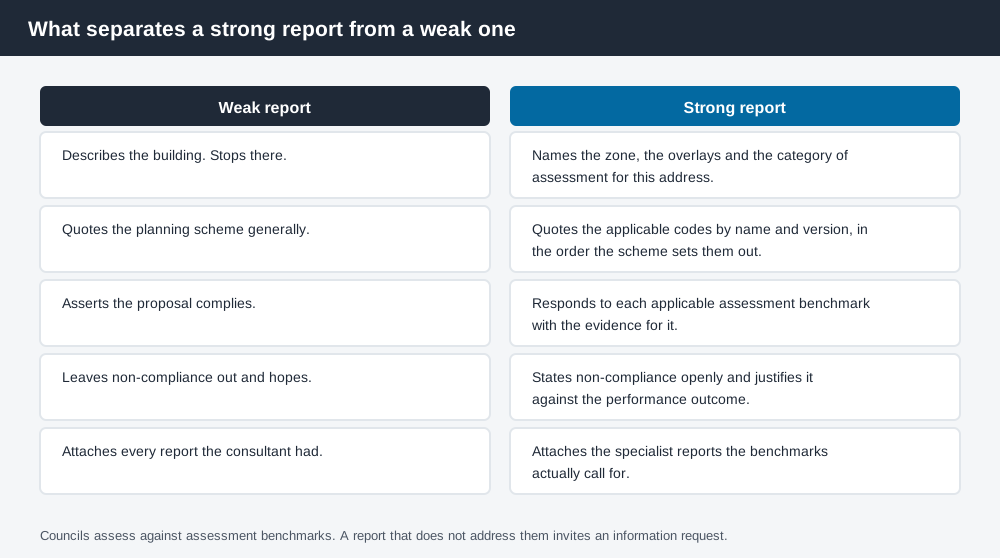
Figure 3: The difference is engagement with the benchmarks, not length.
The weak version describes the building in loving detail and then asserts that it complies. The strong version does something less comfortable: it takes each applicable benchmark in the order the code sets it out, states what the benchmark requires, states what the proposal does, and says whether that complies.
Where it doesn't comply, a strong report says so — and then argues the performance outcome. Queensland codes are typically written as performance outcomes with acceptable outcomes underneath them. Failing an acceptable outcome is not fatal if you can demonstrate the performance outcome is still met by another means. Hiding the non-compliance is what's fatal, because the assessing officer will find it, and now they've found it in an application that also looked evasive.
An information request is the mechanism councils use when the material in front of them isn't enough to decide. Under the state's development assessment framework, once an information request is issued the applicant has three months to respond, extendable by agreement. That's the real cost of a thin report — not a refusal, but months of dead time. If you want the mechanics, information requests in QLD covers when they're issued and how to respond.
Where the outbound facts live
Two things are worth checking yourself before anyone writes anything. The zone and overlays affecting your land are mapped on your council's planning scheme mapping and on the Queensland Globe, which is free and public. The approved forms and the state's development assessment guidance are published on the Queensland planning portal.
If a report you're paying for doesn't name the same zone and overlays that the Globe shows for your address, that's a question worth asking early.
What to do next
Start from the constraints, not from the proposal. Find the zone. Find the overlays. Find the category of assessment. Only then read the codes that apply, and only then write anything — because until you know which benchmarks you're being measured against, you're writing a description, not a planning report.
If you'd rather see your zone, your overlays and your likely category of assessment set out for your address than work through a planning scheme yourself, an instantDA planning report does that for $169 — against the $800–$1,500 a town planner typically charges for a preliminary opinion. You can start a report in a few minutes.
If you want the writing process rather than the anatomy, how to write a planning report in QLD takes it step by step. And if you're weighing up whether to write it yourself at all, DIY planning reports in QLD is honest about where self-preparation works and where it stops working.
Then confirm the requirements with your council before you lodge. Schemes differ, and the officer who assesses your application is the person whose expectations matter.
Frequently asked questions
Is a planning report required for every development application in Queensland?
What is the difference between a planning report and DA Form 1?
Who writes a planning report in Queensland?
What happens if the planning report doesn't address a benchmark?
Does a Queensland planning report need to follow a template?
Can I use a planning report from another state?
Ready to generate your report?
Skip the writing. Get a council-ready planning report in 5 minutes.
Get your report